

Archive · 28 Jul 2026
Protesters Clash with Delhi Police Over Exam Irregularities
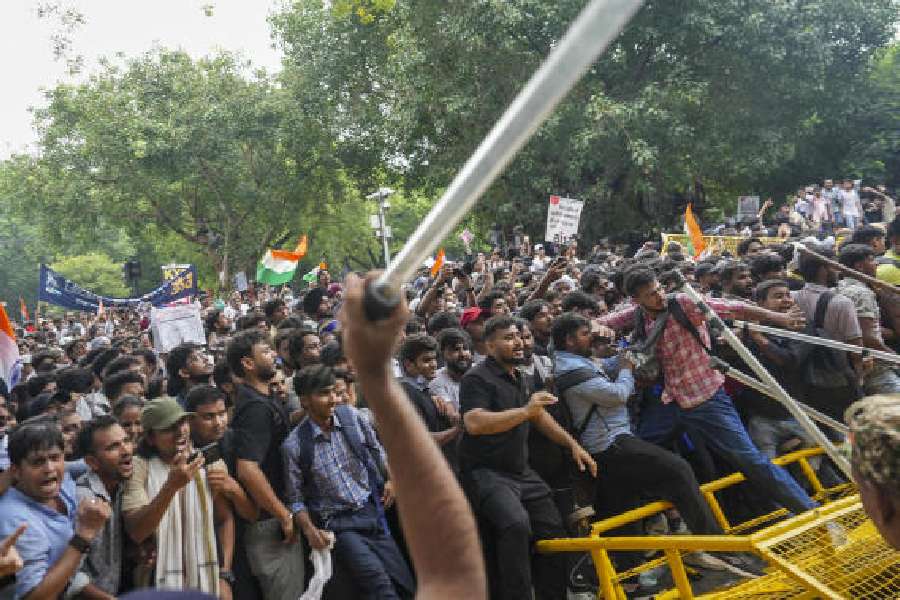
On July 20, thousands of people protested in Delhi to demand accountability for irregularities in national-level exams.
The protest turned violent when the police used batons and tear gas to disperse the crowd.
Eyewitnesses say the police used too much force, hitting people on the head and not wearing visible identification.
The police say they acted professionally.
The law says police can use force to disperse crowds, but it must be the minimum necessary and proportional.
The Supreme Court has ruled that police must be identifiable and that force must be reasonable and necessary.
The protesters say the police did not follow these rules, and the police say they did.
The issue is about whether the police used too much force and whether they followed the law.

Thousands of protesters marched to Parliament on July 20 to demand accountability for exam irregularities.
The Delhi Police used batons and tear gas to disperse the crowd, causing injuries and detentions.
Eyewitnesses report that the police used excessive force, hitting protesters on the head and not displaying visible identification.
The Delhi Police insists that the operation was handled professionally and that the use of force was necessary.
Indian law regulates the use of force by the police, requiring it to be the minimum necessary and proportional, with officers identifiable.
- Who
- Thousands of protesters and the Delhi Police
- What
- A protest over exam irregularities that turned violent due to police intervention
- When
- July 20
- Where
- Delhi, India
- Why
- To demand accountability for irregularities in national-level exams and to protest against the use of excessive force by the police
Protesters
Delhi Police
Use of Force
Protesters
Protesters claim the police used excessive and indiscriminate force, causing injuries and failing to adhere to the principle of minimum force.
Delhi Police
The Delhi Police insists that the operation was handled professionally and that the use of force was necessary to maintain order.
Identification of Officers
Protesters
Protesters and eyewitnesses report that many officers did not display visible identification, making it difficult to hold individuals accountable for their actions.
Delhi Police
The Delhi Police has not publicly addressed the issue of officers not displaying identification, focusing instead on the professionalism of their operation.
- Date of Protest
- July 20
- Location
- Delhi, India
- Cause of Protest
- Irregularities in national-level exams
- Legal Framework
- Section 148 of the Bharatiya Nagarik Suraksha Sanhita, Ramlila Maidan Incident vs Home Secretary (2012), D.K. Basu vs State of West Bengal (1997)
- Key Legal Principles
- Minimum force, reasonableness, necessity, minimal invasion, proportionality, individual identifiability