

Archive · 24 Jul 2026
Jantar Mantar: Meaning and History
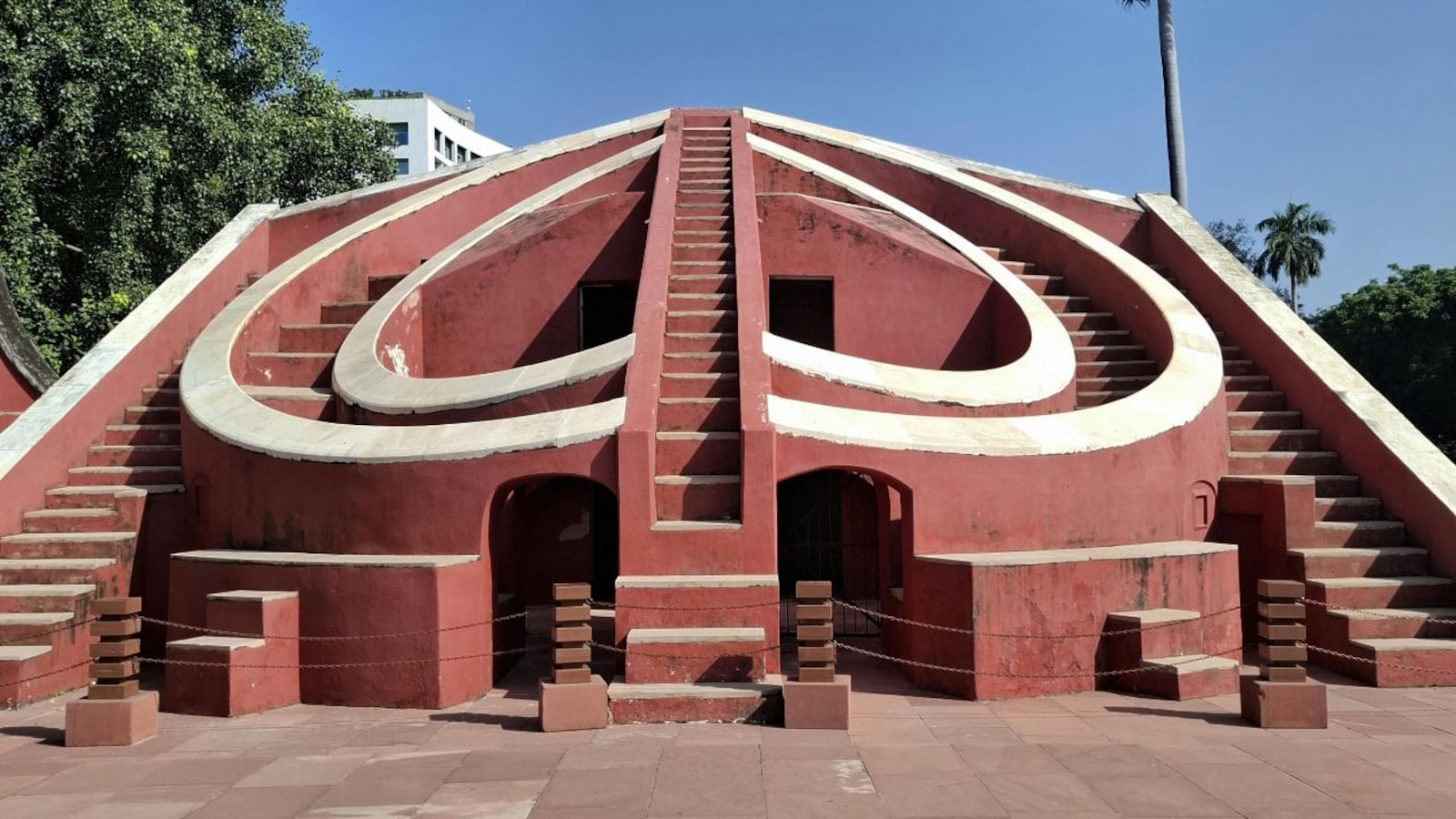
Jantar Mantar is a group of five astronomical observatories built by Maharajah Sawai Jai Singh II between 1724 and 1730.
The name means 'instrument used for calculation' in Sanskrit.
These observatories were built to study celestial movements, measure time accurately, and track planetary positions.
The most famous ones are in Jaipur and Delhi.
However, modern buildings now block the view, making it impossible to use them for accurate observations today.
Each observatory is unique in size, materials, and construction, reflecting the innovative spirit of its creator.

Jantar Mantar means 'instrument used for calculation' in Sanskrit.
Built by Maharajah Sawai Jai Singh II between 1724 and 1730.
Five observatories were constructed in Jaipur, Delhi, Ujjain, Varanasi, and Mathura.
Designed to study celestial movements and measure time accurately.
Modern buildings now obstruct the view, making accurate observations impossible.
- Who
- Maharajah Sawai Jai Singh II
- What
- Construction of five astronomical observatories
- When
- 1724-1730
- Where
- Jaipur, Delhi, Ujjain, Varanasi, Mathura
- Why
- To create larger, more precise astronomical instruments
Historical Significance
Modern Limitations
Scientific Purpose
Historical Significance
Jantar Mantar was built to study celestial movements and measure time accurately.
Modern Limitations
Modern buildings obstruct the view, making accurate observations impossible today.
- Meaning of Jantar Mantar
- Instrument used for calculation
- Builder
- Maharajah Sawai Jai Singh II
- Number of Observatories
- 5
- Years Built
- 1724-1730
- Locations
- Jaipur, Delhi, Ujjain, Varanasi, Mathura (demolished)
- Primary Purpose
- Astronomical measurements
- Current Status
- Tourist attractions, historical monuments