

8 months ago
Vidyasagar, Rammohan and India's Intellectual Legacy
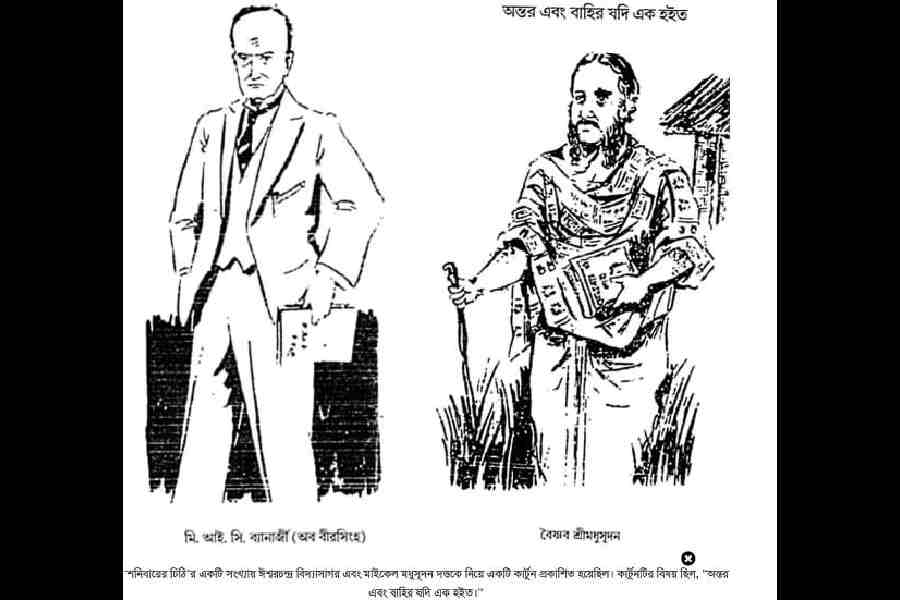
This article talks about a debate on India's intellectual legacy and education system.
It mentions Ishwar Chandra Vidyasagar, who was a principal at Calcutta’s Sanskrit College, and his efforts to create an enlightened Bengali literature by integrating Sanskrit and English knowledge systems.
Rammohan Ray, who lived before Macaulay, also advocated for including Western sciences in Indian education.
The article also discusses a recent lecture by Prime Minister Narendra Modi, who criticized Macaulay's Minute on Education for inculcating a slave mentality among Indians.
The article argues that Indians should not misrepresent their colonial past and should embrace the synthesis of East and West knowledge systems that led to the Indian Renaissance.
It also highlights the importance of bilingualism and syncretic traditions in Indian society.

Ishwar Chandra Vidyasagar, known as Vidyasagar, was a principal at Calcutta’s Sanskrit College who advocated for the integration of Sanskrit and English knowledge systems.
Rammohan Ray, who lived before Macaulay, protested against the East India Company's focus on traditional oriental learning and advocated for the inclusion of Western sciences in Indian education.
The Hindu College, founded by Indians with some European support, provided a secular liberal education without Sanskritic learning.
Prime Minister Narendra Modi recently criticized Macaulay's Minute on Education for inculcating a slave mentality among Indians and denigrating the indigenous knowledge system.
The article argues that Indians should embrace the synthesis of East and West knowledge systems that led to the Indian Renaissance and not misrepresent their colonial past.
- Who
- Ishwar Chandra Vidyasagar, Rammohan Ray, Prime Minister Narendra Modi, Tagore, Sajanikanta Das
- What
- Debate on India's intellectual legacy and education system
- Where
- Bengal, Calcutta, India
- When
- Last century, mid-19th century, recent lecture by Prime Minister
- Why
- To discuss the synthesis of Indian and Western knowledge systems and the impact of colonial education policies
Key facts
- Vidyasagar's Dress
- Dhoti, chaddar, and chappals
- Vidyasagar's Role
- Principal of Calcutta’s Sanskrit College
- Vidyasagar's Goal
- Creation of an enlightened Bengali literature
- Vidyasagar's Synthesis
- Integration of Sanskrit and English knowledge systems
- Rammohan's Protest
- Advocated for Western sciences in Indian education
- Hindu College
- Secular liberal education without Sanskritic learning
- Prime Minister's Criticism
- Macaulay's Minute on Education
- Indian Renaissance
- Synthesis of East and West knowledge systems