

9 months ago
37,000-Year-Old Thorny Bamboo Fossil Found in Manipur
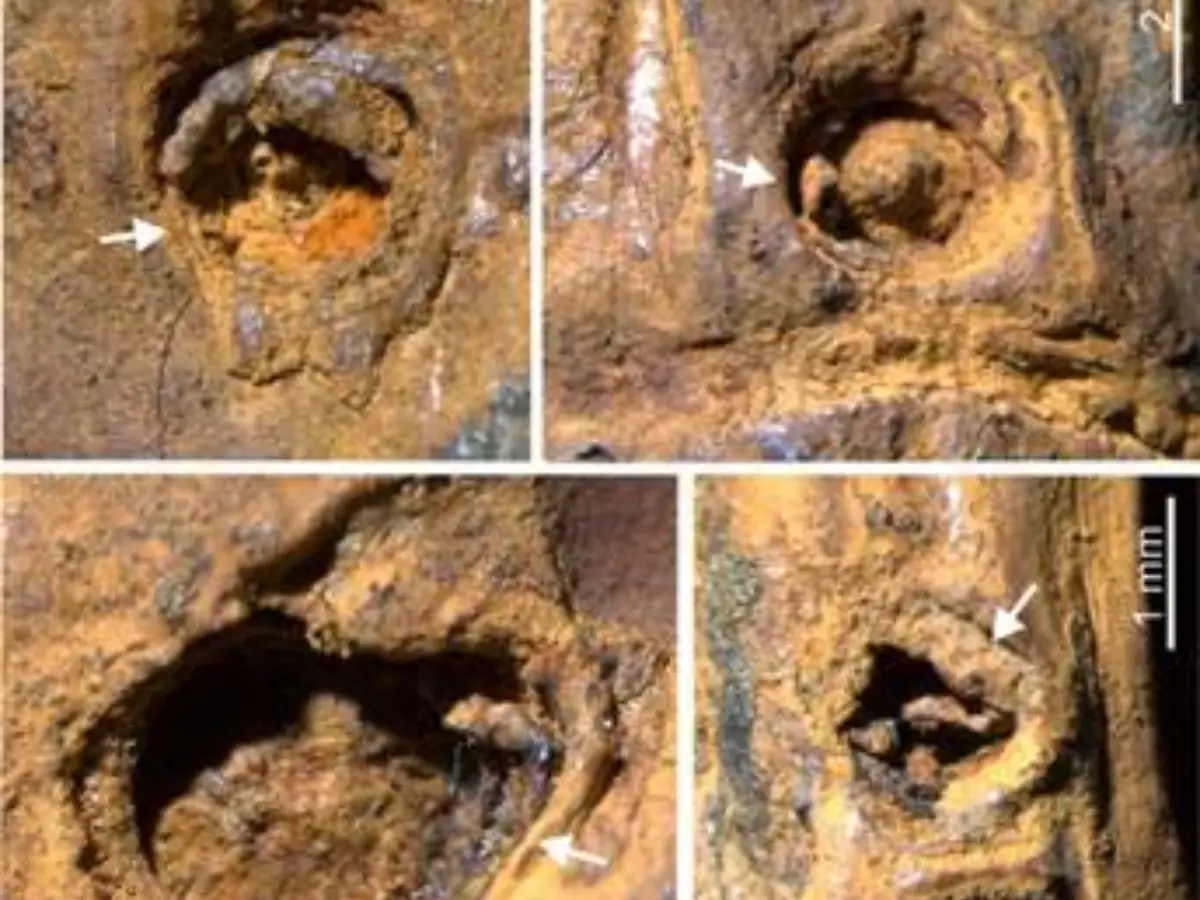
Scientists in India found a very old bamboo stem that is 37,000 years old.
This bamboo is special because it has marks from thorns, which are like little spikes that protect the plant.
The bamboo was found in a river in Manipur, a place in northeastern India.
This discovery is important because it shows that bamboo with thorns existed in Asia a long time ago, during the Ice Age.
Most other bamboos died in colder places, but this one survived in the warm and humid climate of Northeast India.
The scientists studied the bamboo and compared it to modern bamboos to learn more about how it lived and protected itself.
This finding helps us understand the history of plants and how they adapted to different climates.

Scientists discovered a 37,000-year-old bamboo stem with thorn marks in Manipur’s Imphal Valley.
The bamboo stem is the earliest thorny bamboo fossil found in Asia, providing insights into the continent’s botanical history.
The fossil was found in the Chirang River and is significant because bamboo fossils are rare due to their quick decay.
Researchers compared the fossil with living thorny bamboos to understand its defensive traits and ecological role.
The discovery highlights Northeast India as a refuge for bamboo during the Ice Age when other regions were too cold.
- Who
- Scientists from the Birbal Sahni Institution of Palaeosciences (BSIP)
- What
- Discovered a 37,000-year-old bamboo stem with thorn marks
- Where
- Chirang River in Manipur’s Imphal Valley
- When
- The fossil dates back to the Ice Age, discovered in 2021-22
- Why
- To understand the botanical history and ecological role of bamboo in Asia
Key facts
- Age of the fossil
- 37,000 years
- Location of discovery
- Chirang River, Imphal Valley, Manipur
- Institution involved
- Birbal Sahni Institution of Palaeosciences (BSIP)
- Journal of publication
- Review of Palaeobotany and Palynology
- Bamboo genus
- Chimonobambusa
- Significance
- First fossil evidence of thorny bamboo in Asia during the Ice Age
- Comparative species
- Bambusa bambos and Chimonobambusa callosa
- Discovery year
- 2021-22
Quotes
Government release
Official statement from the government
“This is the first fossil evidence that thorniness in bamboo—a defence against herbivores—was already present in Asia during the Ice Age. Its preservation is particularly significant because it comes from a period of colder and drier global climates, when bamboo was wiped out in many other regions, including Europe. The fossil shows that while harsh Ice Age conditions restricted bamboo's global distribution, Northeast India provided a safe refuge where the plant could continue to thrive.”
 assamtribune.com
“This research by H Bhatia, P Kumari, NH Singh and G Srivastava adds a new dimension to our understanding of both bamboo evolution and regional climate history. It also emphasises the role of this part of Asia in safeguarding biodiversity during times of global stress, making the discovery not only a botanical milestone but also an important contribution to palaeoclimatic and biogeographic studies.”
assamtribune.com
N Herojit Singh
Geologist and member of the discovery team
“The fossil was discovered back in 2021-22 at the silt-rich deposits of 'quaternary deposits exposed' west of Senjam-Chirang village in Imphal West district. Several samples were collected, some of which measured nearly one feet.”
assamtribune.com
