Archive · 6 Nov 2025
ISRO to Transfer 50% PSLV Development to Industry Consortium

ISRO, India's space agency, wants to share the work of building its workhorse rocket, the PSLV, with Indian companies.
Right now, these companies already help build most of the parts for ISRO's rockets, about 80-85%.
ISRO plans to give half of the development work for the PSLV directly to a group of Indian companies, like HAL and L&T.
Once these companies successfully launch a couple of rockets themselves, ISRO will transfer this responsibility.
This is a big step to help Indian industries grow stronger and build more rockets.
ISRO has already transferred technology for smaller rockets (SSLVs) to HAL and plans to move production of 16 of them to private companies.
Thanks to government reforms, the number of space startups in India has grown significantly from just a few to over 330.
This move is part of India's larger goal to become more self-reliant in space technology and increase the number of rocket launches significantly.

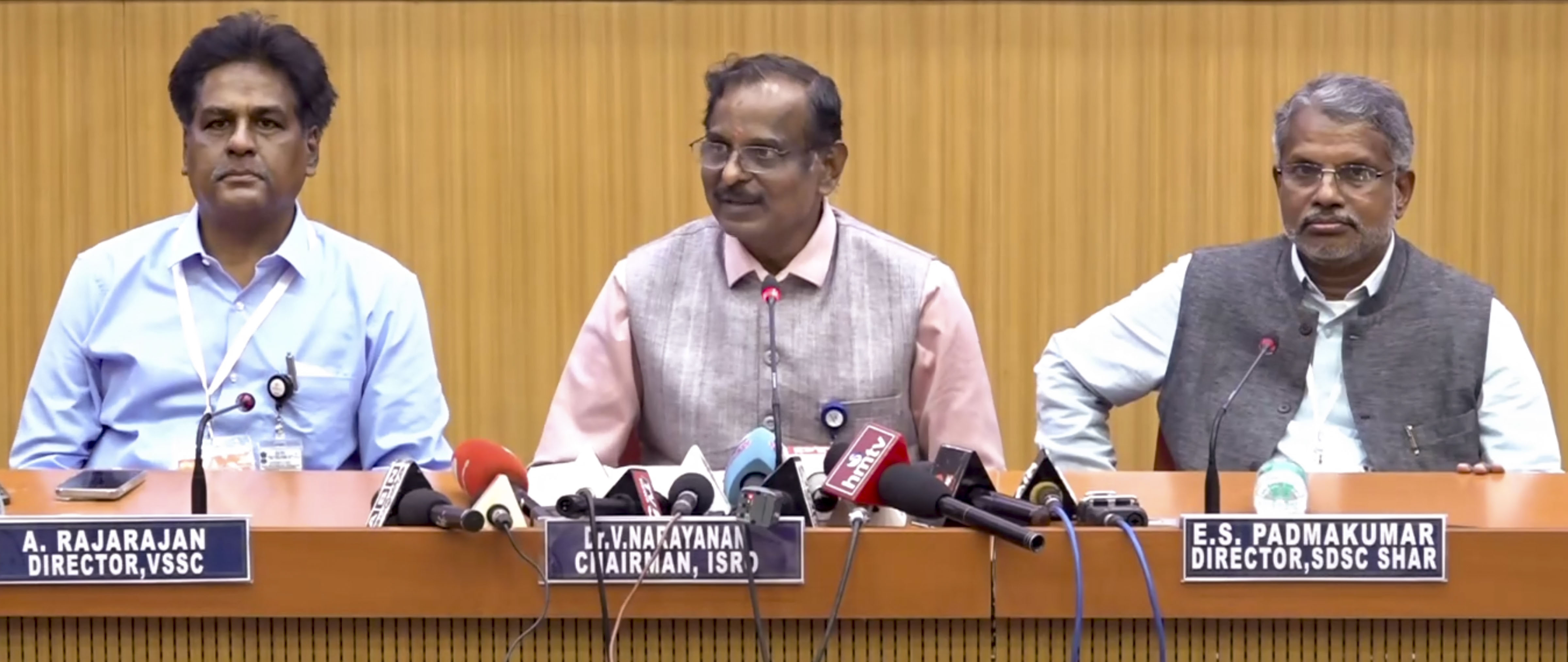
ISRO Chairman V. Narayanan announced plans to transfer 50% of Polar Satellite Launch Vehicle (PSLV) development to an Indian industry consortium.
The Indian industry currently contributes 80-85% of systems for ISRO's missions.
The consortium, headed by HAL and L&T, is expected to launch its first PSLV by February, marking a significant step in industry-led launches.
ISRO has already transferred technology for the Small Satellite Launch Vehicle (SSLV) to HAL, with plans to shift 16 SSLV productions to private industries.
Space sector reforms have boosted the number of Indian space startups from a few to over 330.
- Who
- ISRO Chairman V. Narayanan, Indian industry consortium (including HAL and L&T), approximately 450 industries, over 330 startups
- What
- ISRO's plan to transfer 50% of Polar Satellite Launch Vehicle (PSLV) development to the industry consortium, which aims to eventually launch PSLV rockets.
- When
- Announced during the India Manufacturing Show (IMS 2025) on Thursday, November 6. First PSLV launch by consortium expected by February, by the end of the financial year.
- Where
- Bengaluru, at the India Manufacturing Show (IMS 2025) held at the Bangalore International Exhibition Centre (BIEC).
- Why
- To leverage and boost the capabilities of the domestic aerospace, defense, and engineering sectors, and to increase India's self-sufficiency and launch capacity.
ISRO's Current Role
Industry Consortium's Role
PSLV Development
ISRO's Current Role
ISRO currently leads and oversees the development of the PSLV.
Industry Consortium's Role
ISRO plans to transfer 50% of PSLV development to an industry consortium after they successfully complete two launches.
Production Contribution
ISRO's Current Role
Indian industries currently contribute 80-85% of systems for ISRO's missions.
Industry Consortium's Role
The industry consortium, including HAL and L&T, has already produced the first PSLV and is expected to launch it by February.
- ISRO Chairman
- V. Narayanan
- Planned PSLV Development Transfer
- 50% to Indian industry consortium
- Industry Contribution to ISRO Missions
- 80-85% of systems
- Recent Industry Contribution Example
- 80% for CMS-03 mission
- PSLV Launch by Consortium
- First rocket by Indian consortium to launch by end of financial year (estimated February)
- SSLV Technology Transfer
- To HAL via Rs 511 crore agreement
- SSLVs Planned for Private Industry
- 16
- Space Startups in India
- Over 330