Archive · 6 Oct 2026
Three Scientists Win 2026 Nobel Medicine Prize for Optogenetics

Three scientists won the 2026 Nobel Prize in Physiology or Medicine.
Their work helped researchers use light to switch selected nerve cells on or off.
Hegemann and Nagel studied an alga that reacts quickly to light and helped identify a light-sensitive protein called channelrhodopsin.
Deisseroth showed that the protein could make nerve cells respond to light.
This technique is called optogenetics.
Scientists use it to study how groups of brain cells work and how they relate to memory, feelings and behaviour.
Researchers are also investigating possible medical uses, including approaches to restoring vision.
The three scientists will share 12 million Swedish kronor.

Karl Deisseroth, Peter Hegemann and Georg Nagel received the 2026 Nobel Prize in Physiology or Medicine for discoveries concerning light-gated ion channels and optogenetics.
Hegemann and Nagel’s work on the alga Chlamydomonas led to the discovery of channelrhodopsin, a protein that responds to light.
Deisseroth demonstrated that the protein could make nerve cells respond to light, helping establish optogenetics as a way to control selected cells.
Researchers use optogenetics in laboratories to study brain circuits and how nerve-cell activity relates to functions such as memory and behaviour.
The laureates will share 12 million Swedish kronor, reported as about $1.2 million; the prize was announced in Stockholm on October 5.
- Who
- Karl Deisseroth, Peter Hegemann and Georg Nagel.
- What
- They received the 2026 Nobel Prize in Physiology or Medicine for discoveries concerning light-gated ion channels and optogenetics.
- When
- The prize was announced on Monday, October 5, 2026.
- Where
- At the Karolinska Institute in Stockholm, Sweden.
- Why
- Their work enabled the use of light to control selected nerve cells and study brain activity.
Potential and promise
Current limits
Medical applications
Potential and promise
Clinical trials are exploring optogenetic approaches to restore vision in people with retinitis pigmentosa, and researchers hope the method could improve cochlear implants.
Current limits
The technique is still used mainly in laboratory research; one expert quoted in an article said it remains a long way from therapies for spinal cord paralysis.
- Prize
- 2026 Nobel Prize in Physiology or Medicine
- Laureates
- Karl Deisseroth, Peter Hegemann and Georg Nagel
- Recognized work
- Discoveries concerning light-gated ion channels and optogenetics
- Prize amount
- 12 million Swedish kronor, reported as about $1.2 million, shared by the laureates
- Announcement
- October 5, 2026, in Stockholm
- Protein
- Channelrhodopsin-2, identified through research involving the alga Chlamydomonas
- Research applications
- Optogenetics is used to investigate nerve-cell activity and brain processes; clinical trials are exploring approaches to restore vision for people with retinitis pigmentosa.
- Reported timeline
- Reuters says Deisseroth demonstrated the technique in rat nerve cells in 2005 and the method was named optogenetics in 2006; another article describes his demonstrations in 2006.
Sources
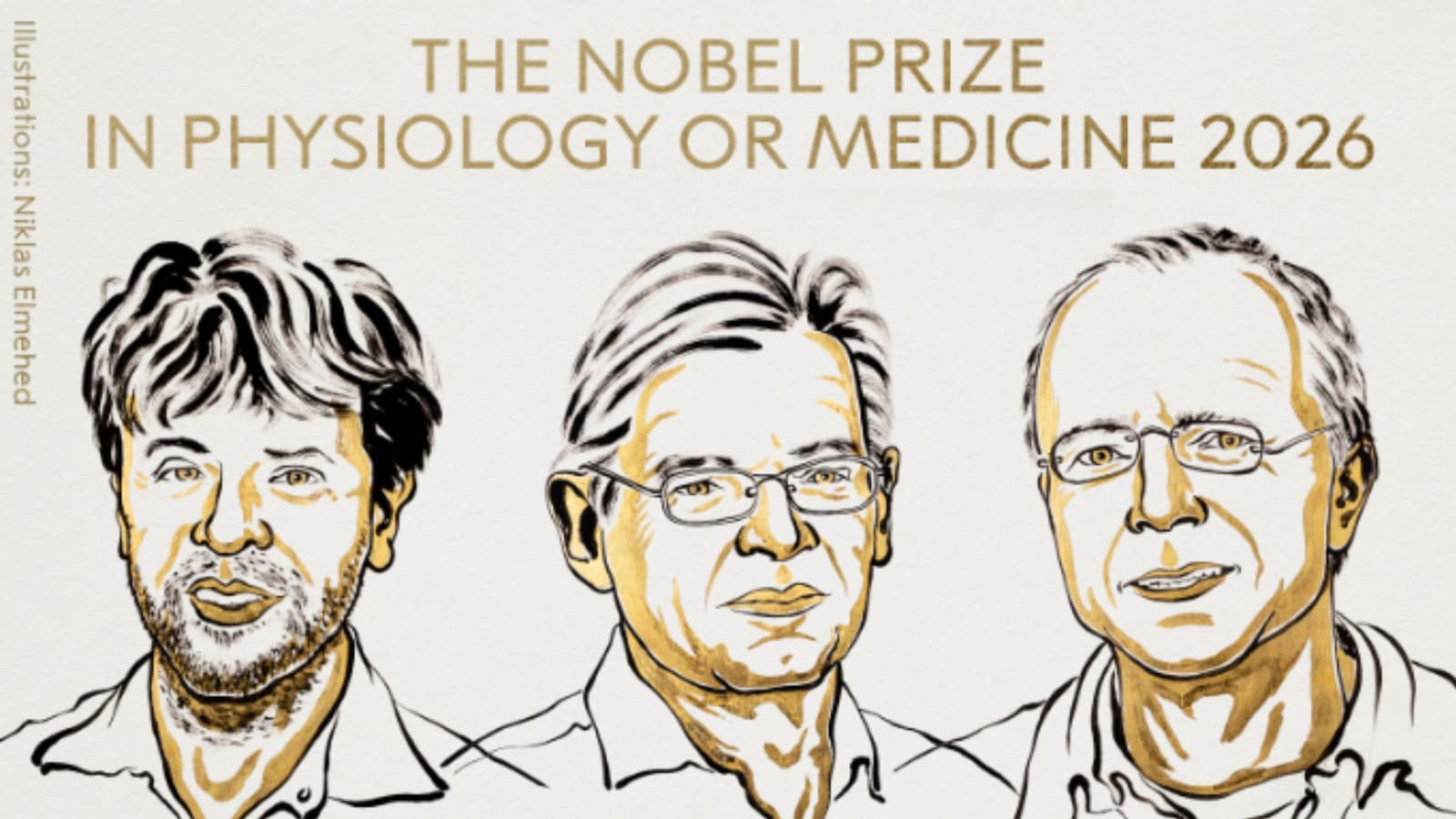
Nobel Medicine Prize Goes To 3 Scientists For Research Into Brain Activity

German and US scientists win Nobel medicine prize for work on optogenetics
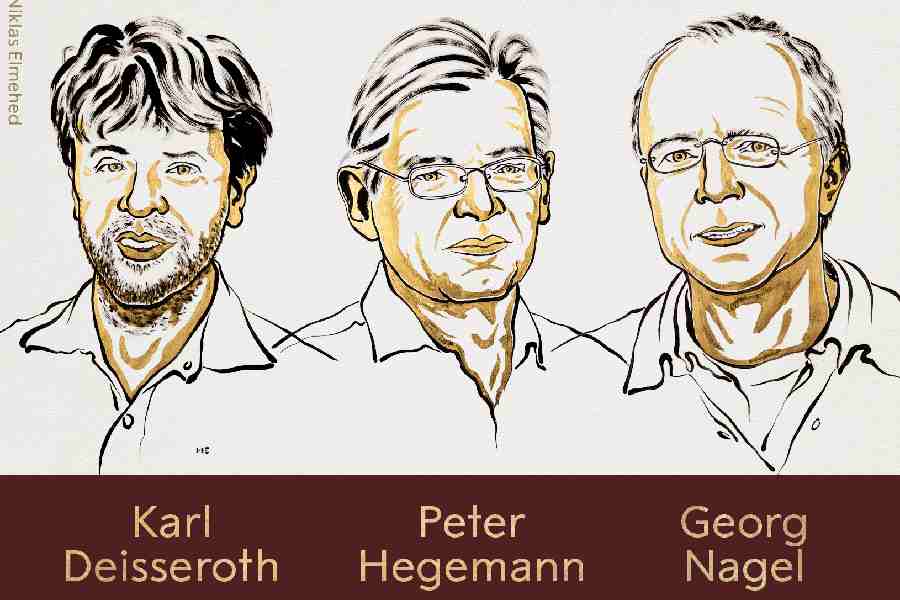
Karl Deisseroth, Peter Hegemann and Georg Nagel win Nobel Prize in medicine - Telegraph India
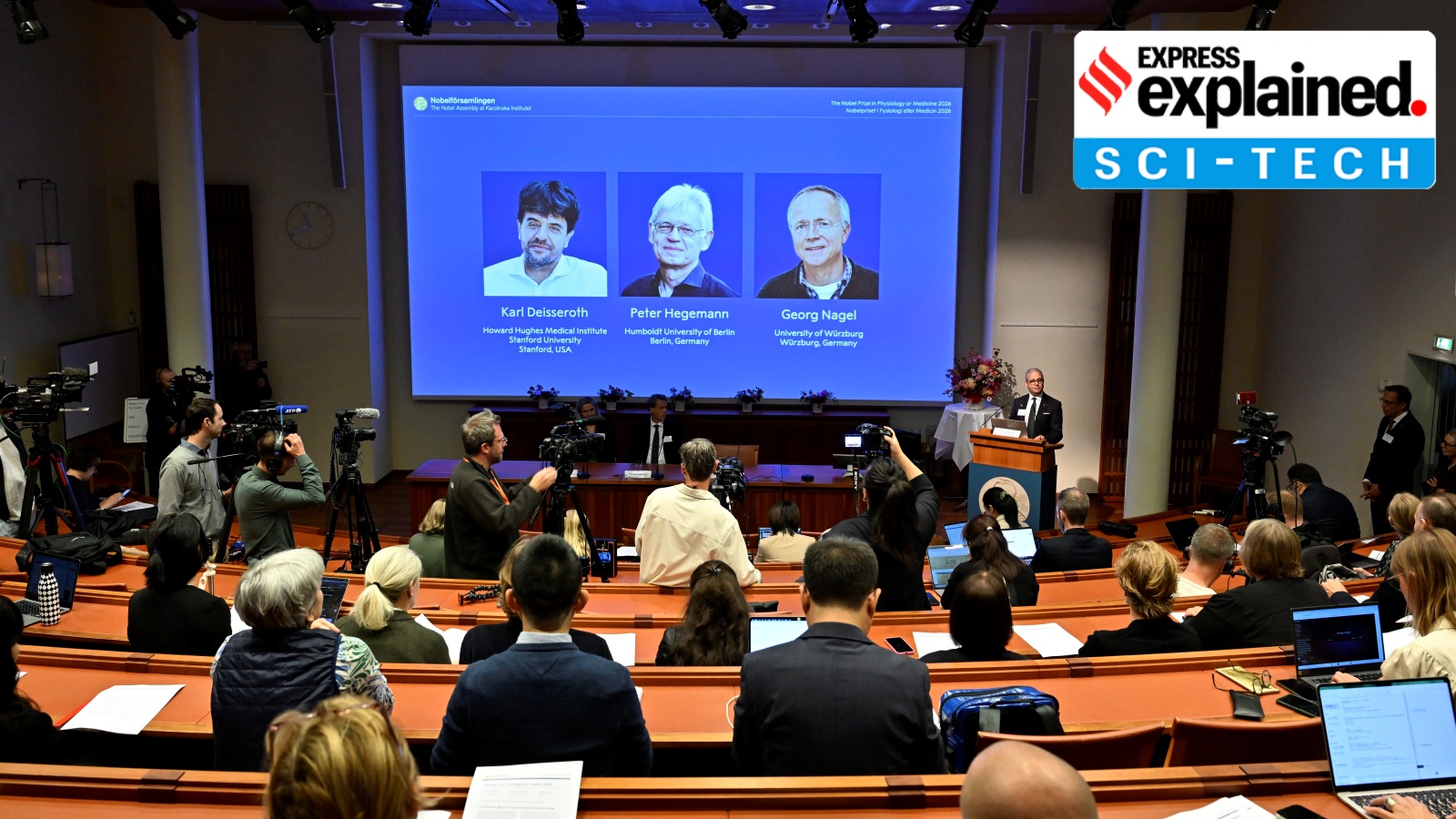
Nobel Medicine Prize 2026: How three scientists discovered a way to control brain cells with light
Nobel Prize 2026: how light is unlocking the human brain