

Archive · 11 Oct 2026
Neurocosmetics, Peptides and Barrier Biotech Shape 2026 Skincare
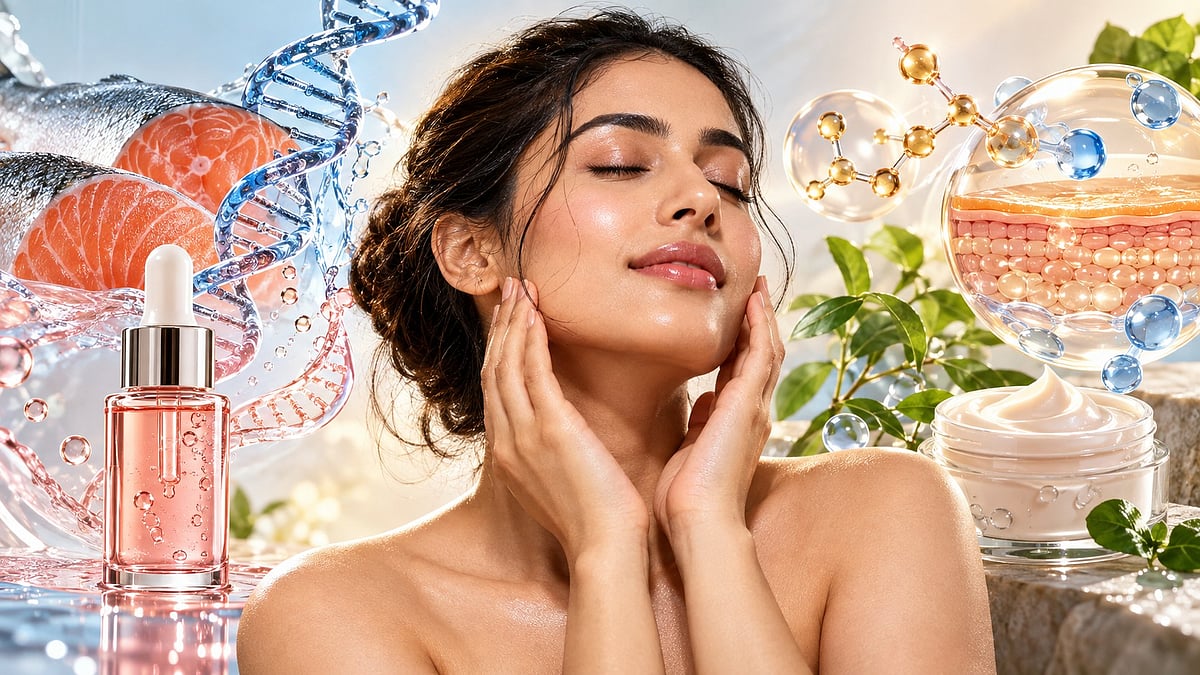
The article describes some skincare ingredients expected to be popular in 2026.
Neurocosmetics are products designed to help calm skin responses linked to stress.
Barrier-repair products aim to help protect the skin's outer layer.
Peptides are small ingredients that, the article says, can send signals involved in skin repair and firmness.
Copper peptides are highlighted for skin recovering after acne.
The article connects these trends to pollution, humidity and other challenges, including in Indian cities.
It suggests adding products gradually rather than changing everything at once.
It also advises patch-testing and asking a dermatologist for guidance.

The article presents neurocosmetics, barrier-repair biotech and advanced peptides as key skincare trends for 2026.
Neurocosmetics use ingredients such as adaptogens and neuropeptides to target stress-related skin responses, according to the article.
Barrier-repair products are described as using bio-ceramides, postbiotics and hypochlorous acid to support the skin barrier.
The article says peptide blends may support collagen production, calm inflammation and improve skin recovery.
It recommends starting with a small number of products, patch-testing and consulting dermatologists.
- Who
- Skincare consumers, with particular attention to people in India; the article cites dermatologist Dr. Mikki Singh and the founder of Aminu.
- What
- An article discusses neurocosmetics, barrier-repair biotech and peptides as skincare trends for 2026.
- When
- 2026
- Where
- India, including Mumbai, and the global skincare market.
- Why
- The article says these approaches aim to address skin concerns linked to stress, pollution, humidity, sensitivity and acne.
- Featured trends
- Neurocosmetics, barrier-repair biotech and advanced peptides
- Neurocosmetic ingredients mentioned
- Adaptogens, neuropeptides and fermented botanicals
- Barrier-support ingredients mentioned
- Fermented bio-ceramides, postbiotics and hypochlorous acid (HOCL)
- Peptide example
- Copper peptide GHK-Cu
- Other ingredient mentioned
- PDRN
- Suggested precautions
- Start gradually, patch-test products and consult a dermatologist
- Article's stated context
- Skin concerns associated with stress, pollution, humidity and acne