Archive · 30 Sep 2026
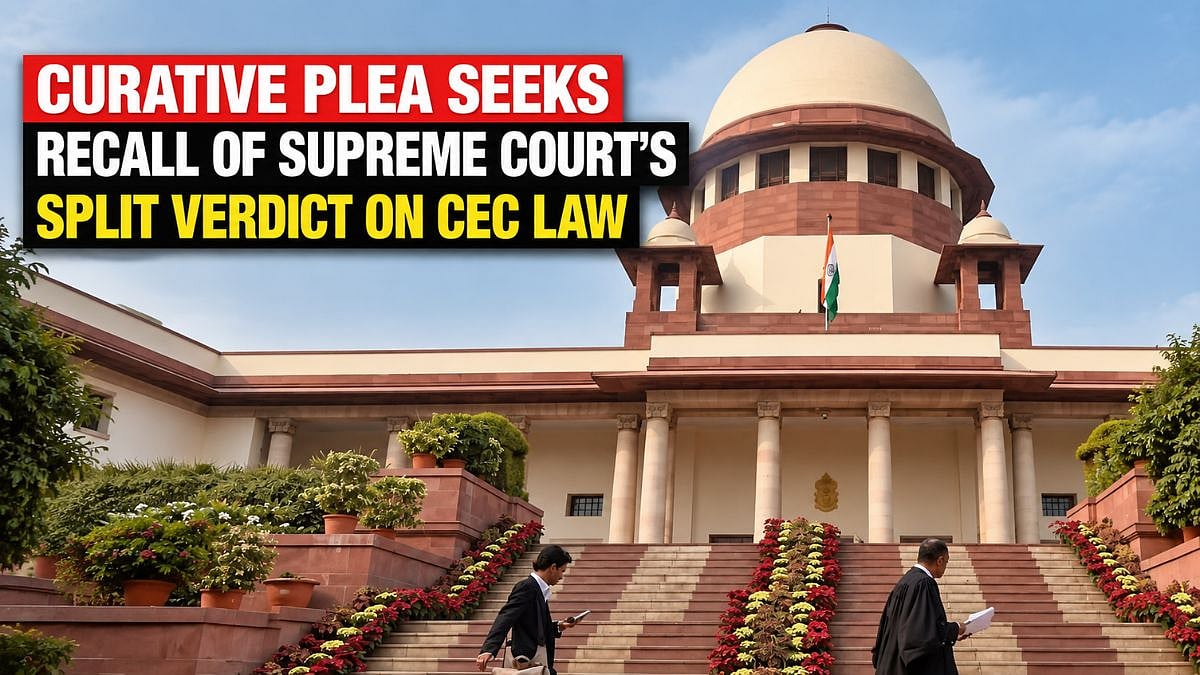
Curative Plea Challenges Split Verdict in Election Commission Law Case

Jaya Thakur has asked India’s Supreme Court to cancel and rehear a recent decision.
The decision involved a law about choosing the country’s top election officials.
Two judges disagreed about whether a larger group of judges should examine the law.
One of those judges, Justice Satish Chandra Sharma, has a son who represents the Election Commission in another court.
Thakur says the judge should have disclosed this family connection before the case began.
She says this could make people worry that the process was not fair, even without proof of actual bias.
She is using a special legal request called a curative petition.
She also wants to skip a normal review because it would usually go to the same judges.
The Supreme Court has not reported a finding that bias actually occurred.

Jaya Thakur filed a curative petition seeking recall of the Supreme Court’s September 23 split verdict.
The petition alleges a conflict of interest involving Justice Satish Chandra Sharma and his son, advocate Siddharth Sharma.
Siddharth Sharma has reportedly served as standing counsel for the Election Commission of India before the Madhya Pradesh High Court since July 2024.
The plea argues that disclosure and recusal were necessary because the family connection could create a reasonable apprehension of bias.
The split verdict concerned whether challenges to the 2023 appointment law should be referred to a five-judge Constitution Bench.
- Who
- Jaya Thakur filed the petition; it concerns Justices Satish Chandra Sharma and Dipankar Datta, the Election Commission of India, and the Centre’s position on a larger bench.
- What
- A curative petition seeks recall and rehearing of the Supreme Court’s September 23 split verdict on challenges to the 2023 Election Commissioners appointment law.
- When
- The split verdict was delivered on September 23, 2026, and the petition was reported on September 30, 2026; Siddharth Sharma’s ECI empanelment was reported as beginning July 10, 2024.
- Where
- The matter is before the Supreme Court of India and involves Siddharth Sharma’s work for the Election Commission before the Madhya Pradesh High Court.
- Why
- Thakur alleges that the judge’s son represented a party connected to the dispute, creating a reasonable apprehension of bias and raising judicial-propriety concerns.
Petitioner’s concerns
Reported institutional positions
Whether disclosure or recusal was required
Petitioner’s concerns
Jaya Thakur argues that Justice Satish Chandra Sharma should have disclosed his son’s professional association with the Election Commission and that recusal was appropriate to avoid an appearance of bias.
Reported institutional positions
The petition itself acknowledges that the judge decided the case on its merits, and the articles report no Supreme Court finding that actual bias occurred.
Whether the case should go to a larger bench
Petitioner’s concerns
Thakur seeks recall of the split order and a fresh hearing before an appropriate bench.
Reported institutional positions
The Centre argued that the challenge raises seminal constitutional questions warranting consideration by a five-judge Constitution Bench; Justice Satish Chandra Sharma favoured such consideration, while Justice Dipankar Datta rejected the referral request.
Whether the review stage should be bypassed
Petitioner’s concerns
Thakur argues that a review would ordinarily return to the same bench and that no useful purpose would be served by requiring one first.
Reported institutional positions
The usual procedure provides for a review before a curative petition, with reviews generally considered by the judges who issued the original decision, subject to exceptional circumstances.
- Petitioner
- Jaya Thakur
- Filing advocate
- Varun Thakur
- Challenged decision
- The Supreme Court’s September 23, 2026 split verdict
- Alleged connection
- Justice Satish Chandra Sharma’s son, Siddharth Sharma, has served as standing counsel or been empanelled with the Election Commission of India before the Madhya Pradesh High Court since July 2024.
- Requested remedy
- Recall of the order, a fresh hearing before an appropriate bench, and exemption from first filing a review petition
- Disputed legislation
- Chief Election Commissioner and Other Election Commissioners (Appointment, Conditions of Service and Term of Office) Act, 2023
- Central constitutional issue
- The 2023 law excludes the Chief Justice of India from the selection panel for the CEC and Election Commissioners