

Archive · 19 May 2025
JWST Detects Frozen Water, Offering Insight into Planet Formation
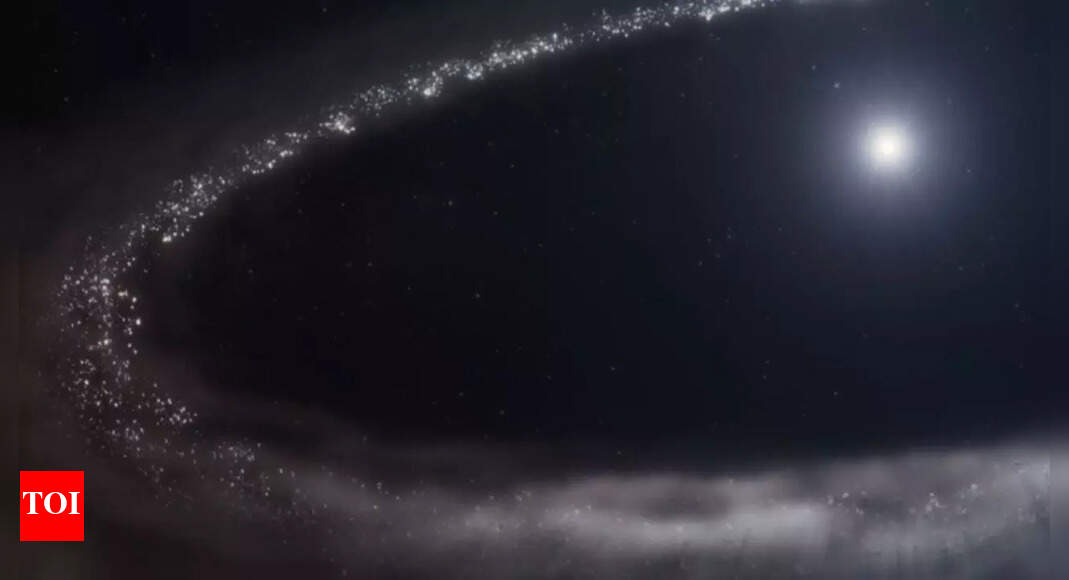
Imagine a telescope that can see things very far away, like the James Webb Space Telescope.
Scientists used it to find frozen water, or ice, around a star that's like our sun but much younger.
This ice is in a ring of dust, similar to our solar system's outer area.
The ice is made of tiny particles that are perfect for the telescope to see.
This discovery helps us learn how planets are made and if there could be water, a key ingredient for life, on other planets.
It's like finding clues that help us understand how our own solar system formed.

The James Webb Space Telescope (JWST) detected crystalline ice water around a distant star.
The star, HD 181327, is 155 light-years away and about 23 million years old.
The ice was found in a debris disk resembling our solar system's Kuiper Belt.
Collisions within the debris disk create particles of icy water detectable by JWST.
The discovery gives insight into planet formation and the distribution of water in space.
- Who
- Scientists using the James Webb Space Telescope (JWST).
- What
- Discovery of crystalline ice water around a distant star.
- When
- The discovery was recently made.
- Where
- Around the star HD 181327, 155 light-years from Earth.
- Why
- To understand planet formation and the prevalence of water and life in the universe.
- Telescope
- James Webb Space Telescope (JWST)
- Star Name
- HD 181327
- Distance from Earth
- 155 light-years
- Star Age
- 23 million years old
- Ice Type Detected
- Crystalline water ice
- Ice percentage in middle areas
- 8%