

Archive · 31 Jul 2026
Deluge with Monsoon Deficit Is India’s New Climate Normal
In July 2026, Mumbai had a huge rainstorm that made a building collapse and buried five children.
In London, a heatwave made people feel very hot and some even fainted.
Scientists say the planet is getting warmer because of gases like carbon dioxide.
This warming makes storms and heatwaves stronger and more common.
In Europe, the heatwave killed about 3,700 people and made electricity very expensive.
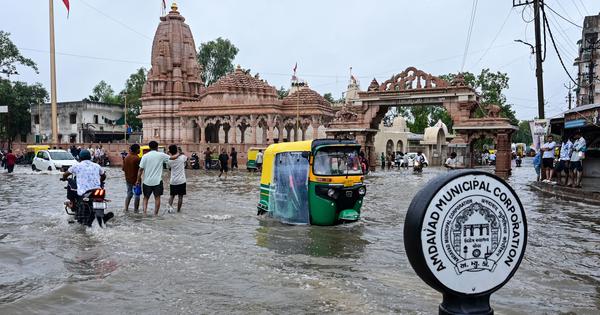
In India, the monsoon rains were uneven—some places got a lot of water while others had a drought.
This caused floods, landslides, and many people were hurt or lost their homes.
The article says we need better plans to protect people from these extreme weather events.

Mumbai building collapse buried five children during torrential July monsoon rains.
London heatwave saw temperatures over 36°C, commuters fainted, activists highlighted fossil fuels.
WMO 2023 data shows global mean temperature 1.45°C above pre‑industrial, greenhouse gases at record highs.
Europe’s June 2026 heatwave caused 3,700 deaths, electricity price spikes, and event cancellations.
India’s monsoon deficit and extreme rainfall led to 94,000 affected, 13 fatalities, and disrupted transport.
- Who
- Residents of Mumbai, London, and European cities; Indian and European authorities
- What
- Extreme weather events—monsoon floods, heatwaves, dust storms—caused widespread damage and loss of life
- When
- June and July 2026
- Where
- Mumbai, London, and various European and Indian regions
- Why
- Accelerating climate change increasing temperature and atmospheric moisture, amplified by El Niño and Omega blocking patterns
- Event
- Monsoon deficit and extreme weather
- Locations
- India (Mumbai, Kerala, Rajasthan), Europe (London, France, Belgium, Netherlands, Spain, Czech Republic, Germany)
- Dates
- June–July 2026
- Impact
- 5 children buried, 3,700 deaths, 94,000 affected, 13 fatalities
- Climate data
- WMO 2023 global mean 1.45°C above pre‑industrial, CO₂ 150% pre‑industrial