

Archive · 21 Jul 2026
Protesting in India: Rights and Legal Restrictions Explained
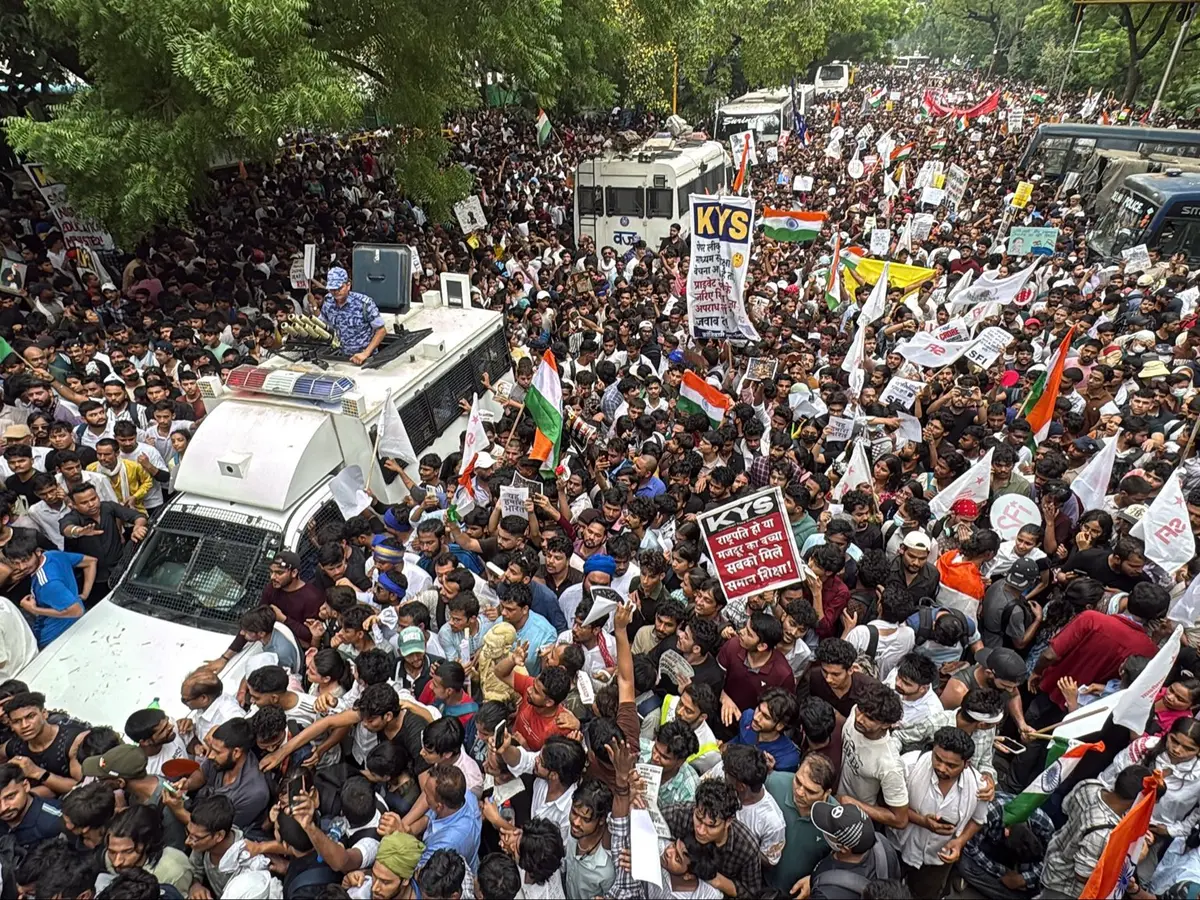
In India, the right to protest is not explicitly mentioned in the Constitution but is derived from the right to freedom of speech and assembly under Article 19.
This right is not absolute and can be restricted by the government to maintain public order.
Protests must be peaceful and require police permission.
Authorities can impose prohibitory orders under Section 144 of the CrPC if there is an immediate threat to public safety.
Jantar Mantar in New Delhi is a designated protest zone, but protests there must also follow specific regulations.

The right to protest in India is derived from Article 19 of the Constitution, which guarantees freedom of speech and assembly.
Protests must be peaceful and require police permission to ensure public order and safety.
Authorities can impose prohibitory orders under Section 144 of the CrPC to prevent imminent danger.
Jantar Mantar in New Delhi is a designated protest zone, but protests there must follow specific regulations.
Protesters and the government have differing views on the balance between protest rights and public order.
- Who
- Citizens of India, particularly members of the Cockroach Janta Party (CJP)
- What
- Protests and legal restrictions on protesting in India
- When
- After the NEET UG paper leak in May
- Where
- Jantar Mantar, New Delhi
- Why
- To demand the resignation of the Union Education Minister and greater accountability from the government
Protesters' Rights
Government Restrictions
Right to Protest
Protesters' Rights
Protesters argue that the right to peaceful protest is essential for democracy and should be protected under Article 19 of the Indian Constitution.
Government Restrictions
The government maintains that while protests are allowed, they must be regulated to maintain public order and prevent disruption.
Police Permission
Protesters' Rights
Protesters believe that requiring police permission for protests is an unnecessary restriction on their fundamental rights.
Government Restrictions
Authorities argue that police permission is necessary to prevent chaos, ensure public safety, and manage crowd control.
Prohibitory Orders
Protesters' Rights
Protesters view prohibitory orders as a tool to suppress dissent and limit their right to protest.
Government Restrictions
The government justifies prohibitory orders as a necessary measure to prevent imminent danger and maintain public order.
- Constitutional Basis
- Article 19(1)(a) and 19(1)(b) of the Indian Constitution
- Restrictions
- Article 19(2) and 19(3)
- Prohibitory Orders
- Section 144 of the Code of Criminal Procedure (CrPC)
- Designated Protest Zone
- Jantar Mantar, New Delhi
- Permission Required
- No Objection Certificate (NOC) or formal permit from District Magistrate or Commissioner of Police