Archive · 9 Nov 2025
Moscow Call to Dissolve Bihar Assembly Led to Nitish Kumar's CM Stint
Imagine a big competition in Bihar, India, to choose a leader for the state.
After the first round of voting in 2005, no single team had enough people to be the leader.
The person in charge of the state, the Governor, told the President that it was hard to pick a leader and suggested that everyone should compete again.
The main leaders in Delhi agreed and decided to cancel the results and have a new vote.
But later, the country's highest court said this decision was wrong.
So, they had another election.
This time, the team led by Nitish Kumar, with his friends from the BJP party, won enough votes to be the leaders.
This is how Nitish Kumar became the Chief Minister of Bihar for a long time.

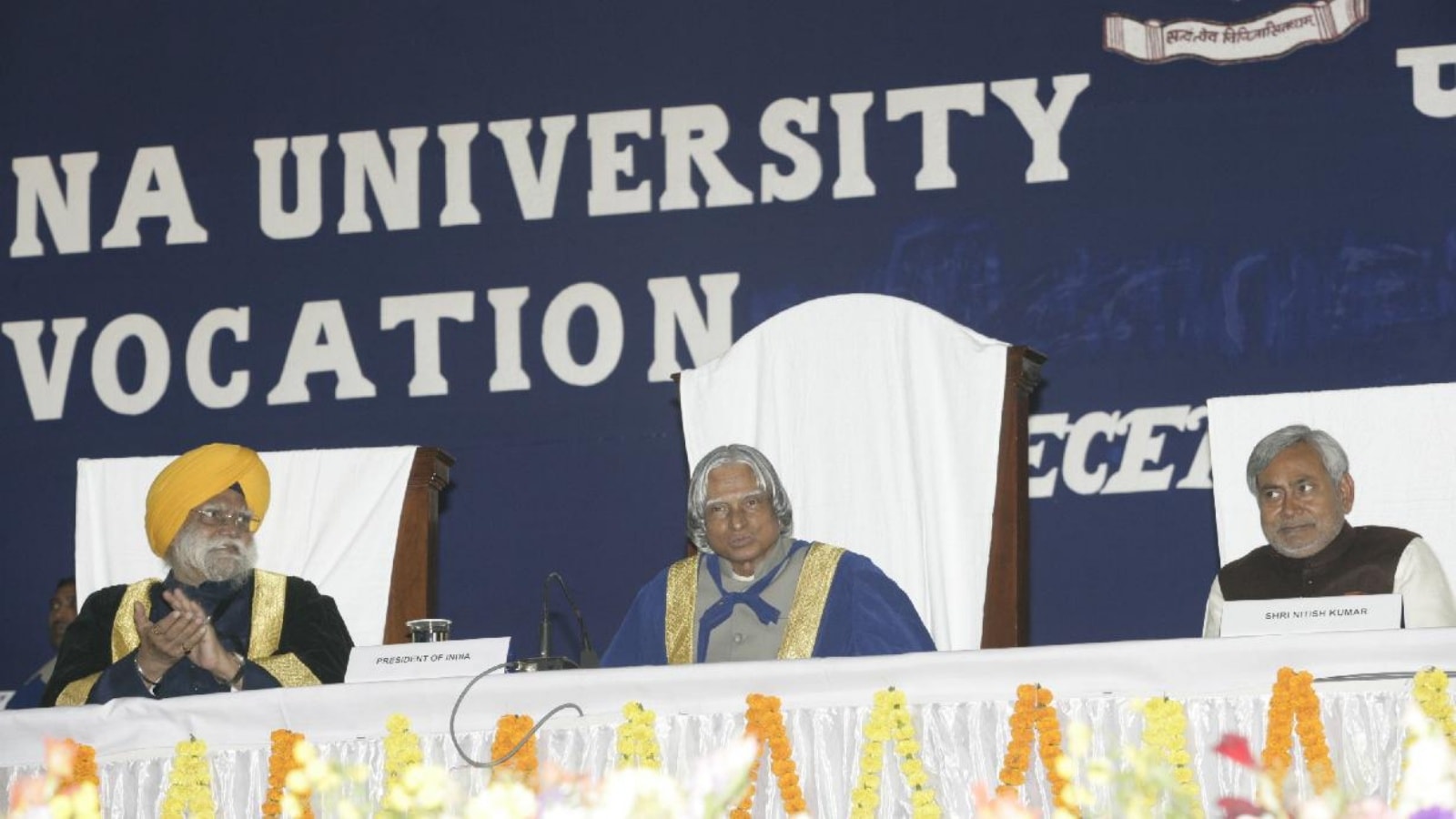
A phone call from Prime Minister Manmohan Singh to President APJ Abdul Kalam in Moscow on May 22, 2005, conveyed the Union Cabinet's decision to recommend the dissolution of the Bihar Legislative Assembly.
In the February 2005 Bihar elections, no single political alliance secured a majority, leading to speculation and attempts to form a government.
Governor Buta Singh sent multiple reports to the President, ultimately recommending the dissolution of the assembly due to the inconclusive mandate and concerns over legislative maneuvering.
The Supreme Court later declared the President's dissolution of the Bihar Assembly unconstitutional, approximately ten days before the second round of polls.
Following fresh elections in October 2005, the NDA alliance, with Nitish Kumar as their Chief Ministerial candidate, secured a majority, leading to his swearing-in as Chief Minister in November 2005.
- Who
- Nitish Kumar (Janata Dal (United)), APJ Abdul Kalam (President of India), Manmohan Singh (Prime Minister of India), Buta Singh (Governor of Bihar), Lalu Prasad Yadav and Rabri Devi (RJD leaders), Arun Jaitley (BJP leader).
- What
- The events leading to Nitish Kumar's first full tenure as Chief Minister of Bihar, involving an inconclusive election, recommendations for dissolution of the assembly, and a subsequent Supreme Court ruling.
- When
- The critical decisions occurred around May 2005, with elections in February and October 2005, and Kumar's swearing-in in November 2005. His first brief tenure was in 2000.
- Where
- Bihar, India (specifically the Bihar Legislative Assembly and Patna).
- Why
- An inconclusive mandate after the February 2005 Bihar elections, coupled with Governor Buta Singh's reports indicating an inability to form a stable government and concerns about horse-trading, led the Union Cabinet to recommend dissolving the assembly. This decision was later deemed unconstitutional by the Supreme Court, paving the way for fresh elections where the NDA secured a majority, allowing Nitish Kumar to become Chief Minister.
NDA Alliance (JD(U) & BJP)
Governor Buta Singh & Union Cabinet
Government Formation After 2005 Elections
NDA Alliance (JD(U) & BJP)
The NDA coalition believed they could form a government, especially after securing support from some LJP MLAs and considering potential splits in the Congress. They emphasized good governance and blamed the previous RJD rule for law and order issues.
Governor Buta Singh & Union Cabinet
Governor Buta Singh, after multiple reports, recommended dissolving the Assembly due to the inability of any alliance to secure a clear majority and concerns about 'distorting the verdict of the people' if MLAs switched parties to form a government.
Dissolution of Bihar Assembly
NDA Alliance (JD(U) & BJP)
NDA leaders protested the President's decision to dissolve the Assembly, arguing that 22 LJP MLAs intended to merge with JD(U) due to ideological differences and that their leader's refusal to support an anti-RJD government was contrary to their party's stance. They took the matter to Parliament and the Supreme Court.
Governor Buta Singh & Union Cabinet
The Union Cabinet recommended, and President Kalam accepted, the dissolution of the newly elected Bihar Legislative Assembly and imposition of President's rule, based on the Governor's reports indicating a hung assembly and potential manipulation of legislative support.
- Nitish Kumar's First Full CM Tenure Start
- November 2005
- Previous CM Stint
- One week in 2000
- Key Political Alliance
- Janata Dal (United) and Bharatiya Janata Party (NDA)
- Major Election Opponent
- Rashtriya Janata Dal (RJD)
- Key Figure in 2005 Election Strategy
- Arun Jaitley (BJP)
- Governor of Bihar in 2005
- Buta Singh
- Supreme Court Ruling on Dissolution
- Unconstitutional (October 2005)