

Archive · 31 May 2025
Meteorite Impact 3.26 Billion Years Ago Spurred Life
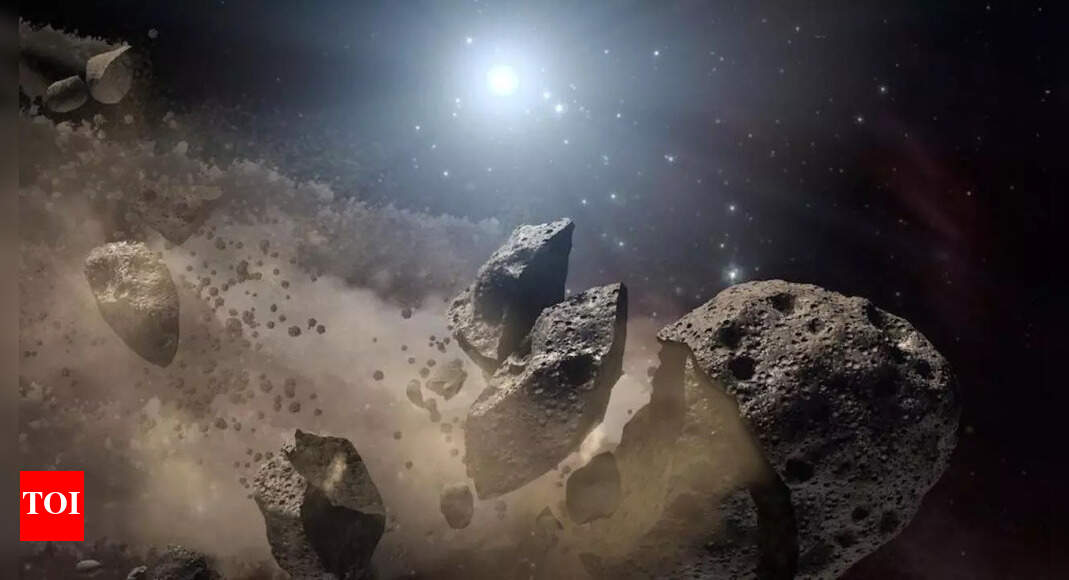
Imagine a giant space rock hitting Earth a long, long time ago!
Scientists now think this space rock, bigger than the one that killed the dinosaurs, might have actually helped life.
When it hit, it released nutrients, like a giant fertilizer bomb, especially phosphorus.
This was great for tiny bugs called microbes.
The impact also mixed up the water, bringing up more good stuff for the microbes to eat.
Instead of wiping out life, this space rock impact may have given it a boost, allowing it to flourish in a new way.

A meteorite impact 3.26 billion years ago may have boosted early life on Earth.
The meteorite was significantly larger than the one that wiped out the dinosaurs.
The impact released phosphorus, an essential nutrient for microorganisms.
It created water turbulence, mixing nutrient-rich deep-sea water with surface layers.
Microbial life in the Paleoarchean Era quickly recovered after the impact.
- Who
- Researchers led by Nadja Drabon studied the event.
- What
- A large meteorite impacted Earth.
- When
- 3.26 billion years ago
- Where
- The impact occurred on early Earth.
- Why
- The impact released nutrients and may have spurred the growth of microbial life.
- Meteorite Size
- 50 to 200 times larger than the dinosaur-killing meteorite
- Impact Era
- Paleoarchean Era
- Key Nutrient Released
- Phosphorus
- Type of Meteorite
- Carbonaceous chondrite
- Location of Evidence
- South African Barberton Greenstone Belt