

Archive · 31 Jul 2026
CJP Protest Sparks Supreme Court Contempt Debate
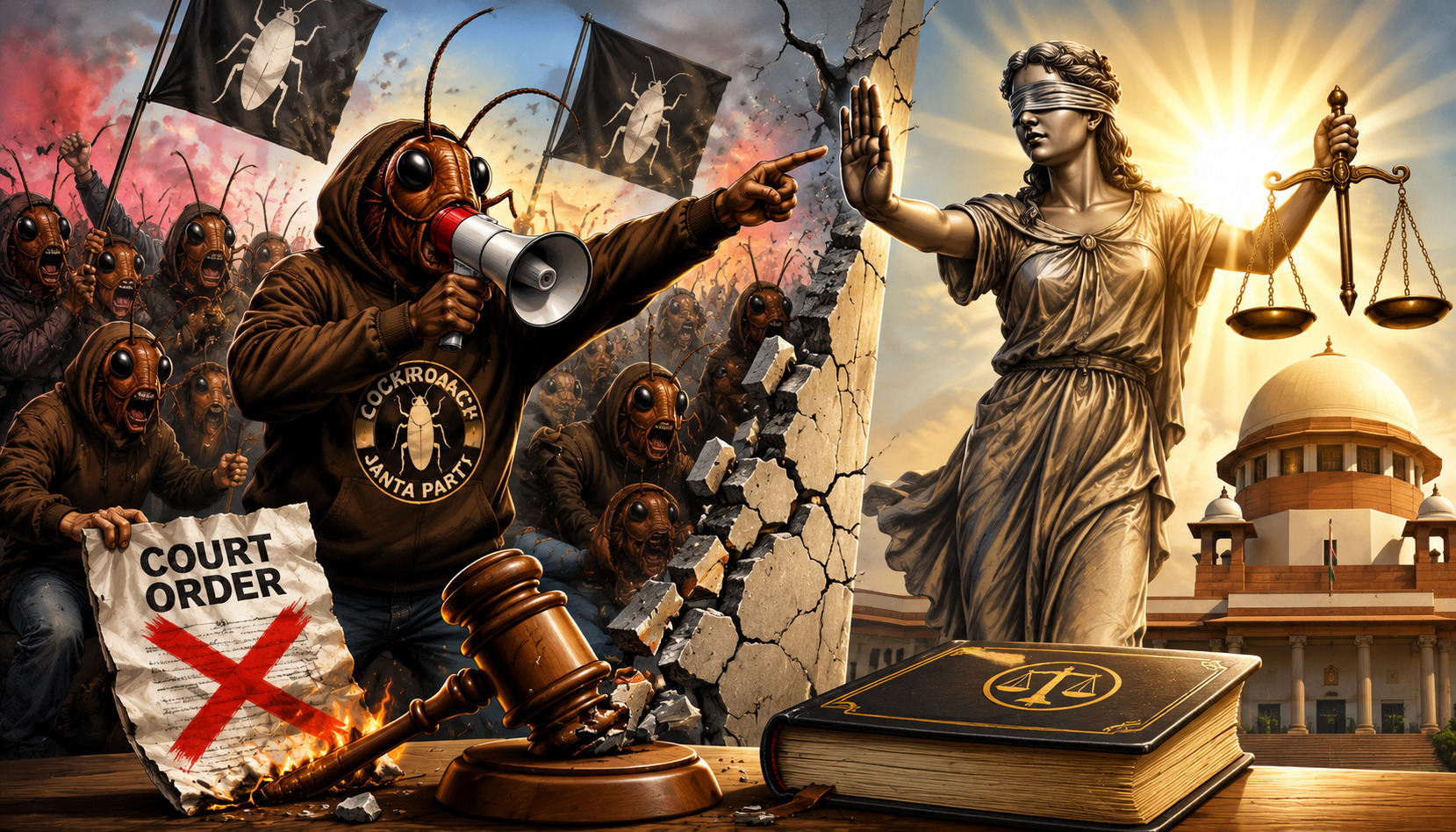
In July 2026, a group called the Cockroach Janta Party (CJP) protested because a medical exam paper was leaked and some students died by suicide.
They marched to Parliament, and police used tear gas and batons.
The Supreme Court gave an order that the police cases should stay.
CJP leaders said the Court was unfair and even accused the Home Minister of ordering the police.
The Court said its orders must be obeyed.
The CJP leaders’ statements could be seen as contempt of court, which is a crime.
The case shows how protests, the government, and the courts can clash over law and fairness.

CJP protests over NEET paper leak led to a Supreme Court interim order.
Supreme Court allowed existing FIRs and investigations to continue.
CJP spokesperson Saurav Das called the order ‘wholly unacceptable’ and warned of new protests.
Founder Abhijeet Dipke accused the Home Minister of ordering police force and questioned the judiciary’s integrity.
The controversy raises questions about contempt of court and the limits of criticizing judicial orders.
- Who
- CJP leaders Abhijeet Dipke and Saurav Das, Supreme Court of India, Union Home Minister Amit Shah
- What
- Protests over NEET paper leak, Supreme Court interim order, CJP criticism of the Court, allegations of police orders
- When
- Late July 2026, including July 20, 2026
- Where
- Jantar Mantar, Parliament, Chhatrapati Sambhajinagar
- Why
- NEET paper leak scandal, government promise to compensate families, alleged police crackdown
- Event
- CJP protests over NEET paper leak
- Date
- Late July 2026
- Location
- Jantar Mantar, Parliament, Chhatrapati Sambhajinagar
- Key Figures
- Abhijeet Dipke, Saurav Das, Amit Shah
- Legal Issue
- Supreme Court interim order and contempt of court