

Archive · 4 Nov 2025
Student Film Explores Human-Tiger Coexistence in Pench Reserve
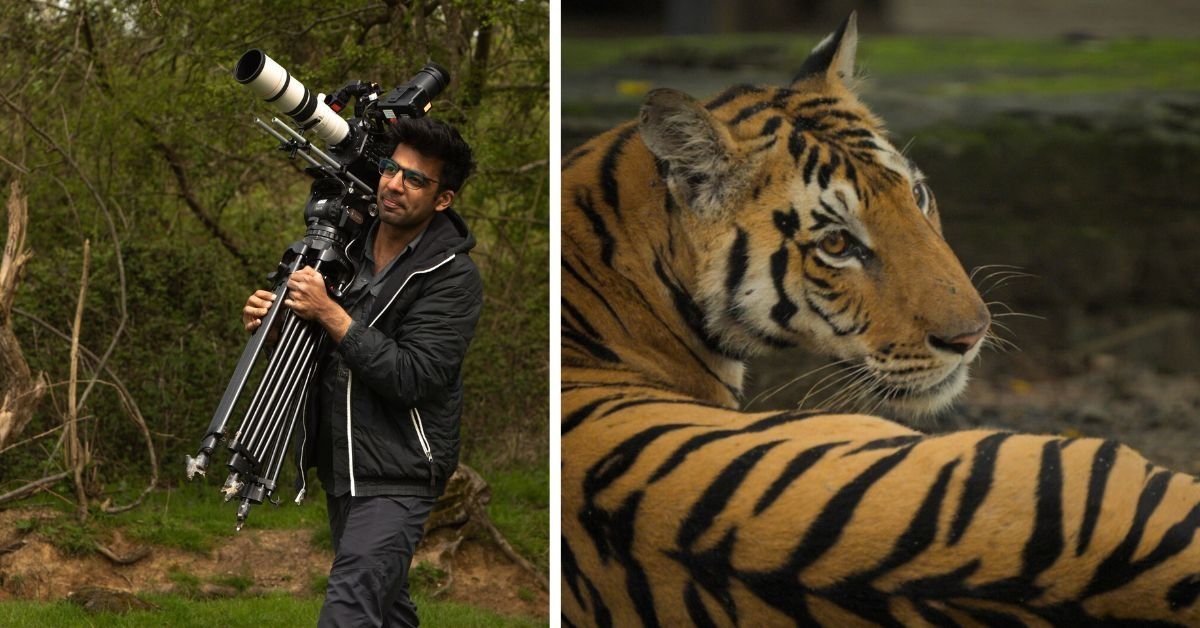
Imagine a beautiful forest called Pench, which is home to tigers and many other animals, just like in 'The Jungle Book'.
Many people live in villages right next to this forest.
They collect special flowers called mahua to make a living.
However, sometimes tigers come too close to the villages, and sadly, people and their pets get hurt or even die.
This makes the villagers very scared of tigers.
A young filmmaker named Tushar went to live with these villagers for many days.
He wanted to understand how people and tigers can live together, even though it's dangerous.
Some people are angry because they lost family or animals to tigers.
Others find jobs because of the tigers, like driving tourists around.
The forest department is trying to help by teaching villagers how to be safe and even offering them new homes.
But leaving their old homes is hard because that's where they get their food.
Tushar's movie shows that it's a complicated problem with no easy answers.

Student filmmaker Tushar Bhojwani documented the lives of villagers near Pench Tiger Reserve for his film 'Roar of the Tiger'.
The film explores the challenges and realities of human-tiger coexistence, particularly for communities reliant on forest resources like mahua flowers.
Villagers face daily risks from tiger attacks, leading to fear and trauma, yet many continue to live and work in these areas.
Conservation efforts include awareness campaigns like 'Sayane Mowgli ki Cycle' and symbolic gestures like 'bagh-rakhi' to promote respect for tigers.
The forest department offers relocation options to villagers, balancing safety and access to facilities against potential loss of livelihood.
- Who
- Student filmmaker Tushar Bhojwani and fringe communities living near Pench Tiger Reserve
- What
- Filming a documentary to understand the dynamics of human-wildlife coexistence, specifically between villagers and tigers.
- When
- During a 40-day stay by the filmmaker, with references to recent incidents (2022-2024).
- Where
- Pench Tiger Reserve, bordering villages in Madhya Pradesh and Maharashtra, India.
- Why
- To explore the complex relationship between humans and tigers, driven by factors such as livelihood, fear, and conservation efforts.
Villagers' Perspective
Forest Department/Filmmaker's Perspective
Livelihood vs. Safety
Villagers' Perspective
Villagers depend on the forest for livelihoods like collecting mahua flowers, even with the risk of tiger attacks. Relocating means sacrificing income, especially for those relying on tourism.
Forest Department/Filmmaker's Perspective
The forest department acknowledges the villagers' deep connection to the land but offers relocation for better access to education and health facilities, aiming to reduce conflict.
Fear and Attachment
Villagers' Perspective
Some villagers experience intense fear and trauma from tiger attacks, impacting their ability to be near the forest. They have lived in these areas for generations and feel a connection to the land and worship forest deities.
Forest Department/Filmmaker's Perspective
Efforts are made to foster understanding and respect for tigers through initiatives like 'Sayane Mowgli ki Cycle' and 'bagh-rakhi', aiming to shift attitudes from fear to conservation and co-existence.
- Location
- Pench Tiger Reserve, Madhya Pradesh and Maharashtra, India
- Filmmaker
- Tushar Bhojwani
- Film Title
- Roar of the Tiger
- Film Award Nomination
- Semi-finalist for Student Academy Awards
- Primary Livelihood
- Collection of mahua flowers
- Human-Tiger Conflict Concern
- Rising incidents in buffer zones and Maharashtra belt
- Conservation Initiatives
- 'Sayane Mowgli ki Cycle', 'bagh-rakhi'