

Archive · 24 Jul 2026
NSE's Social Stock Exchange Boosts Indian Non-Profits
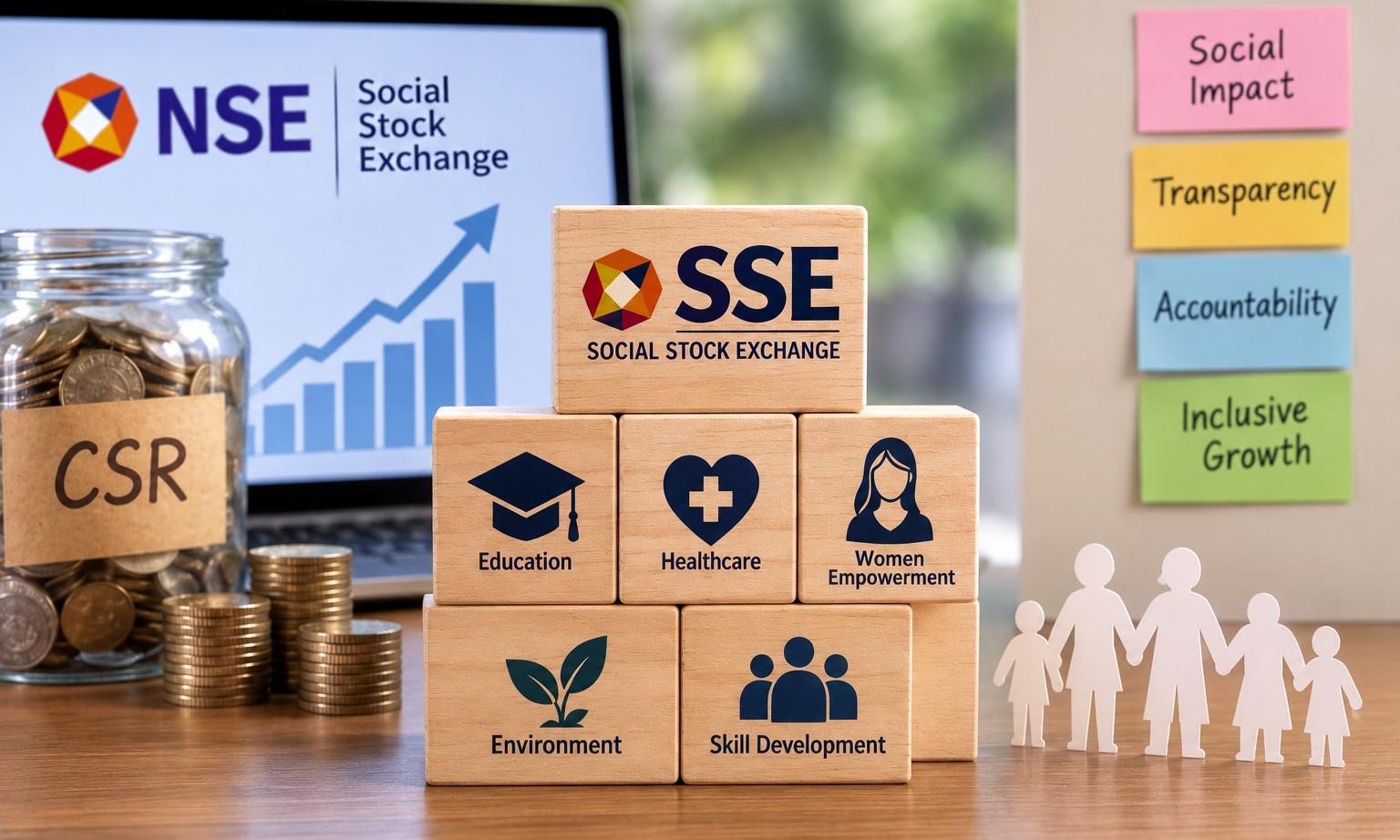
The National Stock Exchange (NSE) and BSE have launched a Social Stock Exchange (SSE) to help non-profits raise money for social causes.
It's like an IPO but for social impact.
NGOs like Unnati Foundation and Pinkishe Foundation are using SSE to gain visibility and credibility.
SSE requires NGOs to undergo rigorous audits and public disclosure, building trust among donors.
Pinkishe Foundation aims to raise ₹2.2 crore for a menstrual health program.
The government allows companies to allocate up to 10% of their CSR spending through SSE, unlocking a potential ₹3,000 crore opportunity.
However, many NGOs find the listing process challenging and awareness about SSE is limited.
Both NGOs and the government believe that SSE can create a new culture of transparent social giving if more donors and NGOs embrace it.

The Social Stock Exchange (SSE) is a regulated platform launched by NSE and BSE to help NGOs raise funds for social initiatives.
Early adopters like Unnati Foundation and Pinkishe Foundation have gained visibility and credibility through SSE.
SSE requires NGOs to undergo mandatory audits, public disclosure of governance details, and independent impact assessments.
Pinkishe Foundation aims to raise ₹2.2 crore through SSE for its menstrual health program benefiting 20,000 girls and 5,000 women.
The government allows companies to allocate up to 10% of their CSR spending through SSE, unlocking a potential ₹3,000 crore opportunity.
- Who
- National Stock Exchange (NSE) and BSE, NGOs like Unnati Foundation and Pinkishe Foundation
- What
- Launch of the Social Stock Exchange (SSE) to help social enterprises raise funds for social initiatives
- When
- SSE launched, with Pinkishe Foundation preparing for listing in August 2026
- Where
- India
- Why
- To direct capital markets towards social impact, improve transparency in non-profit finances, and build donor confidence
NGOs Embracing SSE
NGOs Resisting SSE
Adoption of SSE
NGOs Embracing SSE
NGOs like Unnati Foundation and Pinkishe Foundation are embracing the Social Stock Exchange (SSE) to raise funds for social causes, gaining visibility and credibility.
NGOs Resisting SSE
Many NGOs shy away from SSE due to the rigorous listing process, intensive governance, impact measurement, and documentation required.
Trust and Transparency
NGOs Embracing SSE
SSE builds trust through mandatory audits, public disclosure of governance details, and independent impact assessments, making it attractive for NGOs.
NGOs Resisting SSE
Some NGOs may find the stringent transparency and accountability measures burdensome and prefer traditional fundraising methods.
Donor Awareness
NGOs Embracing SSE
NGOs believe that SSE can attract new philanthropists and donors, creating a culture of transparent social giving.
NGOs Resisting SSE
Limited awareness about SSE among donors and non-profits hinders its mass adoption and potential impact.
- Platform Launch
- Launched by NSE and BSE
- Purpose
- Helps social enterprises raise money for social initiatives
- Early Adopters
- Unnati Foundation, Pinkishe Foundation
- Pinkishe's Fundraising Goal
- ₹2.2 crore for menstrual health programme
- CSR Allocation
- Up to 10% of CSR spending can be allocated through SSE
- Potential CSR Opportunity
- ₹3,000 crore for SSE ecosystem
- Listing Challenges
- Intensive governance, impact measurement, and documentation
- Donor Awareness
- Limited among donors and non-profits