

Archive · 26 Jan 2026
Ocean acidity damages sharks' teeth, study finds
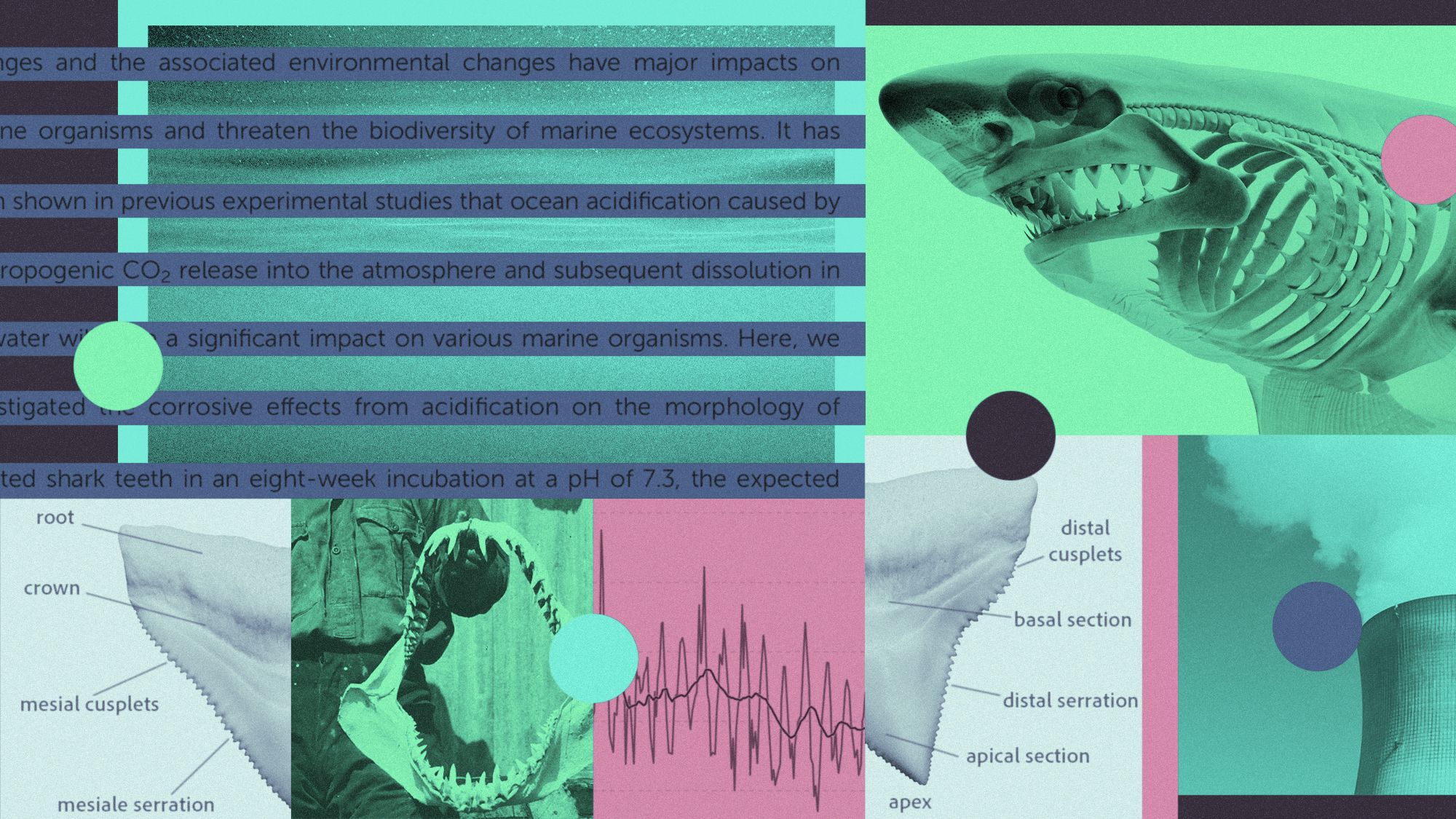
Scientists found that as the ocean gets more acidic, shark teeth become weaker and more damaged.
They did an experiment where they put shark teeth in water with different acidity levels.
The teeth in more acidic water got cracks, holes, and other damage.
This could make it harder for sharks to hunt and eat.
Some experts think sharks might be able to replace their teeth fast enough, but others are worried about the long-term effects on sharks and other ocean animals.
The study shows that even big predators like sharks can be affected by changes in the ocean's chemistry.

Ocean acidification damages shark teeth, causing cracks and holes.
Study simulated future ocean pH levels (7.3) on blacktip reef shark teeth.
Damaged teeth could impair sharks' ability to hunt and eat.
Ocean acidification adds to other threats like overfishing and prey shortages.
Experts have mixed views on whether sharks can adapt to the damage.
- Who
- German scientists led by Maximilian Baum
- What
- Study on ocean acidity's effects on shark teeth
- When
- Study published last year, simulating future ocean conditions
- Where
- Oceans worldwide, study conducted in controlled water tanks
- Why
- To understand the impact of ocean acidification on marine predators
- Study Focus
- Effects of ocean acidity on shark teeth
- Current Ocean pH
- 8.1
- Expected Future pH
- 7.3 by 2300
- Study Duration
- 8 weeks
- Shark Species Studied
- Blacktip reef shark
- Lead Author
- Maximilian Baum
- Journal
- Frontiers in Marine Science