10 months ago
Russian Commanders Accused of Systematically Executing and Torturing Soldiers in Ukraine
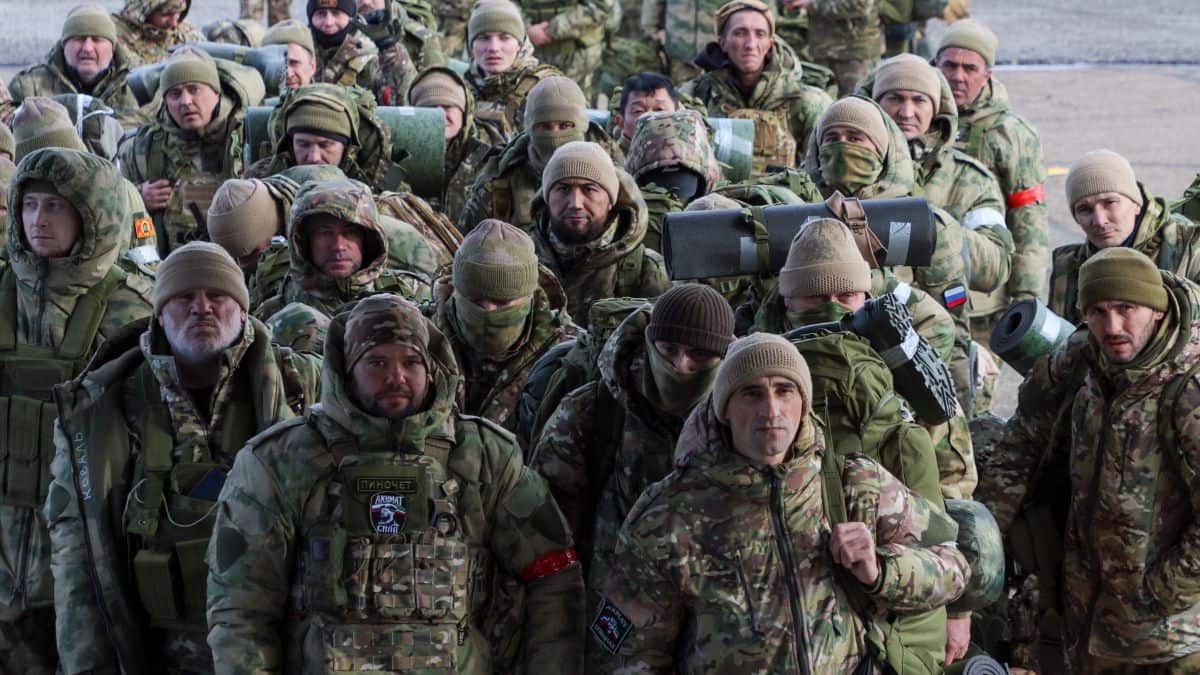
Imagine a school where instead of detention, some teachers would secretly make students disappear or send them on dangerous tasks that they wouldn't survive.
That's kind of what an investigation found is happening in the Russian army fighting in Ukraine.
Some commanders are accused of killing their own soldiers if they don't listen or are scared.
They do this in many ways, like shooting them, sending them on dangerous missions without proper gear, or even using drones to make it look like the enemy did it.
They also try to hide these deaths by saying the soldiers died in normal battles or went missing.
This investigation says it's happening a lot, and it's hard for families to get answers or compensation.
The army's leaders deny these bad things are happening.

An investigation by independent Russian outlet Verstka alleges Russian commanders are systematically executing, torturing, and sending soldiers on suicide missions.
The practice, known as 'zeroing out,' targets soldiers accused of insubordination, cowardice, or intoxication.
Methods include direct execution, forcing unarmed soldiers into 'meat assaults,' and using drones to kill own troops, with over 150 deaths verified.
Killings are allegedly covered up by misreporting deaths as combat casualties or desertion, denying families compensation.
Despite thousands of complaints, very few officers implicated have faced prosecution, with the Kremlin denying allegations and state media remaining silent.
- Who
- Russian commanders and servicemen
- What
- Allegedly engaged in systemic torture, execution, and deliberate elimination of their own soldiers who disobey orders or show cowardice
- Where
- Within Russian military units operating in Ukraine
- When
- The practice evolved from isolated cases in early 2022 to a widespread, institutionalized form of punishment in the current year
- Why
- To enforce discipline, punish insubordination, cowardice, or intoxication, and in some cases, for financial gain through extortion or covering up other crimes
Allegations of Internal Abuse
Kremlin/Official Stance
Systemic Executions and Torture
Allegations of Internal Abuse
An investigation by Verstka presents evidence of commanders systematically executing, torturing, and sending soldiers on suicide missions, with over 150 verified deaths.
Kremlin/Official Stance
The Kremlin consistently denies allegations of widespread abuse or indiscipline within its forces, dismissing such reports as 'Western propaganda.'
Prosecution of Perpetrators
Allegations of Internal Abuse
Verstka found that despite tens of thousands of complaints, only a handful of criminal cases have been opened and convictions are rare, with senior officers enjoying impunity.
Kremlin/Official Stance
No senior Russian officials have commented on the specific findings, and state-controlled media does not report on internal military violence, while soldiers' families face risks for speaking out.
Scale of the Problem
Allegations of Internal Abuse
The investigation suggests a widespread and institutionalized form of punishment, with practices embedded in regular army formations, potentially exacerbated by a 'criminalized' mindset from new recruits.
Kremlin/Official Stance
The Kremlin attributes similar misconduct to the Ukrainian army and has not publicly acknowledged the scale of alleged abuses within its own ranks.
Key facts
- Investigation Outlet
- Verstka (independent Russian outlet)
- Alleged Number of Executed/Eliminated Soldiers
- At least 150 verified deaths, with the real figure believed to be much higher
- Accused Perpetrators
- 101 Russian servicemen identified, including platoon and battalion commanders
- Methods of Execution
- Point-blank shootings, forced suicide missions, drone strikes, confinement in 'disciplinary pits'
- Cover-up Tactics
- Bodies buried in forests/rivers, deaths reported as 'killed in action' or 'missing', manipulation of casualty reports
- Legal Ramifications
- Tens of thousands of complaints filed; only 10 criminal cases opened, five officers convicted since full-scale invasion
Quotes
Unseen voice from above
An unidentified individual giving orders during a fight in a 'disciplinary pit'.
“Commander Kama basically said whoever beats the other one to death gets out of the pit.”
 firstpost.com
“Finish him off already, what are you waiting for?”
firstpost.com
A source within Russia’s Main Military Prosecutor’s Office
An unnamed source providing insight into the internal workings of the Russian military prosecutor's office.
“If we open this, it could harm operations. That means these officers have total impunity.”
firstpost.com
Yuri
A serviceman from the 114th Separate Guards Motor Rifle Brigade who experienced detention in 'disciplinary pits'.
“Some prisoners die right there in the pit, while survivors are sometimes forced to kill one another.”
firstpost.com
Alexey
A mobilised soldier who recounted executions for refusing suicide missions.
“You’re not actually going to reach those positions — they’ll just tear you apart with drones. That’s why people refuse.”
firstpost.com
Vladislav Berlyakov
A serviceman from the 6th Separate Guards Motor Rifle Brigade who witnessed the cover-up of a comrade's execution.
“Later that evening, I saw them put an old bulletproof vest and helmet on ‘Odessa,’ then place two grenades under him and detonate them. After that, to conceal the signs of beating that could be detected during a medical examination, they left the body out in the heat for several days until it began to decompose. Then they sent it ‘back home’ labelled ‘killed in action.’”
firstpost.com
A mobilised soldier
An unnamed soldier expressing fears about the return of battle-hardened troops and potential future consequences.
“When the guys come back and realize they won’t be sent to storm positions again, prison won’t scare them anymore. Many officers will have to hide — and those who return will be drinking.”
firstpost.com