Archive · 10 Nov 2025
India's Himalayas Face Climate Change Disaster Risk, Report Warns

Imagine the giant mountains called the Himalayas are getting sick.
Their ice is melting really fast, making big lakes that could burst and cause floods.
Also, when it rains a lot or the ground shakes, rocks and mud slide down, hurting villages and roads.
This is happening because the Earth is getting warmer, and people are building houses and roads in dangerous places without thinking.
A new report says India needs a strong plan to protect these mountains and the people living there.
It suggests using special warning systems, like alarms for floods, so people can get to safety.
The report also says governments need to work together, stop building in dangerous spots, and make sure new buildings are strong.
It suggests creating a special fund to pay for all these safety measures, just like big global meetings are trying to raise money to help countries deal with climate change.

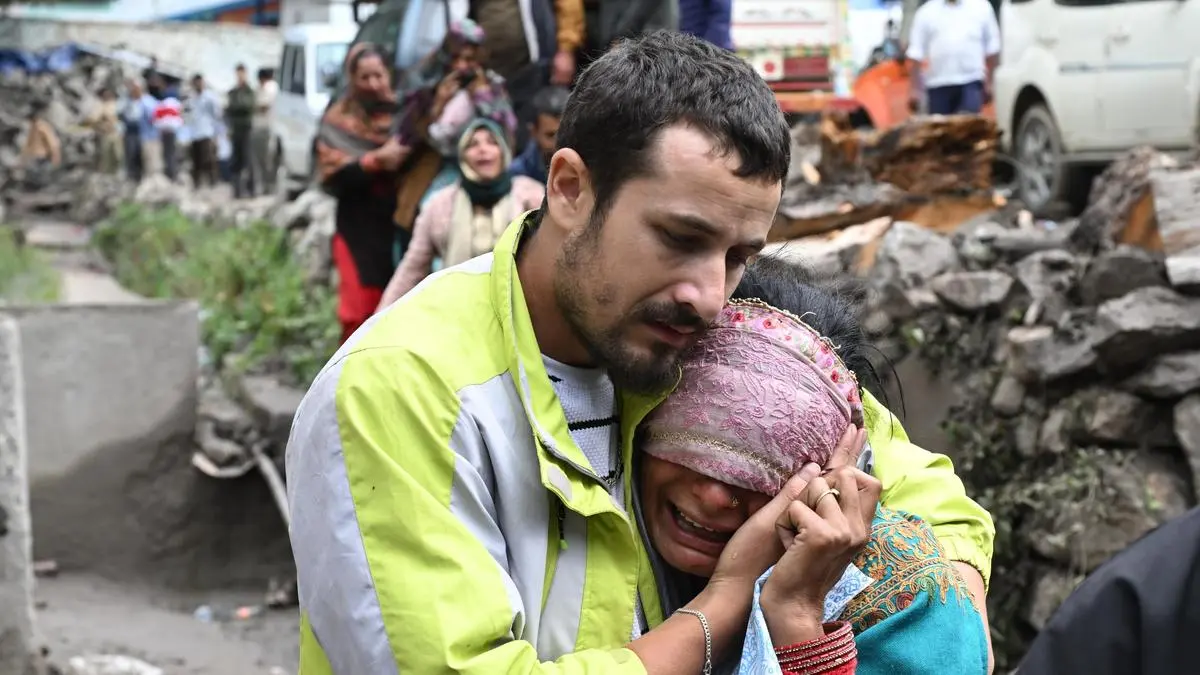
A report highlights that the Himalayas are facing unprecedented human-induced disaster risks due to climate change and poorly planned infrastructure.
Himalayan glaciers are retreating rapidly, creating unstable lakes that pose a significant risk of Glacial Lake Outburst Floods (GLOFs).
Poorly planned infrastructure and unregulated construction in high-risk zones amplify hazards like landslides and flash floods in the region.
The report recommends an action plan based on international models to enhance resilience through multi-hazard early warning systems and scientific zoning.
Establishing a 'Himalayan Risk Council' and a 'Himalayan Resilience Fund' are proposed to improve governance, coordination, and funding for disaster mitigation.
- Who
- A research consultancy Climate Trends and authors of its report on the Himalayas.
- What
- A report highlighting unprecedented human-induced disaster risks in the Himalayas due to climate change and poorly planned infrastructure, recommending an action plan for mitigation and resilience.
- When
- November 10, 2025 (publication date mentioned, report released last month)
- Where
- The Himalayan region of India, with specific mentions of Uttarakhand, Kashmir, and Sikkim.
- Why
- To address the increasing fragility of the Himalayas, the rapid retreat of glaciers, formation of unstable lakes, and the amplification of hazards like GLOFs, flash floods, and landslides caused by climate change and human activities.
Report Recommendations
Global Climate Action
Focus of Mitigation Efforts
Report Recommendations
The report 'Enhancing multi-hazard early warning and resilient settlement in the Himalayan region' emphasizes the urgent need for a specific action plan to protect the Himalayas, its glaciers, biodiversity, and local communities from human-induced disaster risks amplified by climate change.
Global Climate Action
The 30th Conference of Parties (COP 30) is negotiating global ways to tackle the impact of climate change, highlighting the need for international cooperation to address climate-related disasters.
Infrastructure and Development
Report Recommendations
The report identifies poorly planned infrastructure and unregulated construction in high-risk zones, such as along rivers and on steep slopes, as factors amplifying hazards like landslides and floods in the Himalayas.
Global Climate Action
While not explicitly detailed in this article, global climate change mitigation efforts at COP 30 often involve discussions on sustainable development and infrastructure that minimize carbon footprints and environmental impact.
- Report Title
- Enhancing multi-hazard early warning and resilient settlement in the Himalayan region
- Report Authors
- Dr Palak Balyan, Alok Kumar, Sayalee Gulhane
- Key Issues Highlighted
- Himalayan glaciers retreating, unstable moraine-dammed lakes, Glacial Lake Outburst Floods (GLOFs), flash floods, cloudbursts, landslides, climate change patterns, poorly planned infrastructure, unregulated construction, settlement expansion in high-risk zones.
- International Models Referenced
- Japan, Switzerland, and Norway
- Recommended Coordinating Body
- Himalayan Risk Council
- Recommended Funding Mechanism
- Himalayan Resilience Fund
- Related Global Event
- 30th Conference of Parties (COP 30)