

Archive · 18 Jul 2026
India's Gig Workforce May Triple by 2030
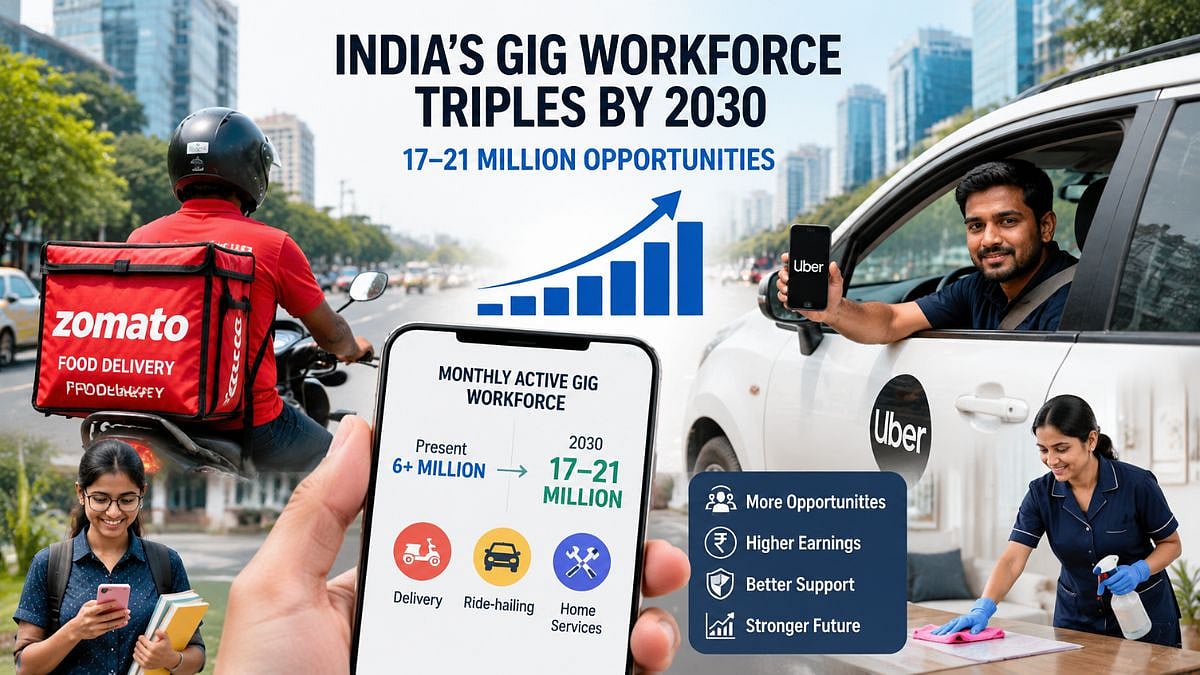
India's gig workforce, which includes people who work through digital platforms like delivery and ride-hailing services, is expected to grow a lot by 2030.
Right now, there are over 6 million people working in gig jobs, but this number could reach between 17 and 21 million in the next few years.
Many people find gig work to be a good way to earn money, especially because it is flexible and can help them support their families or pay for school.
For example, a cook named Manish works as a cook during the day and drives a taxi in the evenings to earn extra money.
Students like Honnur, a nursing student, also work gig jobs to pay for their education.
The report says that gig work is not just about flexible jobs anymore; it is becoming an important way for people to earn a living.
However, some people worry that gig work does not provide job security or benefits like health insurance.
The report also mentions that more women are joining the gig economy, which is a good sign for gender diversity.
Overall, gig work is changing the way people in India think about jobs and careers.

India's gig workforce may triple to 17-21 million by 2030.
Gig work offers flexible, high-earning opportunities and serves as a bridge to long-term careers.
More than 30% of gig workers by 2030 will be first-time entrants into the workforce.
Women, particularly those aged 18-35, are increasingly joining the gig economy.
Platform-led initiatives provide welfare support, but greater awareness and utilization of welfare schemes are needed.
- Who
- India's gig internet workforce, including first-time entrants, students, and women
- What
- Projected growth of gig workforce to 17-21 million by 2030
- When
- By 2030
- Where
- India
- Why
- To provide flexible, high-earning opportunities and bridge to long-term careers
Pro-Gig Economy Advocates
Critics of Gig Economy
Economic Benefits
Pro-Gig Economy Advocates
Gig work provides flexible, high-earning opportunities and serves as a bridge to long-term careers.
Critics of Gig Economy
Gig work lacks job security, benefits, and stable income, potentially exploiting workers.
Workforce Participation
Pro-Gig Economy Advocates
Gig platforms lower entry barriers, helping first-time entrants and supplementing incomes.
Critics of Gig Economy
Gig work may not provide sustainable livelihoods and could lead to overwork and burnout.
- Current Gig Workforce
- More than 6 million
- Projected Gig Workforce by 2030
- 17-21 million
- Average Earnings
- Up to 2.5 times formal/informal occupations
- First-Time Entrants by 2030
- More than 30%
- Women in Gig Economy
- Increasing, particularly in 18-35 age group
- Welfare Support
- Platform-led initiatives include accident insurance and skill development