

Archive · 8 Sep 2026
Delhi Students Face Risks Crossing Major Roads Alone
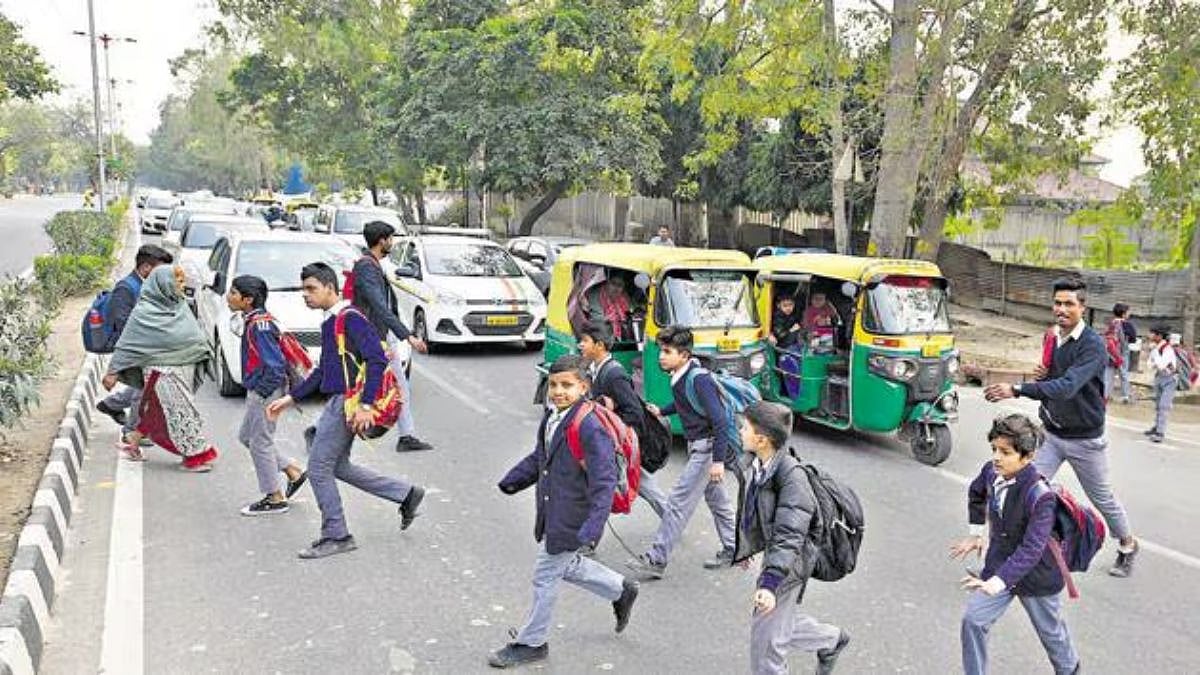
Researchers asked 4,789 students in Delhi how they travel to and from school.
The students were between 10 and 19 years old.
About two out of every three said they cross major roads without an adult.
Walking was the most common way to travel, especially for boys.
Students worried about crashes and vehicles driving too fast.
Some boys were especially concerned about robbery, while girls more often worried about harassment.
Almost 60% did not understand many common road signs.
Researchers said children need safer crossings, better lighting and calmer traffic.
They also recommended more interactive road-safety lessons.

A study of 4,789 students aged 10-19 at four Delhi public schools found that about two-thirds cross major roads alone on their way to school.
Walking was the most common travel mode, reported by 80% of boys and 49% of girls traveling from school to home.
Students reported concerns about crashes, speeding vehicles, robbery, harassment and other personal-safety risks during their commutes.
Nearly 60% of surveyed students had poor knowledge of commonly encountered road-safety signs.
Researchers called for safer infrastructure, stronger enforcement and interactive road-safety education rather than placing responsibility on adolescents alone.
- Who
- Researchers from The George Institute for Global Health, with support from the Indian Council of Medical Research, surveyed 4,789 Delhi students aged 10-19.
- What
- The study examined students’ school-travel methods, road-safety knowledge, protective practices and perceived commute risks.
- When
- The study was reported as published on September 7; the study year was not specified.
- Where
- Four Delhi public schools near high-crash road segments, or black spots.
- Why
- To understand adolescents’ school-commute risks and identify ways to make their journeys safer.
Individual Education and Behavior
Safer Roads and Public Protection
How to improve commute safety
Individual Education and Behavior
Students could benefit from stronger road-safety knowledge through simulations, peer education and scenario-based learning.
Safer Roads and Public Protection
Researchers said adolescents should not carry responsibility alone; safer pathways, lighting, traffic calming, protected crossings and enforcement are also needed.
Role of road-safety lessons
Individual Education and Behavior
Improving students’ recognition of road signs and decision-making could help address unsafe travel practices.
Safer Roads and Public Protection
Classroom instruction alone may be insufficient when children must navigate busy roads; the surrounding streets should be designed to protect them.
- Sample size
- 4,789 students aged 10-19 years
- Study setting
- Four Delhi public schools near high-crash road segments
- Independent crossings
- About two-thirds of students crossed major roads alone on the way to school
- Walking rates
- 80% of boys and 49% of girls walked from school to home
- Road-sign knowledge
- Nearly 60% had poor knowledge of commonly encountered road-safety signs
- Helmet use
- Among motorcycle pillion riders, 39% of boys and 46% of girls reported never wearing a helmet
- Publication
- The study was published in the peer-reviewed journal Injury Prevention
