Archive · 28 Sep 2026
Supreme Court Declines Stay on UPI Charges Above Rs 2,000
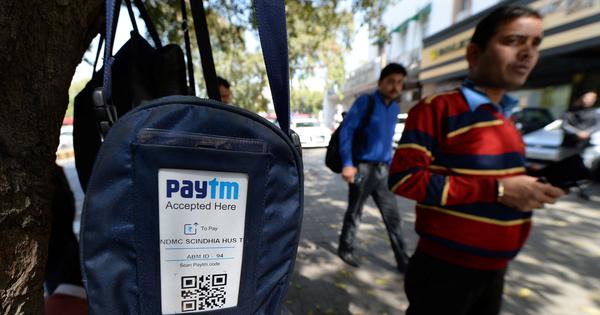
The Supreme Court is looking at a new charge connected to some UPI payments.
It did not stop the charge while it studies the case.
The charge applies to certain payments made to shops and other merchants when the amount is above Rs 2,000.
It is planned to start on October 15, 2026.
The rate is 0.4%, but it cannot be more than Rs 300 for very large payments.
The government says customers should not pay this charge directly.
It says the money will move between banks and payment companies to cover transaction costs.
Payments between people and smaller merchant payments will stay free.
The petitioner says the charge may hurt merchants and could be passed on to customers.

The Supreme Court refused to temporarily halt a 0.4% MDR on specified UPI person-to-merchant payments above Rs 2,000.
The charge is scheduled to begin on October 15, 2026, with a maximum of Rs 300 for transactions of Rs 75,000 or more.
The Centre, RBI and NPCI must respond within four weeks and explain the charge’s legal and executive basis.
The government says the MDR is a settlement charge between payment aggregators and banks, not a tax or government fee.
Person-to-person transfers and merchant payments up to Rs 2,000 will remain free, while the petitioner warns businesses could pass costs to consumers.
- Who
- The Supreme Court of India, the Centre, the Reserve Bank of India, the National Payments Corporation of India and advocate Anjan Datta’s PIL.
- What
- The court refused an interim stay on the planned Merchant Discount Rate for specified UPI person-to-merchant transactions above Rs 2,000 and sought responses from the respondents.
- When
- The order was issued on Monday, September 28; the MDR is scheduled to take effect on October 15, 2026.
- Where
- The proceedings took place before the Supreme Court of India and concern payments made through the UPI network.
- Why
- The PIL challenges the notifications and MDR framework, while the Centre says the charge is needed to cover electronic-payment settlement costs and support the UPI ecosystem.
Petitioner and Merchant Concerns
Centre and Payments Industry Position
Legal authority
Petitioner and Merchant Concerns
The petitioner questions whether the MDR has adequate statutory safeguards, transparency, consultation and a valid legal basis, and asks the court to suspend or quash the framework.
Centre and Payments Industry Position
The Centre says the charge is neither a tax nor a fee imposed by the government, but a settlement charge between payment aggregators and banks; it says the government receives no money.
Effect on consumers
Petitioner and Merchant Concerns
The petitioner argues that merchants may pass the additional cost to consumers and says the move could contribute to more cash or black-money transactions.
Centre and Payments Industry Position
The Centre says customers will not be charged directly, and the government has advised banks to ensure the MDR is not passed on to them.
Need for the charge
Petitioner and Merchant Concerns
The challenge questions the character of the charge and its impact on merchants, especially low-margin businesses and small enterprises.
Centre and Payments Industry Position
The Centre and NPCI say electronic payments involve costs and that MDR revenue will support infrastructure resilience, cybersecurity, fraud prevention, innovation and customer service.
- MDR rate
- 0.4% on specified UPI person-to-merchant transactions above Rs 2,000
- Effective date
- October 15, 2026
- Maximum charge
- Rs 300 for payments of Rs 75,000 or more
- Free transactions
- Person-to-person transfers and merchant payments up to Rs 2,000 remain free
- Essential sectors
- Railways, telecom, insurance, fuel and agricultural inputs face a flat Rs 5 MDR above Rs 2,000
- Special financial transactions
- Mutual funds, securities, stockbrokers and dealers face a 0.02% MDR, capped at Rs 300
- Court deadline
- The Centre, RBI and other respondents must file counter affidavits within four weeks
- Transaction distribution
- The government says 96% of users or transactions will be exempt; reports say payments above Rs 2,000 represented 4% of person-to-merchant transactions but nearly two-thirds of their value in 2025-26
Sources
Supreme Court Refuses To Stay Charges For UPI Transactions Above 2,000

Supreme Court refuses to stay Centre’s decision to impose fee on UPI transactions over Rs 2,000 - Telegraph India

SC refuses to stay MDR on UPI payments above Rs 2,000; issues notice to Centre
SC refuses to stay fee on UPI payments above Rs 2,000