Archive · 9 Oct 2026
SEBI Mandates Colour-Coded Credit Risk Meter for Bonds

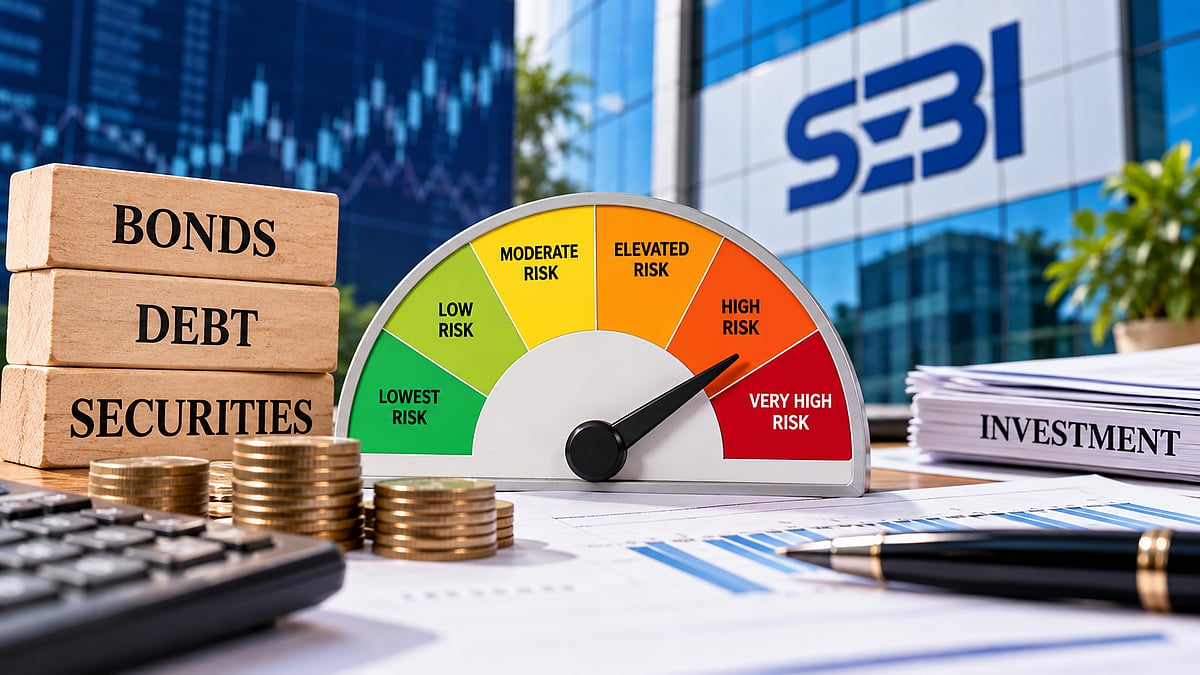
SEBI is asking bond sellers and online bond platforms to show a colour-coded meter about how likely a bond issuer is to repay its debt.
The meter sorts bonds into six risk levels using their credit ratings.
It also has a separate scale for short-term debt.
If a bond has ratings from more than one agency, the meter uses the lowest rating.
Unsecured bonds must be marked clearly in bold red text.
A special grey label is used when a rating agency says an issuer is not cooperating.
The meter only explains the chance of repayment problems; it does not say whether a bond is a good investment.
Investors should also consider other risks, such as changes in bond prices and difficulty selling.
One article says the rules may take effect on 21 November 2026, 45 days after the circular.

SEBI is requiring a six-level, colour-coded Credit Risk-o-Meter for covered listed and proposed-to-be-listed debt securities.
The meter must appear in specified investor documents, advertisements, and online bond platforms’ websites and apps.
Ratings range from AAA at the lowest credit risk to B-rated and lower securities at high to very high default risk; short-term instruments have a separate scale.
When multiple agency ratings exist, the meter uses the lowest rating; issuers must also show the rating and agency name, and mark unsecured debt in bold red text.
The meter addresses credit risk only; investors are also cautioned about market and liquidity risks and, for unsecured perpetual AT1 bonds, possible complete loss of capital.
- Who
- The Securities and Exchange Board of India (SEBI), issuers, market intermediaries, and Online Bond Platform Providers.
- What
- SEBI mandated a colour-coded Credit Risk-o-Meter for specified debt securities.
- When
- The circular was issued on 7 October; one article says provisions may come into force on 21 November 2026, 45 days after issuance.
- Where
- India; required disclosures include investor documents, advertisements, and online bond platform websites and mobile apps.
- Why
- To help investors understand the credit or default risk of bonds and other covered debt instruments.
Investor aid
Limits and cautions
Use of the meter
Investor aid
SEBI’s colour-coded categories are intended to make the credit risk of debt securities easier for investors to assess.
Limits and cautions
The meter is only a first filter: it measures credit risk, not overall investment suitability, price attractiveness, yield, or other bond risks.
Interpreting ratings
Investor aid
The scale helps investors compare ratings, with higher-rated bonds placed in lower credit-risk categories.
Limits and cautions
Experts say investors should also consider an issuer’s finances, maturity, security structure, liquidity, and rating changes; a lower rating may come with higher potential yield.
Issuer Not Cooperating
Investor aid
The separate grey INC category gives investors a visible signal when a rating agency lacks issuer cooperation or information.
Limits and cautions
An expert advises treating the tag as a reason to pause and, if considering the bond, checking financial results, exchange disclosures, trustee reports, and payment history.
- Risk scale
- Six colour-coded levels, from lowest credit risk for AAA-rated instruments to high to very high risk of default for B-rated and lower securities.
- Short-term ratings
- A separate scale covers short-term ratings from A1+ to A4/D.
- Covered instruments
- Listed and proposed-to-be-listed non-convertible securities, commercial papers, securitised debt instruments, security receipts, and structured debt or market-linked debentures.
- Multiple agency ratings
- The meter reflects the lowest available rating when a security has ratings from more than one credit rating agency.
- Required rating details
- The rating and credit rating agency’s name must be displayed alongside or below the meter.
- Unsecured instruments
- Must be identified using bold red text.
- Issuer Not Cooperating
- A separate grey “INC” category signals that a rating agency has classified an issuer as Issuer Not Cooperating.
- Effective date
- One article reports that provisions may come into force on 21 November 2026, 45 days after the circular was issued.