9 months ago
Unveiling the Overlooked Women of the Taj Mahal and Mughal Court
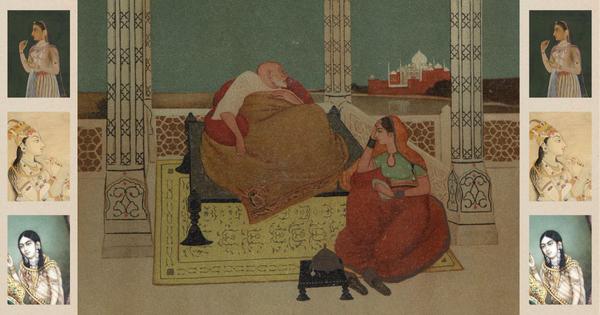
Imagine the Taj Mahal, a famous building made for Emperor Shah Jahan's favorite wife, Mumtaz Mahal.
But, many other important women in his family and in the Mughal times helped build things and had influence, even though their stories are often forgotten.
Shah Jahan's daughter, Jahanara, was a major builder and even paid for a mosque herself, calling herself 'luminous like the sun.'
Another powerful woman was Nur Jahan, Emperor Jahangir's wife, who designed gardens and built a beautiful tomb for her parents that was a bit like the Taj Mahal.
Shah Jahan also had other wives who were important builders in Delhi, and some of their tombs might be near the Taj Mahal.
Even though history books often focused only on the men, these women left their mark through gardens and buildings.
Today, some people are working to tell their stories and remember their contributions.

Elite Mughal women, such as Jahanara Begum and Nur Jahan, made significant contributions to architecture, patronage, and court life, often overshadowed by male rulers.
Jahanara Begum, Shah Jahan's daughter, commissioned the first congregational mosque in Mughal history and managed her own palace gardens.
Nur Jahan, wife of Emperor Jahangir, influenced Mughal garden design and architectural innovations, notably the tomb of Itimad-ud-Daula, a precursor to the Taj Mahal.
The memory of Mumtaz Mahal, the consort for whom the Taj Mahal was built, has largely overshadowed the contributions of other wives and female relatives of Shah Jahan.
Historical records and subsequent neglect have rendered the contributions of many Mughal women 'invisible,' though recent scholarship and local traditions are working to acknowledge their presence.
- Who
- Elite women of the Mughal empire, including princesses and consorts, particularly Jahanara Begum, Nur Jahan, Akbarabadi Begum, and Fatehpuri Begum.
- What
- An examination of the often unacknowledged architectural contributions, patronage, and influence of women connected to the Taj Mahal and the Mughal court, who have been historically overshadowed by male figures.
- Where
- Agra and Delhi, India, particularly in relation to Mughal architecture and court life.
- When
- Primarily the 17th century, with some references to earlier periods and contemporary practices.
- Why
- To uncover and highlight the 'disappeared' histories and significant roles of women whose contributions have been obscured by dominant historical narratives and the focus on male rulers and figures like Mumtaz Mahal.
Key facts
- Jahanara Begum's Commissions
- Commissioned the first congregational mosque in Mughal history; transformed her garden into a palace garden.
- Nur Jahan's Architectural Influence
- Owned an early Mughal riverfront garden (Bagh-i Nur Afshan); built a caravanserai; commissioned the tomb of Itimad-ud-Daula, an architectural precursor to the Taj Mahal.
- Mughal Garden Design
- Bagh-i Jahanara and Bagh-i Nur Afshan are early examples of the quintessential Mughal riverfront garden.
- Taj Mahal Precursor
- The tomb of Itimad-ud-Daula, commissioned by Nur Jahan, introduced innovations like white marble and pietra dura inlay work.
- Shah Jahan's Other Wives
- Included Kandahari Begum, Akbarabadi Begum, and Fatehpuri Begum, some of whom commissioned buildings or were favored in his later years.
- Saheli Burjs
- Four tomb enclosures near the Taj Mahal, possibly for Shah Jahan's favored consorts like Akbarabadi Mahal and Fatehpuri Mahal.
- Contemporary Devotion
- Women still visit the tomb of Sandali Begum to sing songs and offer devotion, commemorating a saint.
Quotes
Jahanara Begum
Daughter of Shah Jahan
“This Holy house of God is built for the believers… its sight is pleasing to the eye and bestows divine light to those who believe… it is built by the order of Jahan Ara Begum… Luminous like the Sun…”
 scroll.in
“begged that the sacred place of worship might be erected out of her personal funds.”
scroll.in
Koch
Scholar
“the flowering plant at the foot and the solar motif at the head are smaller, simplified versions of the designs on Shah Jahan’s cenotaph”
scroll.in
“were the tombs of women.”
scroll.in
Francois Bernier
French physician
“I can indeed barely repress my indignation... when I reflect that there was not a single movement, nor even a voice heard, on behalf of the aged and injured Monarch.”
scroll.in
Aurangzeb
Son of Shah Jahan
“he went directly to the garden of Jahanara, with the intention of calling on that princess of the people of the world.”
scroll.in
Peter Mundy
Traveller
“a very fair one”
scroll.in
Michael Calabria
Scholar
“It would seem... that (Nur Jahan) was relieved of certain items in her possession at the time (Shah Jahan) seized power, perhaps by her own brother Asaf Khan!”
scroll.in
Qazwini
Biographer of Shah Jahan
“assuage the feelings of the Khankhanan”
scroll.in
Inayat Khan
Biographer of Shah Jahan
“showed kindness towards the other Ladies concealed behind the veil of chastity”
scroll.in
Sarthak Malhotra
Scholar
“Though the identity of the person entombed at the Tomb of (Sandali) Begum has been lost to time, women from neighbourhoods across Agra visit this tomb every Thursday to sing songs, light incense sticks, and offer food and milk to cats as richly nuanced acts of Sufi devotion. The tomb, for them, commemorates the sacred memory of a saint whom they identify as Sandali Begum and… even though the historical records remain silent about the women of the Mughal past, their presence flourishes today.”
scroll.in
Gavin Hambly
Scholar
“generations of scholars of the Islamic past, whether they emerged from an indigenous Muslim tradition or were part of the European Orientalist tradition, largely ignored the existence of women.”
scroll.in