

Archive · 20 Sep 2026
India Can End Extreme Hunger, But Public Will Must Act
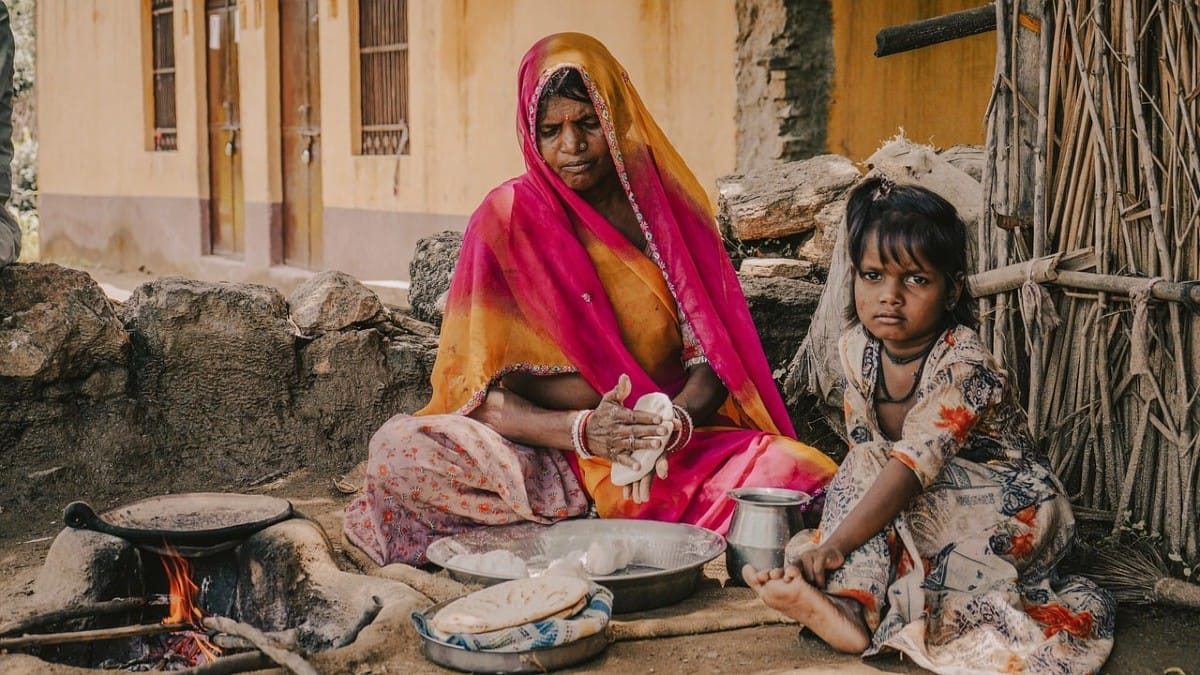
The article says India has many tools that could help end extreme hunger.
These include better farming, digital payments, satellites and improved transport.
In the past, there was not enough food or information to help everyone quickly.
Today, the author says the bigger problem is choosing to use these tools for hungry people.
Building technology for national strength does not automatically help the poorest citizens.
The government might provide help when it is convenient, but that help could later be reduced.
The author says people must believe that feeding the hungry is a basic duty of the country.
When enough people demand this, the government can be held responsible for meeting that duty.
Technology makes ending hunger possible, but people must decide to make it happen.

The article argues that India now has enough technology and state capacity to eliminate extreme hunger within a generation.
It cites precision agriculture, biometric transfers, cold-chain logistics, satellites, desalination and drought-resistant crops as available tools.
The author says hunger is no longer mainly a production or distribution problem, but a political and moral choice.
India’s technonationalist push for domestic semiconductors, launch systems and AI must be judged by who benefits from that capacity.
The article concludes that individual convictions must become public demands so feeding the hungry becomes an enforceable political duty.
- Who
- The article focuses on India, its citizens, government and people living with extreme hunger.
- What
- It argues that India has the technical capacity to eliminate extreme hunger, but lacks the political decision and public demand to make that goal a binding priority.
- When
- The argument concerns the present moment and the possibility of ending extreme hunger within a generation.
- Where
- The discussion centers on India while placing the issue within broader global debates about technology, sovereignty and political morality.
- Why
- The author says available technology cannot decide how its benefits are distributed; citizens must turn that capacity into a political obligation.
Public obligation
State discretion
What technology should achieve
Public obligation
Technological capacity should be directed first toward ending extreme hunger, making food access a duty that citizens can demand from the state.
State discretion
A state may prioritize strategic autonomy, prestige and deterrence, with poverty reduction treated as a possible secondary benefit.
How hunger relief should be secured
Public obligation
Individual convictions should become a shared public demand so that feeding the hungry is a non-negotiable condition of political legitimacy.
State discretion
The state could distribute benefits through strategic calculation without requiring a broad moral awakening among its citizens.
Meaning of sovereignty
Public obligation
Sovereignty over technology carries responsibility for what that technology could accomplish for the poorest people.
State discretion
Building domestic technological capacity can be treated as an achievement in itself, even if its benefits are not immediately or equally distributed.
- Central claim
- India can now plausibly eliminate extreme hunger within a generation.
- Main obstacle
- The author identifies political will and moral commitment, rather than technology, as the remaining shortage.
- Technologies cited
- Precision agriculture, biometric cash transfers, cold-chain logistics, satellite-guided distribution, desalination and drought-resistant crops.
- State capacity cited
- India’s direct-benefit-transfer architecture is presented as evidence of improved administrative ability.
- Technonationalism
- The article defines it as linking national sovereignty to control of semiconductors, data, satellites and frontier AI.
- Political test
- National technological capacity should be judged by whether it benefits the poorest citizens, especially those facing hunger.
- Author
- Pranav Sharma, a historian of science based in New Delhi, India and Paro, Bhutan.