2 days ago
India’s Gold Wealth Could Boost Spending, Loans, Jefferies Says

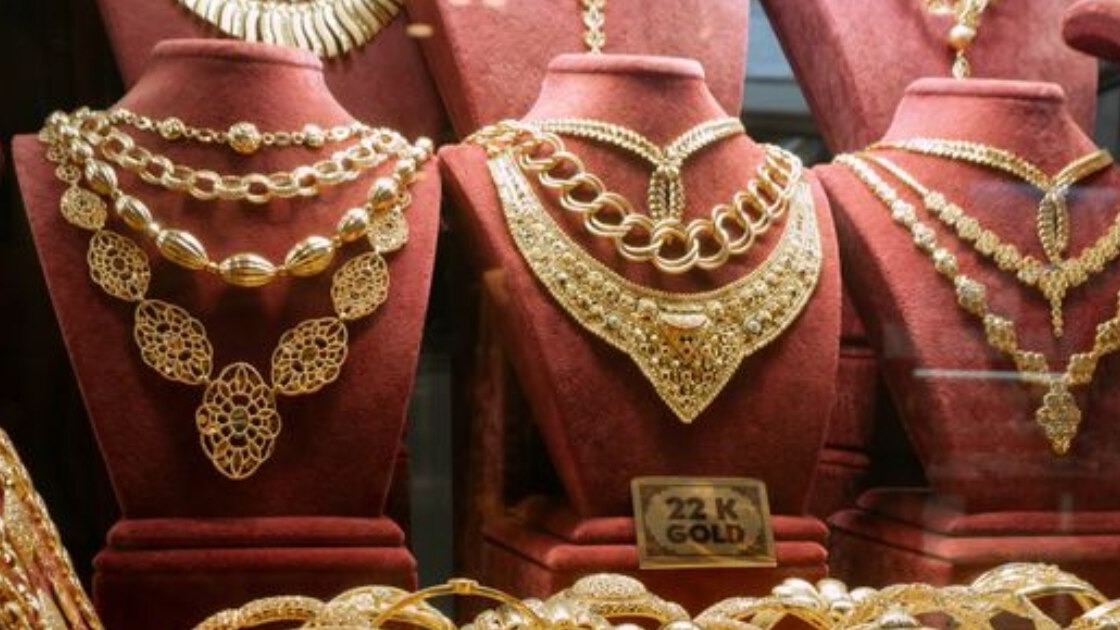
Indian families own a very large amount of gold.
Jefferies estimates this gold was worth about $3.9 trillion in March 2026.
Its value increased by around $1.9 trillion over two years as gold prices rose.
Gold now makes up about one-quarter of household wealth.
Families can sometimes borrow money by using their gold as security.
Gold loans have grown quickly, but only about 15% of household gold is estimated to be used for lending.
If gold prices rise another 10%, household wealth could increase by about $400 billion.
More borrowing against gold could provide another $20–25 billion in loans.
Jefferies says these effects could support spending and economic growth, although gold imports may put pressure on India’s current account.

Jefferies estimates Indian households hold about 25,000 tonnes of gold worth $3.9 trillion as of March 2026.
Household gold wealth rose by approximately $1.9 trillion over two years, while gold’s share of assets increased to 24.2%.
Organised gold-loan assets reached roughly $197 billion in March 2026, up 73% over two years and equal to about 7% of bank and NBFC credit.
Jefferies estimates that a 10% rise in gold prices could add $400 billion to household wealth and generate $20–25 billion in additional gold loans.
The brokerage estimates the combined wealth and lending effects could provide an 80–100 basis-point boost to GDP and consumer spending, while higher imports could pressure India’s current account.
- Who
- Indian households and Jefferies, the brokerage cited in reports by Moneycontrol and other outlets.
- What
- A rise in gold prices and increased gold-backed borrowing could increase household wealth, spending and economic activity.
- Where
- India.
- When
- The estimates are stated as of March 2026; gold ETF assets are reported through July 2026.
- Why
- Higher gold prices raise the value of household holdings, while using more gold as collateral could unlock additional credit.
Potential Economic Benefits
Macroeconomic Trade-offs
Household wealth and consumption
Potential Economic Benefits
Jefferies says rising gold prices could strengthen household balance sheets and support spending, particularly among rural and lower-income households where gold ownership is widespread.
Macroeconomic Trade-offs
The articles do not identify a direct opposing forecast, but note that the wealth effect depends on households spending or borrowing against their higher-valued gold.
Gold-backed lending
Potential Economic Benefits
Only about 15% of household gold is estimated to be monetised, suggesting that greater use as collateral could unlock additional credit and liquidity.
Macroeconomic Trade-offs
Expanding gold-backed borrowing would involve households pledging their gold, and the articles present the lending potential as an estimate rather than a guaranteed economic outcome.
Imports and economic growth
Potential Economic Benefits
Jefferies estimates that higher gold wealth and lending together could provide an 80–100 basis-point tailwind to GDP and consumer spending.
Macroeconomic Trade-offs
Gold imports rose to $79 billion in FY26, or about 2% of GDP, which the report says could put pressure on India’s current account.
Key facts
- Household gold holdings
- Approximately 25,000 tonnes.
- Value of household gold
- About $3.9 trillion as of March 2026, or roughly ₹33 lakh crore.
- Increase in gold wealth
- Approximately $1.9 trillion over the previous two years.
- Gold’s share of household assets
- 24.2% in March 2026, compared with 15.4% in March 2023.
- Organised gold loans
- Approximately $197 billion in assets under management in March 2026, up 73% over two years.
- Potential impact of a 10% price rise
- About $400 billion in additional household wealth and $20–25 billion in further gold loans.
- Estimated economic tailwind
- An 80–100 basis-point boost to GDP and consumer spending, according to Jefferies.
- Gold imports
- Gold imports rose to $79 billion in FY26, about 2% of GDP, from $36 billion in FY23.
Quotes
Jefferies
Brokerage that authored the report on India’s gold wealth effect
““The wealth effect of rising Gold prices... Gold prices have sustained above US$4k/ounce for about a year, which has been good news for Indian households,””
 businesstoday.in
““As a result, the Gold wealth effect could offer a buffer amid deficient monsoons and provide tailwind to bottom-of-pyramid consumption,””
businesstoday.in
Sources

Related news

India’s Gold Loans Could Drive Consumption Despite Import Risks

Gold Loans Quadruple as India’s Untapped Gold Wealth Fuels Growth
India's ₹315 lakh crore gold stock could power economy

Indian Bank Gold Loan Portfolio Seen Surpassing ₹1.5 Lakh Crore

Digital Gold Could Unlock India's $5 Trillion Opportunity, Luniya Says
NSE derivatives turnover falls below ₹200 lakh crore in August

Brokerages Favor Indian Auto Stocks as Truck Sales Surge

Jefferies Sets Target Prices for Indian Industrial Stocks

Jefferies Sees 33% Reliance Industries Upside Amid Refinery Disruptions

Jefferies Sees 28% Upside in Allied Blenders Stock