

Archive · 7 Aug 2025
Ancient Israeli Cave Reveals Clues About Early Human Burials
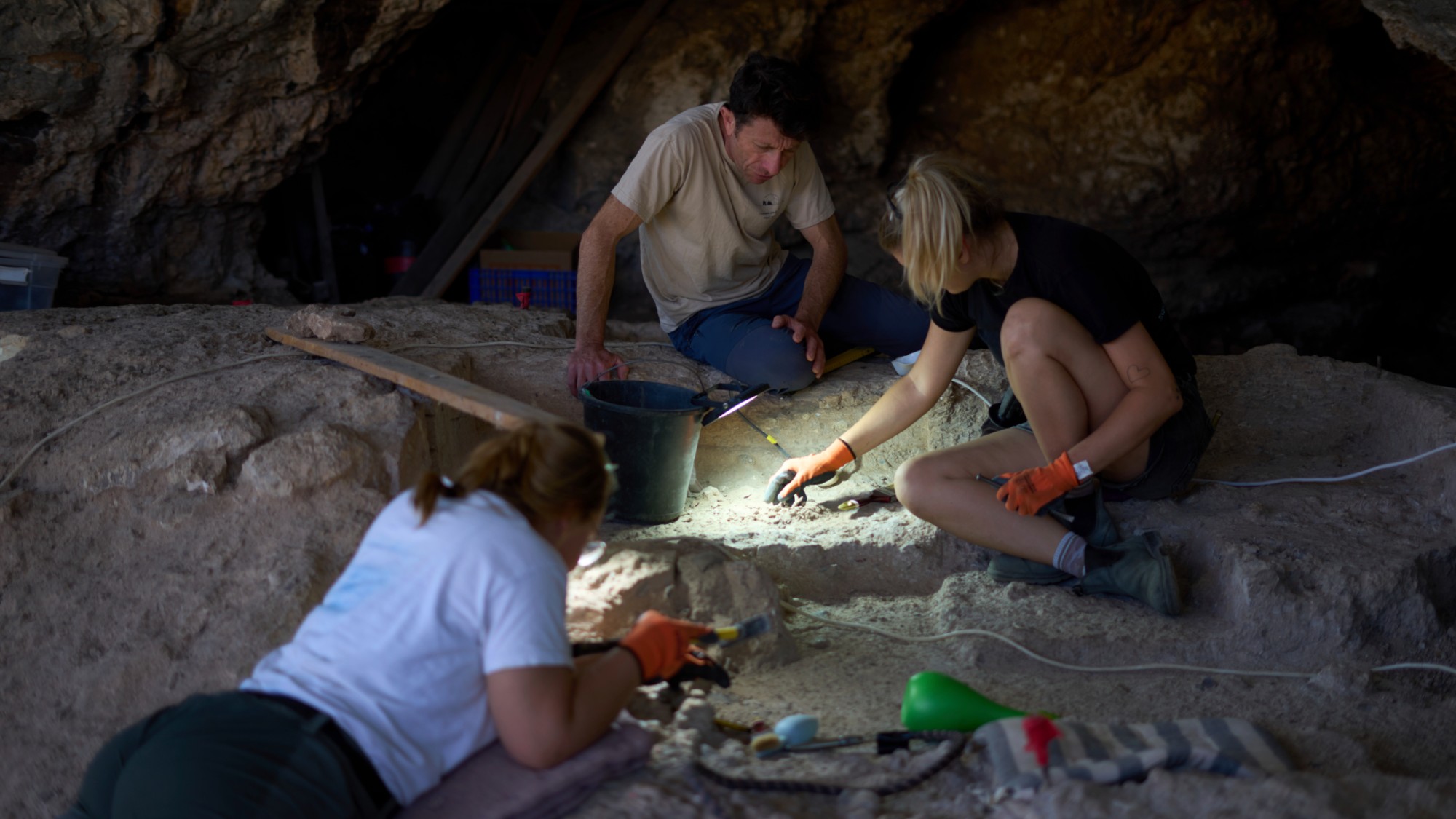
Imagine people from a very long time ago, around 100,000 years ago, lived in a cave in Israel.
They buried their dead in a special place.
Archaeologists found this place and discovered the well-preserved remains of these early humans.
They also found interesting objects like colorful rocks and animal pieces near the bodies, which might have been used in ceremonies to honor the dead.
This find is important because it might show us how these ancient people thought about death and how they treated each other.
It's like discovering the very first time humans started treating death with rituals and symbolism.

Archaeologists discovered a primitive burial ground in Israel's Tinshemet Cave.
The burial site contains well-preserved human remains dating back approximately 100,000 years.
Objects like basalt pebbles and ochre were found alongside the remains, suggesting rituals.
The discovery may reshape our understanding of early human interactions during the Middle Paleolithic period.
Researchers believe the findings may link to modern funerary practices and communal bonds.
- Who
- Early humans.
- What
- Discovery of a 100,000-year-old burial ground with human remains and ritual objects.
- When
- Dating back approximately 100,000 years ago.
- Where
- Tinshemet Cave in central Israel.
- Why
- To understand early human behavior, rituals, and how they honored the dead.
Potential Discoveries
Importance of the Findings
The meaning of objects
Potential Discoveries
Suggests shared rituals and communal bonds.
Importance of the Findings
Provides evidence for funerary practices.
- Location
- Tinshemet Cave, Israel
- Estimated Age
- Approximately 100,000 years
- Finds
- Human remains, basalt pebbles, ochre, animal remains
- Significance
- Oldest burial site, insights into early human rituals
- Period
- Middle Paleolithic