

Archive · 13 Sep 2025
Spinal Curvature Problems and Their Health Impacts
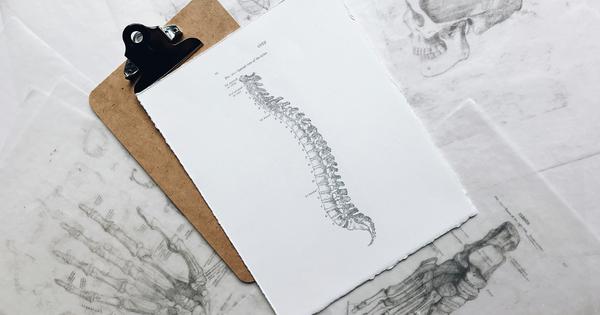
Your spine, made of bones called vertebrae, has curves that help you move.
Sometimes, these curves change in ways they shouldn't.
One problem is Dowager's Hump, where the upper back curves too much.
Another is Scoliosis, where the spine curves sideways.
Slipped vertebrae can also occur.
These changes can cause pain, stiffness, and even problems with breathing.
Treatment depends on the problem, sometimes needing braces or surgery to help fix the issues, or focus on posture and building a stronger back.

Over 60% of people will experience lower back pain at some point.
The spine has natural curves essential for function.
Hyperkyphosis (Dowager's Hump) is when the thoracic curve becomes excessive.
Scoliosis is characterized by a sideways curvature, rotation, or collapse of the vertebrae.
Vertebrae can become displaced or fuse together causing issues like nerve compression.
- Who
- People with spinal curvature problems.
- What
- How changes in spinal curves can cause health issues, including back pain, and other medical problems.
- When
- N/A
- Where
- Spine (vertebrae)
- Why
- Curvature issues can result from various factors like aging, posture, injury, and other health problems.
- Spinal Segments
- Cervical, Thoracic, Lumbar, Sacral, Coccyx
- Dowager's Hump Cause
- Osteoporosis, poor posture, aging
- Scoliosis
- Spinal sideways curvature/rotation/collapse
- Spondylolisthesis
- Vertebrae displacement
- Ankylosing Spondylitis
- Spinal joint inflammation causing rigidity