

Archive · 20 Aug 2025
Science and Technology Updates: Infections, Waste, Satellites, and Trains
This news covers several topics.
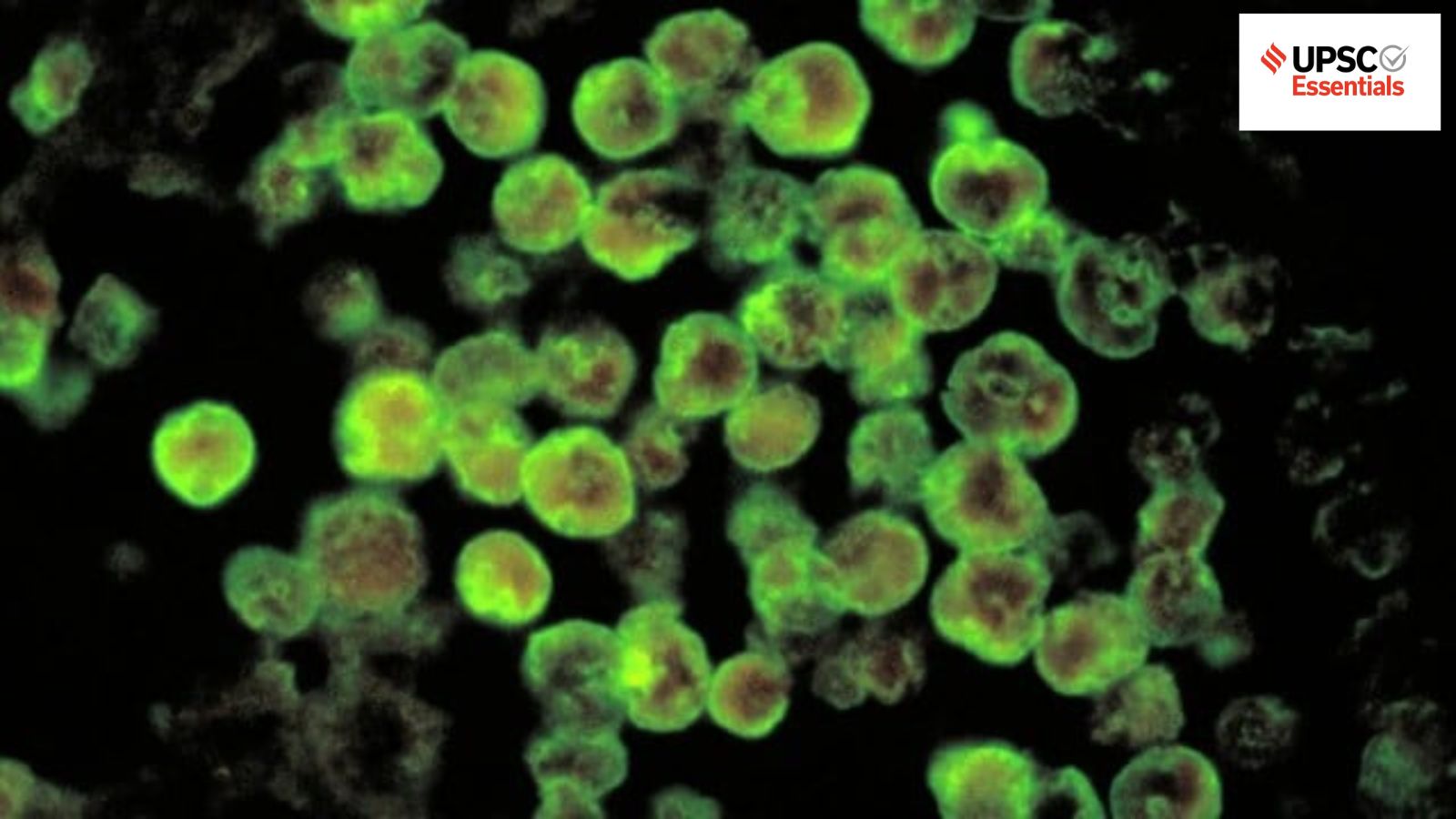
One story discusses a rare brain infection, PAM, caused by an amoeba found in warm water.
Another explains how microalgae can clean dirty water.
Satellites called OCOs are used to study carbon dioxide in the air to understand climate change.
A process called vitrification turns radioactive waste into glass to keep it safe.
Finally, trains use regenerative braking, which creates electricity while slowing down, making them more efficient.

Primary amoebic meningoencephalitis (PAM) is a rare brain infection caused by Naegleria fowleri.
Microalgae can successfully treat industrial wastewater by removing pollutants and producing biomass.
Orbiting Carbon Observatories (OCOs) are satellites designed to observe atmospheric CO2 and understand climate change.
The vitrification process involves combining radioactive waste with glass-forming ingredients, then heating and cooling it.
Regenerative Braking Systems in trains reuse kinetic energy, generating electricity to power other trains.
- Who
- Naegleria fowleri causes PAM. OCOs are a series of Earth remote sensing satellites.
- What
- The articles discuss primary amoebic meningoencephalitis (PAM), microalgae in wastewater treatment, Orbiting Carbon Observatories (OCOs), vitrification of radioactive waste, and regenerative braking systems in trains.
- When
- PAM cases were recently reported, OCO-2 was launched in 2014, and OCO-3 went to the ISS in 2019.
- Where
- PAM cases were reported in Kerala, India.
- Why
- OCOs are used to better understand climate change. Regenerative braking is more efficient and can save up to 30% on electrical consumption.
Arguments for using OCOs
Arguments against the use of OCOs
Contradictory viewpoints on the operation of OCOs
Arguments for using OCOs
OCOs are a series of dedicated Earth remote sensing satellites that were designed specifically to observe atmospheric CO2 from space to understand the characteristics of climate change.
Arguments against the use of OCOs
The Trump administration has reportedly asked the National Aeronautics and Space Administration (NASA) to prepare to shut down two major satellites that monitor atmospheric carbon dioxide (CO2) and crop health.
- PAM Cause
- Naegleria fowleri
- PAM Location
- Warm, fresh water and soil
- OCO-2 Launch Year
- 2014
- Vitrification Process
- Combines radioactive waste with glass-forming ingredients and then heats it.
- Trains with Regenerative Braking
- Vande Bharat Express