

Archive · 31 Dec 2025
Air Pollution Eroding India's Heritage Monuments
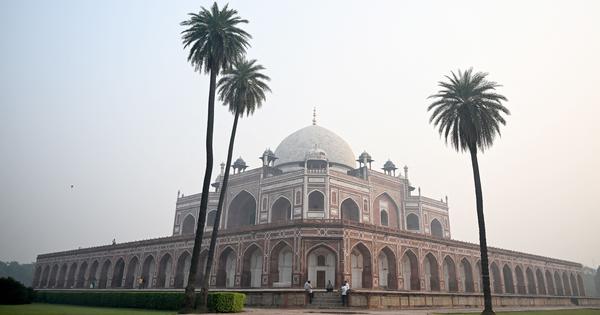
Air pollution is harming India's old and beautiful buildings like the Red Fort and Taj Mahal.
Pollutants from factories, cars, and power plants are reacting with the stone, making them turn black and dirty.
Experts are trying to clean and protect these buildings, but the pollution is still a big problem.
The government has rules to control pollution, but they are not being followed well.
People need to care more about these historic places and work together to reduce pollution.

Air pollution is causing chemical reactions that erode and discolor heritage monuments in India, such as the Red Fort and Taj Mahal.
Scientists have found that pollutants from cement factories, thermal power plants, and vehicles are forming black crusts on the Red Fort's sandstone surface.
The Taj Mahal, despite being in a protected zone, continues to suffer from pollution, with its marble turning green and yellow.
Restoration efforts include non-abrasive cleaning methods and chemical treatments, but early intervention is crucial to prevent further damage.
Regulatory bodies like the Archaeological Survey of India (ASI) and the Taj Trapezium Zone (TTZ) are working to protect these monuments, but enforcement and public participation remain challenges.
- Who
- Scientists, conservation architects, regulatory bodies, historians, and the general public
- What
- Air pollution is causing chemical reactions that erode and discolor heritage monuments in India
- When
- The issue has been ongoing for decades, with recent studies highlighting the severity
- Where
- Primarily in Delhi and Agra, affecting monuments like the Red Fort and Taj Mahal
- Why
- High levels of particulate matter and atmospheric pollutants from industrial and vehicular sources are reacting with the stone surfaces of monuments, causing degradation and black crust formation
- Monuments Affected
- Red Fort, Taj Mahal, Qutub Minar, Humayun’s Tomb, Konark Sun Temple
- Primary Pollutants
- Particulate matter, nitrogen dioxide, sulfur dioxide
- Sources of Pollution
- Cement factories, thermal power plants, vehicles, industrial emissions
- Restoration Methods
- Non-abrasive cleaning, water misting, multani mitti, paper poultices, chemical peeling
- Regulatory Bodies
- Archaeological Survey of India (ASI), Taj Trapezium Zone (TTZ), Commission for Air Quality Management
- Key Studies
- Red Fort study, Taj Mahal pollution studies, Centre for Science and Environment analysis
- Challenges
- Rapid industrialization, vehicular emissions, lack of enforcement, public participation
- Expert Opinions
- Abha Narain Lambah, MC Mehta, Sanjay Kumar Manjul, Sohail Hashmi