

Archive · 22 Sep 2025
Pacific Ocean Pinging Linked to Decades-Old Mining
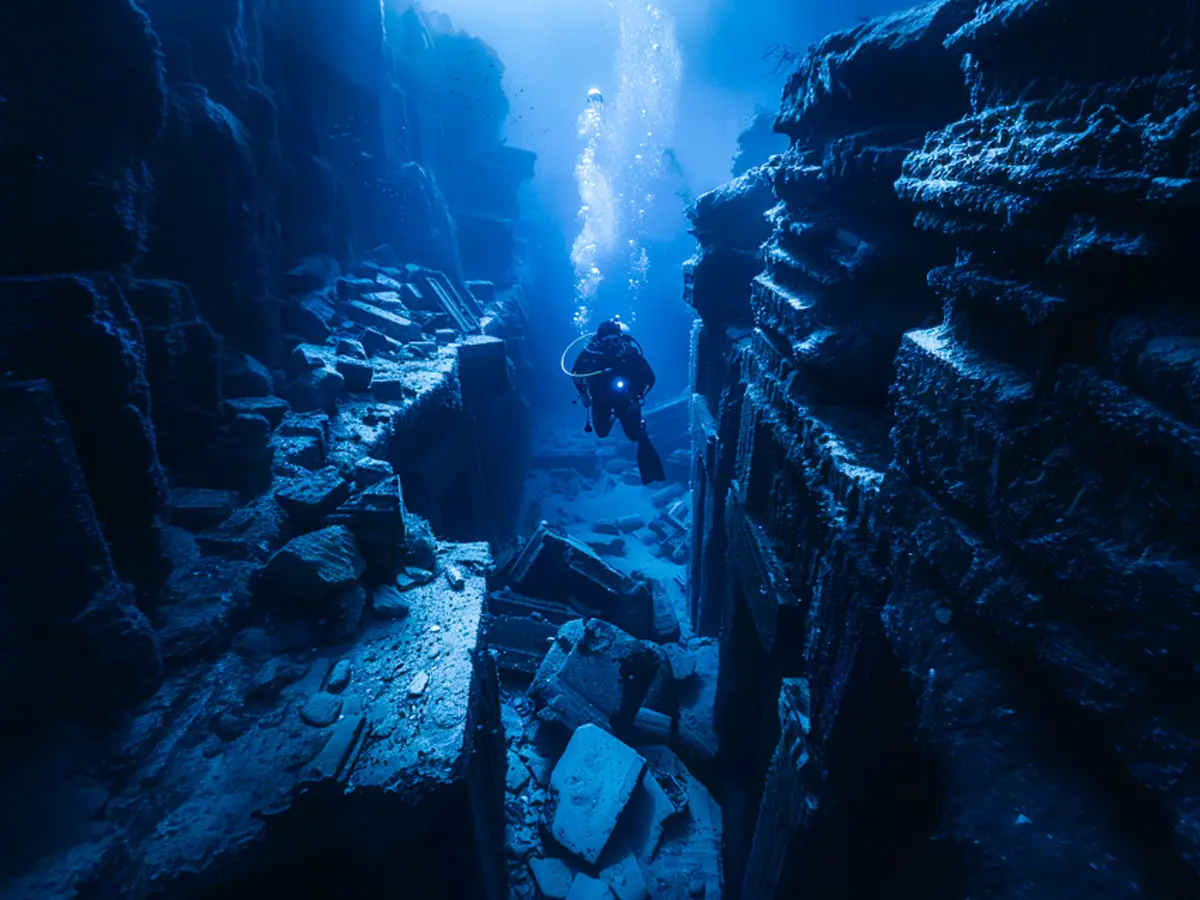
Imagine scientists did some work in the deep sea a long time ago to find out if they could mine the ocean floor.
After they finished, they started hearing strange pinging sounds.
These sounds were a mystery for many years.
Recently, scientists figured out that the sounds were coming from where they did the mining!
The machines left a mark on the ocean floor that makes the sound.
The mining affected the animals that lived there, too.
Even though some animals are coming back, the original ones are still missing.
It's a reminder that when we change things in nature, there can be lasting effects.

Scientists investigated mysterious pinging sounds in the Pacific Ocean.
The sounds originate from a 1979 deep-sea mining experiment.
Mining machinery left a sonic imprint on the ocean floor.
The mining experiment affected the marine ecosystem.
Some species have returned but the original ones are still missing.
- Who
- Scientists from the National Oceanography Centre and the Natural History Museum
- What
- Discovered that strange pinging sounds in the Pacific Ocean are a result of a deep-sea mining experiment.
- When
- Experiment conducted in 1979; sounds studied decades later.
- Where
- Clarion-Clipperton Zone (CCZ) in the central Pacific Ocean.
- Why
- To understand the impact of deep sea mining and to find out the source of the mysterious sound.
Those concerned
Those who want to benefit
Mining
Those concerned
Mining seabed can have devastating long term impact on the ecosystems and the organisms that live there.
Those who want to benefit
Mining the seabed offers a solution to access the materials needed for technological advancement.
- Location
- Central Pacific Ocean (Clarion-Clipperton Zone)
- Event
- Deep-sea mining experiment
- Year of Experiment
- 1979
- Cause of Sound
- Sonic imprint left by mining machinery
- Materials Sought
- Nickel, manganese, copper, zinc, cobalt
- Ecological Impact
- Disappearance of some marine life; ecosystem affected