

Archive · 16 Aug 2026
Can restoring forests and springs save Himalayan water?
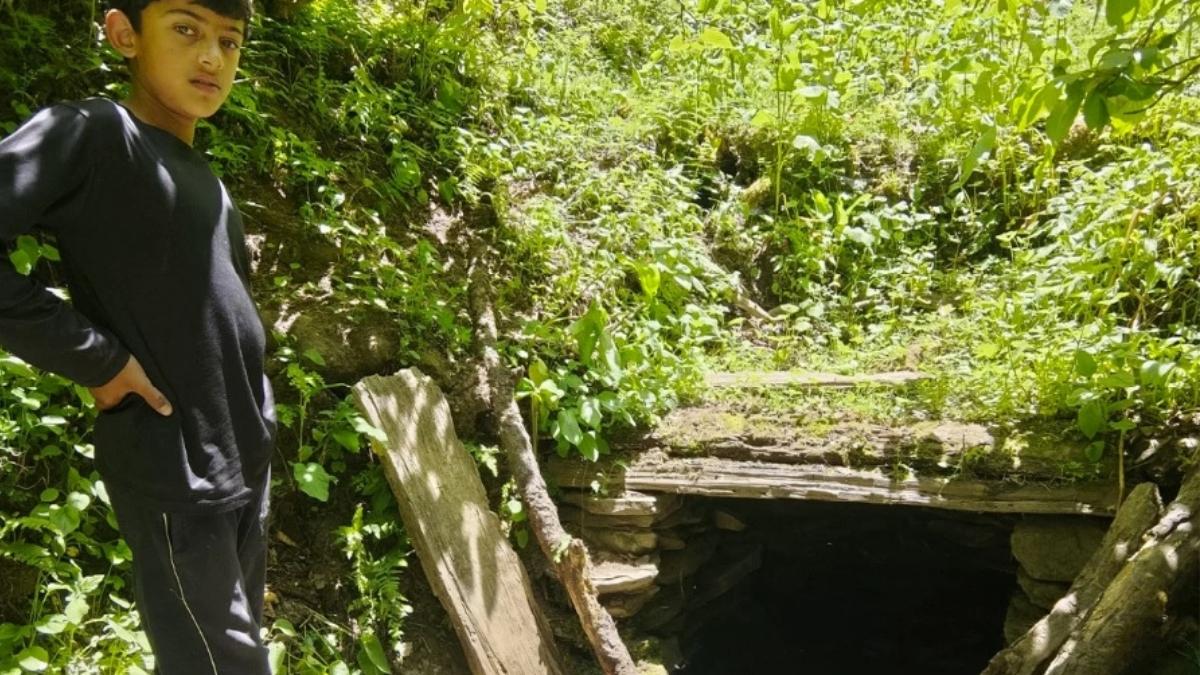
People who live in the Himalayan mountains have used natural springs for water for many years.
These springs are small pools where water slowly comes up from under the ground.
But now many springs are drying up.
The rain has started to fall differently, coming in big quick storms instead of gentle, steady showers.
When rain falls too fast, it rushes away downhill instead of soaking into the ground.
The state of Himachal Pradesh in India is trying a new way to help.
Instead of only building pipes and tanks, it is restoring forests, ponds and recharge zones that catch rain and let it seep underground slowly.
Villagers are cleaning old ponds and protecting spring areas.
These projects are already helping some villages have water all summer.
The work has also restored water supplies for around 650 people in Khurik panchayat.
But the work is far from finished, and many springs still need to be restored.
Protecting nature is becoming an important way to keep water flowing in the mountains.

Himalayan springs that communities have relied on for generations are drying up due to changing rainfall patterns in Himachal Pradesh.
Between 2010 and 2024, Himachal Pradesh experienced sharp rainfall swings, with heavy downpours increasing runoff but reducing groundwater recharge.
Himachal Pradesh is restoring watersheds, forests, ponds and springs through nature-based solutions under programmes such as the Catch the Rain campaign.
A 2018 Shimla water crisis highlighted the vulnerability of Himalayan towns, with residents receiving water only once every eight days.
Of 417 springs identified for restoration under WDC-PMKSY 2.0, work has been completed on 178, with 130 under restoration and 109 yet to begin.
- Who
- The Himachal Pradesh Jal Shakti Department, Gram Panchayats, and local communities, including villagers such as Balkrishan Singh of Ludera village.
- What
- The state is restoring forests, ponds, watersheds, recharge zones and natural springs to address drying springs and unreliable water supplies caused by changing rainfall patterns.
- When
- Ongoing, with rainfall changes observed between 2010 and 2024 and continuing into 2025; restoration work includes projects completed as of 2024 and reported in the Economic Survey 2025-26.
- Where
- Himachal Pradesh, India, particularly districts including Chamba, Lahaul-Spiti, Kinnaur, Kullu, Bilaspur, Hamirpur, Shimla and Una.
- Why
- Because long dry spells followed by intense cloudbursts mean less water seeps into underground aquifers, making springs unreliable and exposing communities to both floods and water shortages.
Nature-based restoration focus
Conventional infrastructure focus
Best approach to water security
Nature-based restoration focus
Restoring forests, springs, ponds and recharge zones is essential because pipelines can transport water but cannot replenish the springs and aquifers that supply infrastructure.
Conventional infrastructure focus
Pipelines, storage tanks and reservoirs remain essential for water security; nature-based solutions alone cannot solve the crisis and must complement, not replace, conventional infrastructure.
Success of universal tap-water coverage
Nature-based restoration focus
Official claims of 100% Functional Household Tap Connection under Har Ghar Jal are overstated, as several wards are not covered and water does not always arrive regularly, leaving springs as the primary source.
Conventional infrastructure focus
The Har Ghar Jal programme provides tap water to rural families, and restored water bodies now support household tap connections, such as for around 650 residents in Khurik panchayat.
- Groundwater recharge expected from restored Una ponds
- Nearly 5.8 million cubic metres annually
- Additional daily water availability from restored Una ponds
- Estimated 0.90 million litres, enough for 9,000 people
- Springs identified for restoration (WDC-PMKSY 2.0)
- 417 total; 178 completed, 130 in progress, 109 not started
- Khurik panchayat residents supported by restored water bodies
- Around 650 residents via household tap connections
- Restoration works under WDC Plus pilot programme
- 17 completed (Economic Survey 2025-26)
- Natural resource management works implemented
- 1,488 works to improve soil moisture and groundwater recharge
- Disaster-related losses in Himachal Pradesh (past 4 years)
- Around Rs 46,000 crore, roughly 4% of Gross State Domestic Product annually