

Archive · 23 Jun 2025
How Do Woodpeckers Avoid Concussions While Pecking?
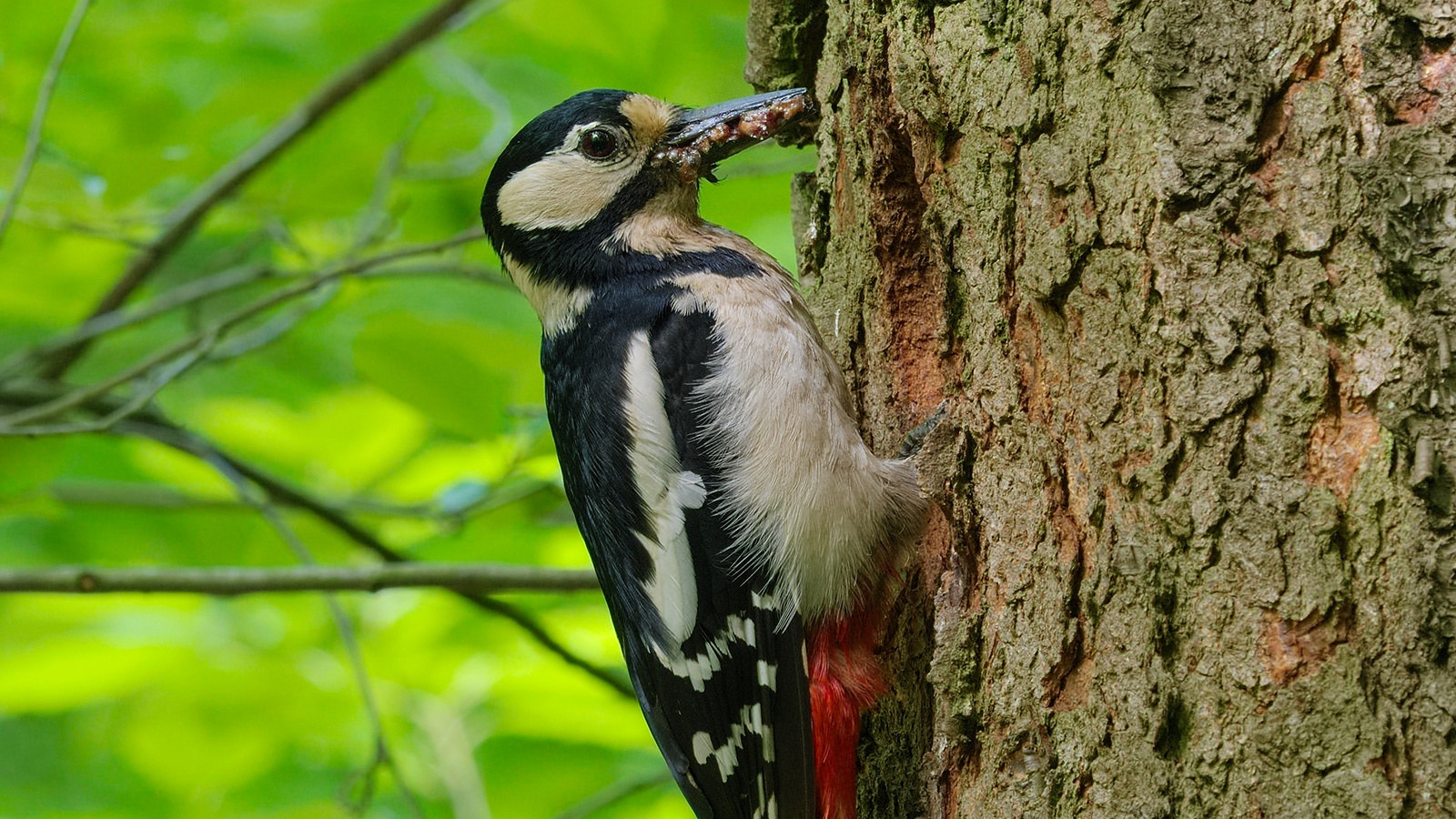
Woodpeckers can peck trees incredibly fast without getting hurt.
Their secret is a combination of smart anatomy.
They have strong, flexible skulls and brains that don't move much.
Their tongues are super long and wrap around their heads like a helmet, acting like a cushion.
Their beaks also have built-in padding.
All of this helps absorb the impact when they peck, preventing damage to their brains, sort of like how a good helmet protects your head when you fall.

Woodpeckers can peck trees up to 20 times per second with high impact forces.
Their skulls are strong and flexible, helping to evenly distribute impact forces.
Woodpeckers have a long tongue that wraps around their skull, acting as a shock absorber.
The tongue's wraparound design helps to brace the brain during pecking.
Their beaks are also specially adapted, with a hard outer layer and elastic inner core to absorb force.
- Who
- Scientists have studied woodpecker anatomy.
- What
- The biomechanics of how woodpeckers avoid brain injuries while pecking.
- When
- The study of woodpecker anatomy has been ongoing.
- Where
- N/A
- Why
- To understand how woodpeckers withstand high-impact pecking and to apply this knowledge to safety designs.
Traditional Understanding
Recent Study
Brain Protection Mechanism
Traditional Understanding
Woodpeckers' skulls are specially adapted to absorb shock.
Recent Study
Woodpeckers' small brains by their nature do not need much protection
- Pecking Frequency
- Up to 20 times per second
- Impact Force
- Up to 1,200 times the force of gravity
- Brain Movement
- Minimal
- Tongue Length
- Up to three times the length of its beak (in some species)