

Archive · 24 Jul 2026
Strait of Hormuz ship standstill threatens global marine invasive species crisis
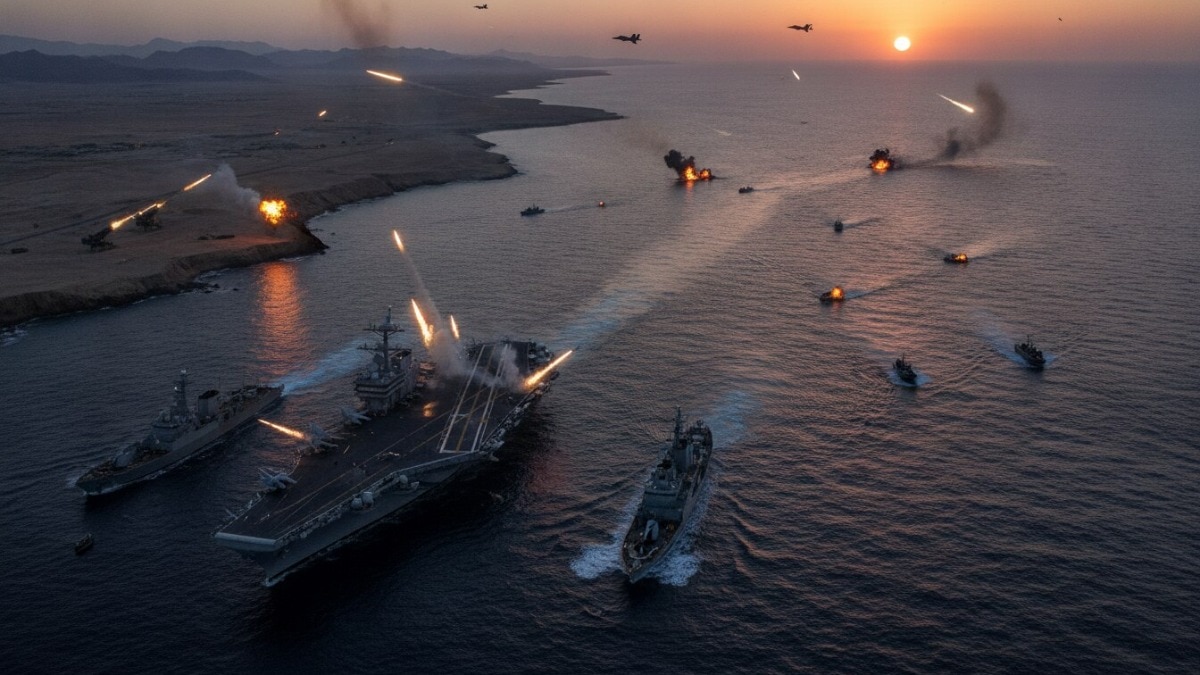
Scientists are worried about a big problem in the ocean.
Because of a conflict between the US and Iran, many ships have been stuck in the Strait of Hormuz for a long time.
While they are stuck, tiny sea creatures and plants are growing on the ships' hulls.
When the ships start moving again, these creatures could travel to new places and cause problems for the local sea life.
Scientists say this could be a big issue because these creatures are hard to get rid of once they settle in a new place.
They are asking ship owners and governments to clean the ships before they start moving again to stop these creatures from spreading.

Strait of Hormuz is effectively closed, stranding over 1,500 commercial vessels.
Prolonged inactivity allows biofouling to accumulate on ship hulls, posing a risk of invasive species spread.
Study published in Biological Invasions warns of potential global marine 'super-spreader' event.
Biofouling can increase fuel consumption and greenhouse gas emissions by over 50%.
Scientists urge stronger biofouling management and international coordination to mitigate risks.
- Who
- Scientists from the University of Maryland Center for Environmental Science (UMCES) and Woods Hole Oceanographic Institution (WHOI)
- What
- Potential global marine invasive species crisis due to biofouling on stranded ships
- When
- Nearly five months after the escalation of US-Iran conflict on February 28, 2026
- Where
- Strait of Hormuz, Persian Gulf, Gulf of Oman
- Why
- Prolonged disruption to global shipping leading to biofouling accumulation on ship hulls
Environmental Concerns
Economic and Operational Pressures
Biofouling Management
Environmental Concerns
Proponents emphasize the ecological risks and advocate for strict biofouling management to prevent invasive species spread.
Economic and Operational Pressures
Opponents highlight the economic burden and operational challenges of implementing extensive biofouling management measures.
- Strait of Hormuz Status
- Effectively closed
- Number of Stranded Vessels
- More than 1,500
- Study Journal
- Biological Invasions
- Lead Research Institution
- University of Maryland Center for Environmental Science (UMCES)
- Biofouling Management Recommendation
- IMO recommends management for vessels idle over 30 days
- Estimated Cost to Clean a Vessel
- Nearly $8,000
- Potential Increase in Fuel Consumption Due to Biofouling
- More than 50%