9 months ago
India's Shanti Bill Aims to Boost Nuclear Energy
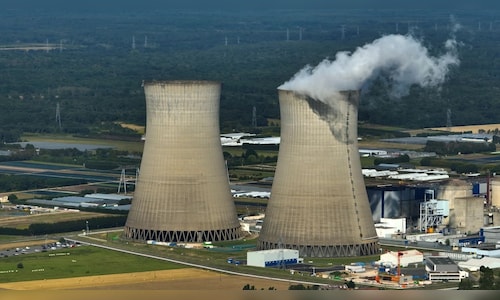
India has introduced a new law called the Shanti Bill to improve its nuclear energy sector and attract more foreign investment.
This law replaces old rules and aims to make nuclear power a big part of India's clean energy plans.
It sets rules for who can build nuclear plants and how much they can invest.
The law also changes who is responsible if something goes wrong, making it clearer and more in line with global standards.
There are debates about how much foreign companies can invest and how taxes should be applied to nuclear energy compared to other clean energy sources.
Some worker groups are planning a strike because they have concerns about safety and responsibility.
The law also includes new rules about patents for nuclear technology, which could help Indian companies get involved in this field.

The Shanti Bill aims to reform India's nuclear energy sector and attract global investment by replacing outdated laws.
The bill sets a 49% FDI cap and excludes foreign-incorporated companies as licensees, focusing on building domestic capability.
Liability clauses are adjusted to align with global practices, with the central government assuming responsibility for terrorism-related incidents.
Trade unions plan a general strike on February 12, 2026, against the Shanti Act and other labor codes, citing safety and responsibility concerns.
The bill includes provisions for intellectual property, allowing patents for nuclear energy-related inventions to boost domestic involvement.
- Who
- Indian government, trade unions, industry experts, and foreign investors
- What
- Introduction of the Shanti Bill to reform India's nuclear energy sector and attract global investment
- Where
- India
- When
- December 23, 2025 (strike date: February 12, 2026)
- Why
- To boost India's nuclear energy roadmap and address concerns over FDI caps, liability clauses, and tax structures
Key facts
- Bill Name
- Sustainable Harnessing and Advancement of Nuclear Energy for Transforming India (SHANTI) Act
- FDI Cap
- 49%
- GST for Nuclear
- 18%
- GST for Renewables
- 8.9%
- Strike Date
- February 12, 2026
- Strike Ratification Date
- January 9, 2026
- Strike Location
- HKS Bhawan, national capital
- Resistance Day
- January 16, 2026
- Nuclear Power Ambition
- 100 GW by 2047
- Liability Ceiling
- 300 million SDR (Special Drawing Rights)
Timeline
India opens nuclear sector to private investment.
Then, SHANTI Bill approved.
President signs off on bill.
Bill introduced to boost nuclear energy, attract foreign investment.
India's nuclear sector set for private, global boost.
Quotes
Amit Kapur
Partner at JSA, Advocates & Solicitors
“Evidently, the fixing of tariff for nuclear power plants is squarely within the domain of DAE, unless DAE elects to delegate that power to AERB by Rules to be notified. From the perspective of private investors, this may be a problem of perception for robustness of tariff determination mechanism and for components of tariff.”
 businesstoday.in
“At the very least, the principles of Section 61 of the Electricity Act, 2003 ought to have been extended to provide for a balance between affordability for consumer and viability for investors, as also promoting safety and efficiency.”
businesstoday.in
Adani Energy Solution Limited
Energy company
“Since investment is made by the developer, including associated risk. Hence, users should have freedom on the use of or right on electricity without any need of DAE to determine tariff.”
businesstoday.in
Aditya Birla Renewables
Energy company
“Post our captive consumption, we will sell the surplus power (if any) through Power Exchange, given that in an Exchange, tariff is determined through price discovery mechanism, what role the DAE would play?”
businesstoday.in
Sources
SHANTI Bill is India’s second shot at nuclear energy leadership
India Nuclear Energy Roadmap Boosted by Shanti Bill: Experts Debate FDI Cap, SMR Funding, and GST Parity for Sector Reform

Will SHANTI create turbulence?
SHANTI Act: Industry wants competitive bidding for nuclear power tariff

Trade unions call general strike on Feb 12 against 4 labour codes