

Archive · 10 Aug 2025
Why Clothes Shrink: The Science of Textiles Explained
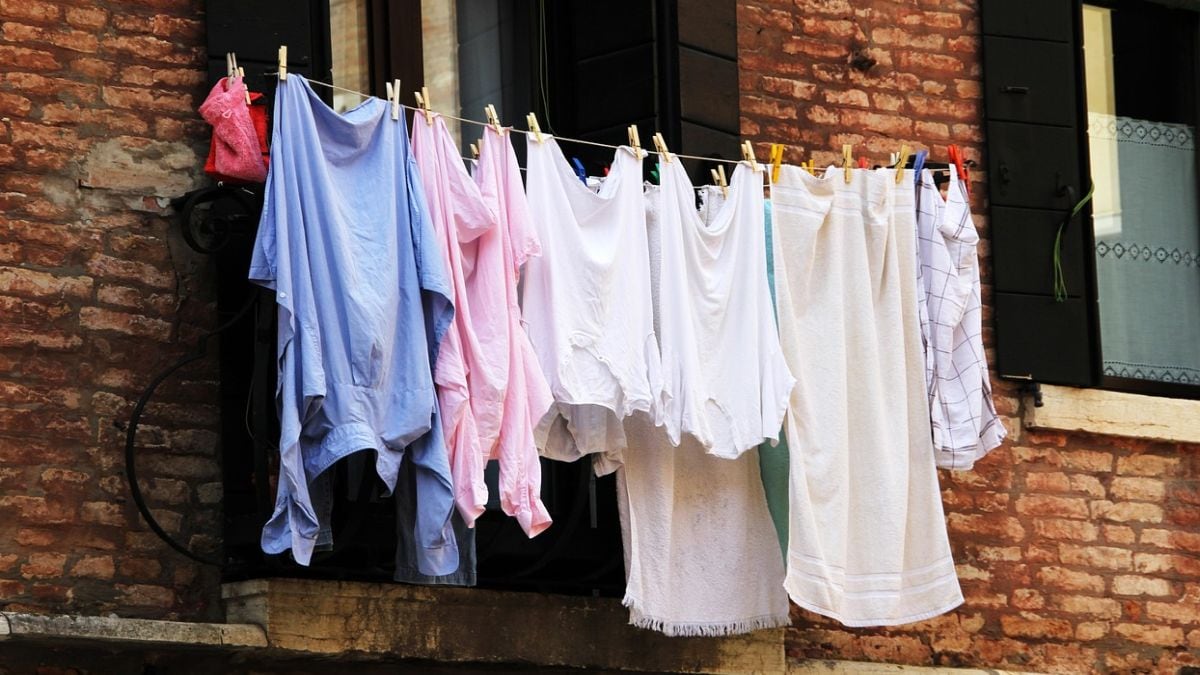
When clothes shrink in the wash, it's because of how their fibers are made.
Plant-based fibers like cotton and linen have tiny, coiled parts that can relax and go back to their original shape when wet and heated.
Hot water and washing machines cause these fibers to recoil, making the clothes smaller.
Wool shrinks differently as its surface scales tangle together.
Synthetic fabrics like polyester are more stable and don't shrink as much.
You can even try to stretch shrunken clothes back to size using lukewarm water and conditioner!

Some fabrics shrink more than others after washing due to their fiber structure.
Cotton and linen fibers, made from plants, have coiled cellulose molecules that can relax and crinkle.
Hot water, along with mechanical action, disrupts hydrogen bonds, causing fibers to recoil and shrink.
Wool shrinks differently, with its overlapping scales interlocking during washing.
Synthetic fabrics, like polyester, are more stable and less prone to shrinking due to their structure.
- Who
- Fabrics made from cotton, linen, wool, and synthetic fibers.
- What
- Why some clothes shrink more than others in the wash.
- When
- The process occurs during laundering.
- Where
- This occurs in washing machines.
- Why
- Because of how the fibers react to water, heat, and mechanical action.
- Common Fibers Prone to Shrinkage
- Cotton, linen
- Shrinkage Cause
- Disrupted hydrogen bonds in fibers.
- Wool Fiber Reaction
- Cuticle scales interlock, causing felting
- Synthetic Fiber Properties
- More stable and less prone to shrinking
- Shrinkage Minimization
- Use cold water, low spin, delicate cycle
- Rescue Method
- Soak in lukewarm water with conditioner, stretch.