Archive · 27 Jan 2026
James Webb Telescope Maps Dark Matter with Unprecedented Clarity

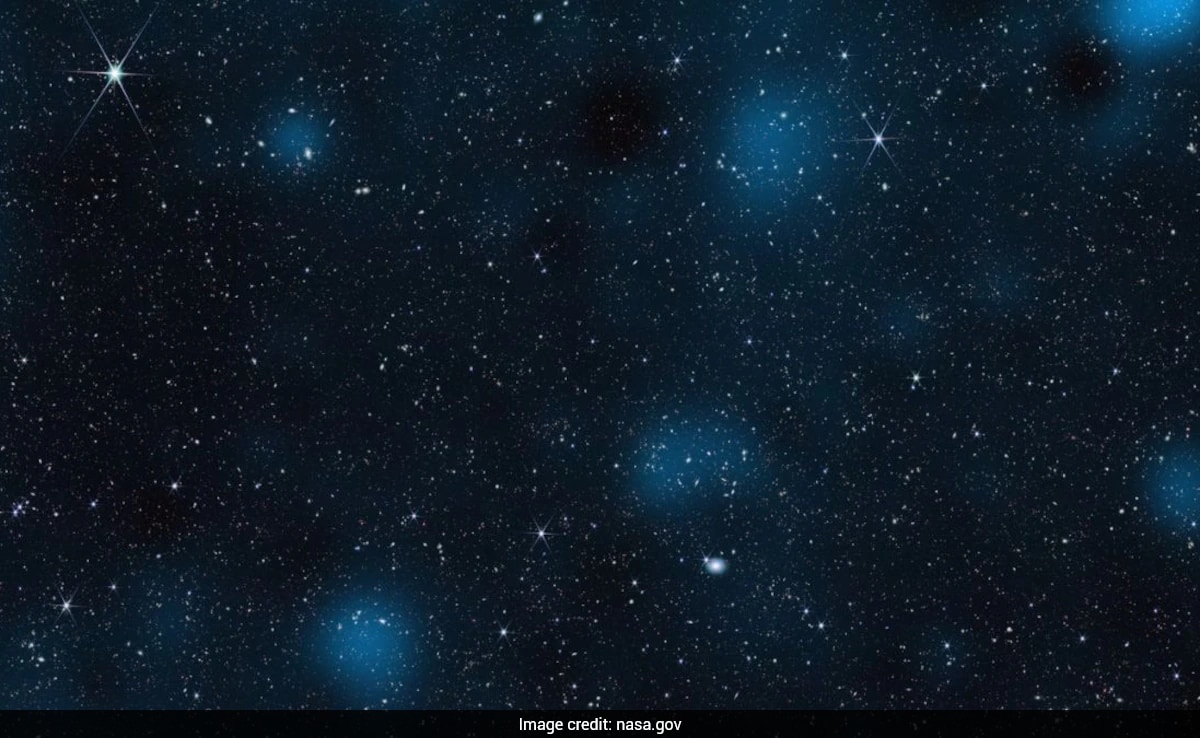
Scientists have used the James Webb Space Telescope to create a very detailed map of dark matter, which is a mysterious substance that makes up most of the universe.
This map shows how dark matter is spread out and helps us understand how galaxies form and grow.
The telescope can see much fainter and more distant galaxies than before, which helps make the map more accurate.
The map covers a big area of the sky and looks back in time to when the universe was much younger.
This new map will help scientists study how the universe has changed over time and how galaxies are formed.

Scientists created the most detailed cosmic map of dark matter using the James Webb Space Telescope.
The map covers a patch of the sky almost three times the area of the full moon and looks back 8 to 10 billion years.
Dark matter makes up about 85% of all matter in the cosmos and is invisible but can be inferred through its gravitational effects.
The new map offers double the resolution of the previous Hubble map and reveals finer dark matter structures.
The map will help future investigations into galaxy formation and evolution, providing important boundary conditions for models.
- Who
- Scientists using the James Webb Space Telescope
- What
- Created the most detailed cosmic map of dark matter
- When
- Published on January 26, 2026
- Where
- COSMOS patch in the direction of the constellation Sextans
- Why
- To understand the distribution and structure of dark matter in the universe
- Telescope Used
- James Webb Space Telescope
- Area Covered
- COSMOS patch, almost three times the area of the full moon
- Resolution
- Double the resolution of previous Hubble map
- Time Period Observed
- 8 to 10 billion years ago
- Dark Matter Percentage
- 85% of all matter in the cosmos
- Galaxies Observed
- Roughly 250,000 distant galaxies
- Research Publication
- Nature Astronomy
- Lead Author
- Diana Scognamiglio, NASA's Jet Propulsion Laboratory