

Archive · 24 Jul 2026
India Debates Regulatory Data Protection for Agrochemicals
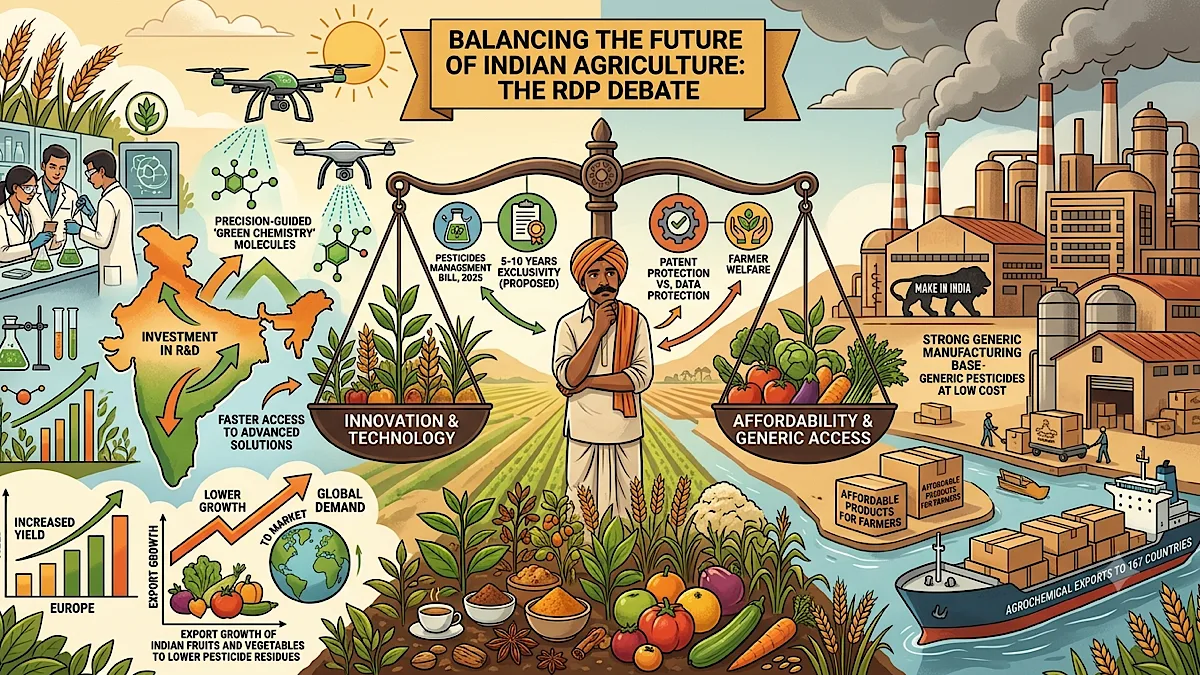
India is discussing whether to introduce Regulatory Data Protection (RDP) for agrochemicals.
RDP would protect the data submitted by companies for regulatory approval, preventing competitors from using that data for a certain period.
Proponents say this will encourage innovation and investment, while opponents argue it could restrict competition and increase costs for farmers.
The debate is about finding the right balance between promoting new technologies and keeping crop protection solutions affordable for farmers.
The outcome will affect agricultural productivity, exports, and the future of India's agrochemical industry.

India is considering introducing Regulatory Data Protection (RDP) for agrochemicals under the proposed Pesticides Management Bill, 2025.
Proponents argue RDP will foster innovation and attract investment, while opponents fear it will restrict competition and increase costs.
RDP would protect the data submitted by companies for regulatory approval, preventing competitors from using that data for a certain period.
India's agrochemical industry is a major global hub, exporting to 167 countries and contributing significantly to agricultural exports.
The debate centers on balancing innovation and affordability to benefit farmers and the agrochemical industry.
- Who
- Stakeholders including research-based companies, industry associations, and domestic agrochemical manufacturers
- What
- Debate over the introduction of Regulatory Data Protection (RDP) for agrochemicals in India
- When
- In the context of the proposed Pesticides Management Bill, 2025
- Where
- India
- Why
- To balance innovation and affordability in the agrochemical industry
Proponents of Regulatory Data Protection (RDP)
Opponents of Regulatory Data Protection (RDP)
Innovation and Investment
Proponents of Regulatory Data Protection (RDP)
Proponents argue that RDP is crucial for fostering innovation, attracting investment, and facilitating access to advanced crop protection technologies.
Opponents of Regulatory Data Protection (RDP)
Opponents argue that RDP could restrict competition, weaken India's generic manufacturing base, and potentially increase costs for farmers.
Market Exclusivity
Proponents of Regulatory Data Protection (RDP)
Proponents claim that RDP is necessary to protect the significant investments made in research and regulatory studies.
Opponents of Regulatory Data Protection (RDP)
Opponents argue that RDP creates an additional layer of market exclusivity beyond patent protection, delaying generic competition.
Farmer Benefits
Proponents of Regulatory Data Protection (RDP)
Proponents believe that RDP will encourage the introduction of advanced, safer, and more effective crop protection technologies, benefiting farmers.
Opponents of Regulatory Data Protection (RDP)
Opponents warn that RDP could lead to higher prices and reduced market competition, potentially harming farmers.
- Proposed Pesticides Management Bill
- 2025
- Data Exclusivity Period in China
- 6 years
- Investment in New Crop Protection Molecules
- Hundreds of millions of dollars
- India's Share in Global Agricultural Exports
- 2.4-2.5%
- Number of Countries India Exports to
- 167