Archive · 6 Nov 2025
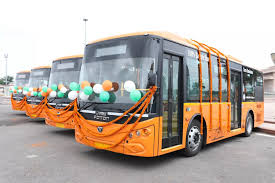
India Plans Easier Loans for Electric Trucks and Buses

Imagine you want to buy a big electric truck or bus for your company, but they cost a lot more than regular diesel ones.
It's hard to get a loan for them because banks think it's risky.
So, the Indian government is thinking about making it easier and cheaper to get loans for these electric vehicles.
They want to help banks and other lenders offer better deals, like lower interest rates.
This is part of a bigger plan to help India use less fuel and have cleaner air.
Right now, not many electric trucks and buses are on the road because of these costs, but this new plan hopes to change that.

The Indian government is developing a new financing scheme to boost the adoption of electric trucks and buses.
The scheme aims to overcome the lack of affordable credit, a major hurdle for fleet owners in India's transition to green mobility.
Discussions are underway between the Ministry of Heavy Industries and the Department of Financial Services, based on NITI Aayog recommendations.
Proposed measures include incentives for lenders and structured guidelines to offer lower interest rates and shift costs to operational expenses.
High upfront costs (2-3 times that of diesel vehicles) and uncertainties in residual values are key challenges addressed by the new plan.
- Who
- The Centre (Ministry of Heavy Industries and Department of Financial Services), with recommendations from NITI Aayog
- What
- Preparing a new financing scheme to accelerate the adoption of electric trucks and buses by addressing the lack of affordable credit for fleet owners.
- When
- Discussions have begun, following NITI Aayog recommendations made earlier this year. The scheme is suggested for implementation within a year of the recommendation.
- Where
- India
- Why
- To cut dependence on fuel imports, move toward net zero emissions, and overcome the high upfront cost and financing hurdles for commercial electric vehicles.
Challenges in EV Financing
Proposed Solutions and Government Action
High Upfront Costs
Challenges in EV Financing
Electric trucks and buses are 2-3 times more expensive than their diesel counterparts (e.g., electric buses cost ₹1-1.25 crore vs. ₹25-50 lakh for diesel).
Proposed Solutions and Government Action
A new financing scheme is being discussed by the Ministry of Heavy Industries (MHI) and the Department of Financial Services (DFS) to make borrowing cheaper for buyers.
Lender Risk and Residual Value Uncertainty
Challenges in EV Financing
Lenders perceive higher risk due to the higher upfront costs, absence of a mature resale market, and uncertainty in residual values (estimated worth at loan end) for EVs, partly due to battery depreciation.
Proposed Solutions and Government Action
The proposed scheme could involve incentives for lenders and structured guidelines to encourage lower interest rates and shift costs from upfront to operational expenses.
Fragmented Ownership and Data Standardization
Challenges in EV Financing
Truck and bus ownership is highly fragmented, with small operators struggling to secure financing. Lenders face difficulties in assessing risk due to a lack of standardized frameworks for reporting battery degradation and forecasting residual values.
Proposed Solutions and Government Action
NITI Aayog recommended a pooled fund from public and multilateral sources for low-interest loans, especially for small operators, to be implemented within a year.
- Affected Vehicles
- Electric Trucks and Buses
- Primary Challenge
- Lack of affordable credit for fleet owners
- Proposed Solution
- New financing scheme with lender incentives and structured guidelines
- Key Players Involved
- Ministry of Heavy Industries (MHI), Department of Financial Services (DFS), NITI Aayog
- NITI Aayog Recommendation
- Pooled fund for low-interest loans to small operators
- Current E-bus Penetration (2024)
- 7% of total bus sales in India
- Current E-truck Penetration (2024)
- 0.07% of heavy-duty trucks