

Archive · 3 Aug 2025
Animal Same-Sex Behavior: A Look at Diversity and Science
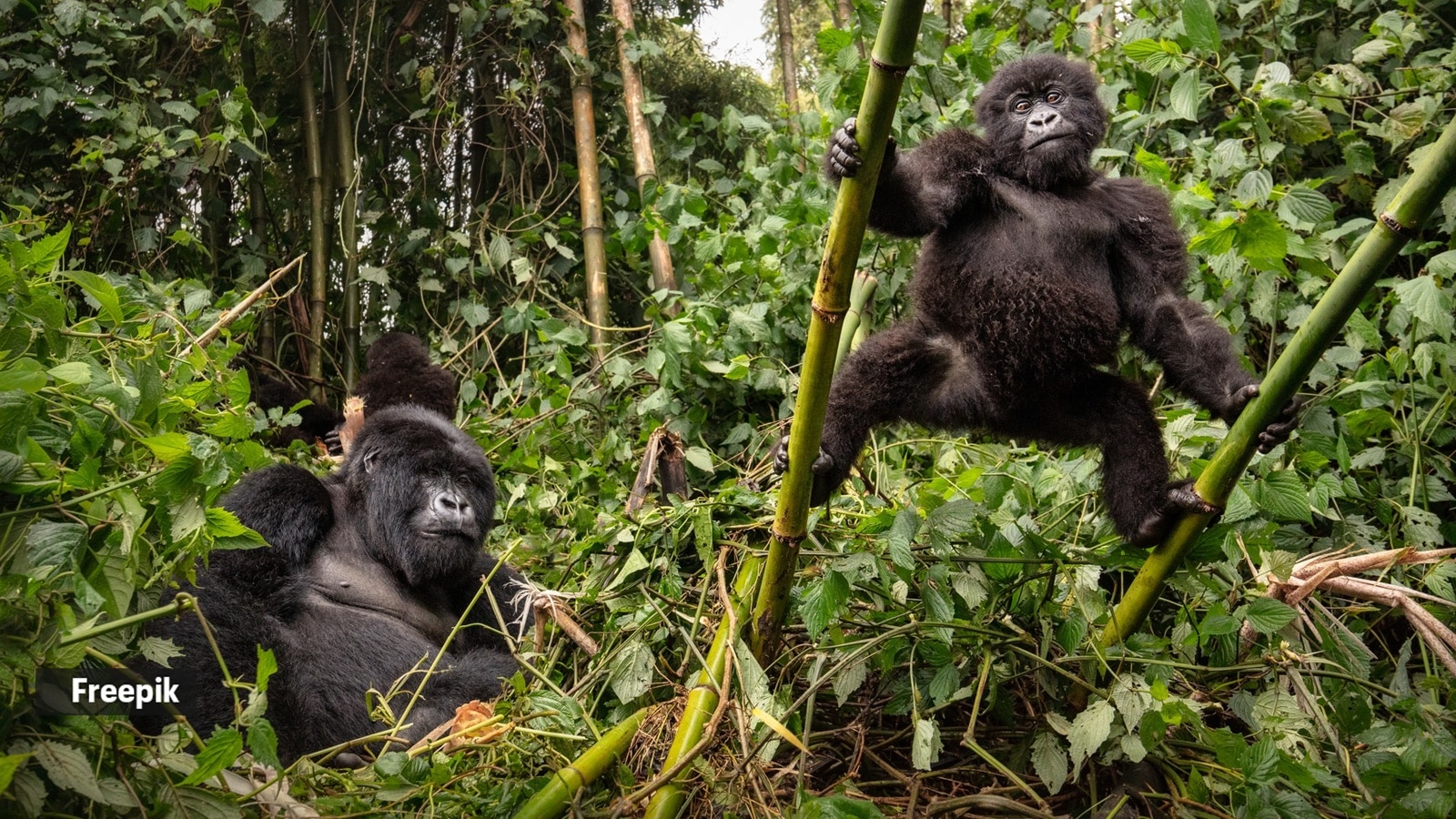
Animals, like bonobos and macaques, sometimes show same-sex behaviors.
This can include physical contact for social reasons, not just reproduction.
Scientists are studying these behaviors, as they challenge the idea that all behaviors must help animals have babies to be successful.
The article says we should be careful about calling these behaviors 'gay' or 'lesbian' because they may be more complex.

Animals, including primates and birds, exhibit same-sex sexual behavior.
Terms like 'gay' or 'heterosexual' might not be suitable for describing animal behavior.
Same-sex behavior in animals is sometimes seen as a 'Darwinian paradox'.
Bonobos use sexual contact for social bonding, not limited by sex.
Female Japanese macaques form exclusive same-sex relationships.
- Who
- Bonobos, Japanese macaques, and birds, among other animals.
- What
- Various animal species exhibit same-sex sexual behavior.
- When
- The behaviors are observed in modern times.
- Where
- Observed in multiple locations.
- Why
- Scientists study these behaviors to understand evolution and animal social dynamics.
Scientific Understanding
N/A
Scientific Explanations
Scientific Understanding
Some scientists study and attempt to explain the existence of same-sex behaviors in animals to reconcile them with Darwin's theory of natural selection.
N/A
The article doesn't state opposing viewpoints.
- Species exhibiting same-sex behavior
- Bonobos, Japanese macaques, birds, and others
- Behavior in Bonobos
- Genital rubbing for social contact
- Behavior in Japanese macaques
- Exclusive female-female relationships
- Examples in birds
- Same-sex pairing in penguins, geese, and swans
- Key Concept
- Challenging Darwinian evolution by natural selection theory