

Archive · 26 Jun 2025
How NASA Handles Astronauts' Medical Emergencies In Space
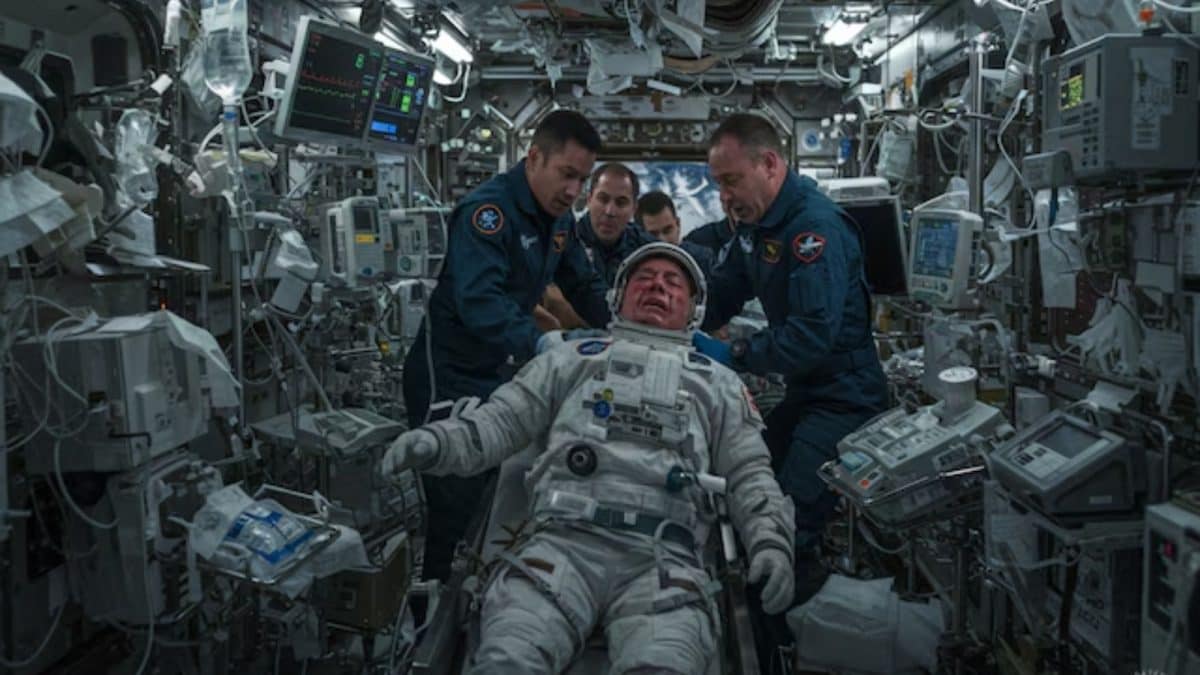
Astronauts can get sick in space, but they don't have hospitals.
Instead, one astronaut on each mission is trained to be the Crew Medical Officer, like a doctor.
They have a medical kit with medicines and tools.
Doctors on Earth can help them through video calls.
If it's really serious, they can return to Earth in a special capsule.
They also do thorough health checks before the mission to make sure they are healthy.
It is important to manage the condition on board and not to re-enter the Earth's gravity if avoidable.
The biggest risks in space include bone loss, heart problems, and changes to eyesight.

Astronauts in space can get sick, but there are no traditional hospitals in space.
Each mission has a Crew Medical Officer (CMO) who is trained in medicine.
The ISS has a medical kit with tools and medications, including an ultrasound device.
Ground-based doctors at Mission Control provide real-time telemedical assistance.
Emergency evacuation via a Soyuz or SpaceX Dragon capsule is a last resort option.
- Who
- Astronauts and the medical staff and doctors supporting them.
- What
- NASA has a plan to treat astronauts when they get sick in space.
- When
- The plan has been in place for over 20 years of ISS operation.
- Where
- On the International Space Station (ISS) and in space.
- Why
- To provide medical care to astronauts in the absence of traditional hospitals.
- Crew Medical Officer (CMO)
- Designated astronaut with medical training.
- ISS Medical Kit Includes
- Painkillers, antibiotics, tools for wound dressing, ultrasound device, and AEDs.
- Telemedical Support
- Real-time assistance from ground-based doctors.
- Emergency Evacuation
- Via Soyuz or SpaceX Dragon capsule (Contingency Return).
- Return Time
- 3-5 hours to Earth.
- Common issues
- Back pain, rashes, toothaches, eye irritation, muscle atrophy and bone density loss.
- Incidents
- Kidney stone symptoms and infections were successfully treated.