

Archive · 14 Aug 2025
AI's Impact: Entry-Level Jobs Are Disappearing
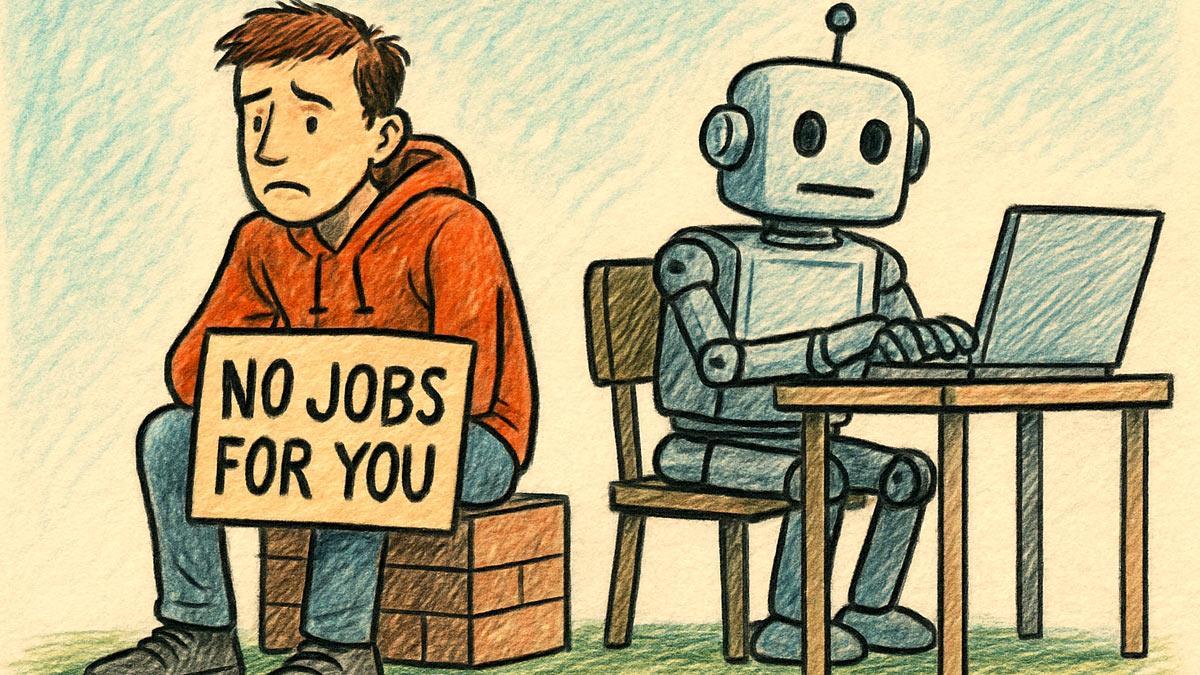
AI is changing how companies work, which is causing a problem for young people looking for jobs.
Because computers can now do many tasks, companies don't need as many new workers in entry-level positions.
This is especially true for jobs like basic office work or customer service.
Experts say young people need to learn new skills to work alongside AI to get ahead.
It's important that these changes don't make it harder for young people to find work, as they are the ones who will shape the future.

AI is leading to fewer entry-level jobs, especially in sectors like administration and customer service.
Younger workers in the US have seen a drop in employment, contrasting with older age groups.
AI-powered automation is replacing roles traditionally held by early-career employees.
Experts suggest the transition to an AI-driven economy will require adaptability and new skills.
There is a risk of a widening employment gap between older and younger generations.
- Who
- Young workers, companies adopting AI, economists, and governmental bodies.
- What
- The impact of AI on entry-level jobs and the employment of young workers.
- When
- Recent trends, particularly since the pandemic.
- Where
- Primarily in the US, the UK, and India, with a global scope.
- Why
- Because AI is automating tasks and reducing the need for entry-level roles.
Potential Solutions
Ongoing Concerns
Reskilling and Training
Potential Solutions
Need frameworks to support reskilling for AI-driven industries.
Ongoing Concerns
Reskilling implementation is slow.
- US Employment Drop (15-24)
- Nearly 4 percentage points decline since pre-COVID levels.
- Potential Job Switching (US)
- Nearly 12 million Americans may need to switch occupations by 2030.
- Youth Unemployment (Urban India)
- Hovered around 17% in early 2025.
- AI Impact on GDP
- Could boost global GDP by 7% over the next decade.