

Archive · 30 Jan 2026
India's Recycling System Favors Processors Over Informal Workers
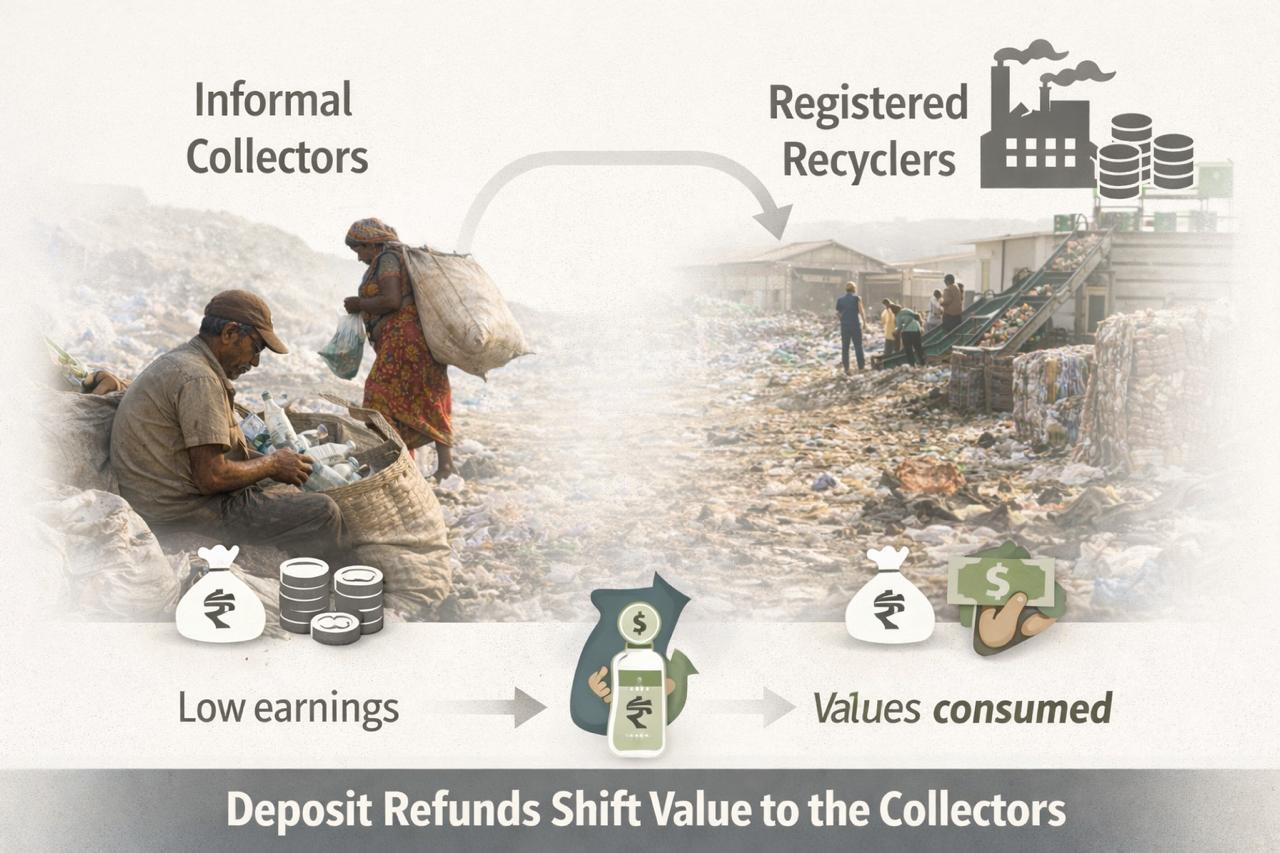
In India, many people collect waste like bottles and packaging from streets and landfills to recycle.
However, they are not paid well for their hard work.
The money in recycling mostly goes to the people who process the waste, not the collectors.
A new idea called the Deposit Refund Scheme could help.
It pays collectors more for each item they bring back, making their job easier and more rewarding.
This could make recycling better for everyone and help keep India cleaner.

India's recycling system relies heavily on informal waste collectors but pays them poorly.
Current payment structures favor downstream processors, paying collectors based on fluctuating scrap prices.
The Deposit Refund Scheme could increase earnings for collectors significantly, making their work more rewarding.
Goa has implemented this scheme to address structural imbalances in waste recovery.
The scheme could improve health and efficiency by reducing the need to sort contaminated waste.
- Who
- Informal waste collectors in India
- What
- The recycling system favors downstream processors over informal waste collectors
- When
- Ongoing issue with attempts to address it through schemes like the Deposit Refund Scheme
- Where
- Across cities and towns in India, with a specific focus on Goa
- Why
- The current system pays collectors based on fluctuating scrap prices, which disadvantages them
- Current Earnings for PET Bottles
- ₹15-20 per kilogram (40-50 bottles)
- Earnings for Glass Bottles
- ₹2 per unit
- Earnings for Multi-layered Plastic
- No value, often discarded
- Deposit Refund Scheme Return Rates
- Above 80% in Europe, North America, and parts of Asia
- Potential Earnings Increase with Deposit Refund Scheme
- Up to 12-fold for PET bottles, 10-fold for glass, 3-fold for aluminium
- Goa's Implementation
- Attempts to address structural imbalances in waste recovery
- Impact on Informal Collectors
- Reduces dependence on volatile scrap prices and intermediaries
- Health and Efficiency Benefits
- Cleaner streams improve recycling efficiency and reduce health risks