

Archive · 1 Sep 2026
Rare Sharp-Tailed Sandpiper Spotted at Najafgarh in Fifth Indian Record
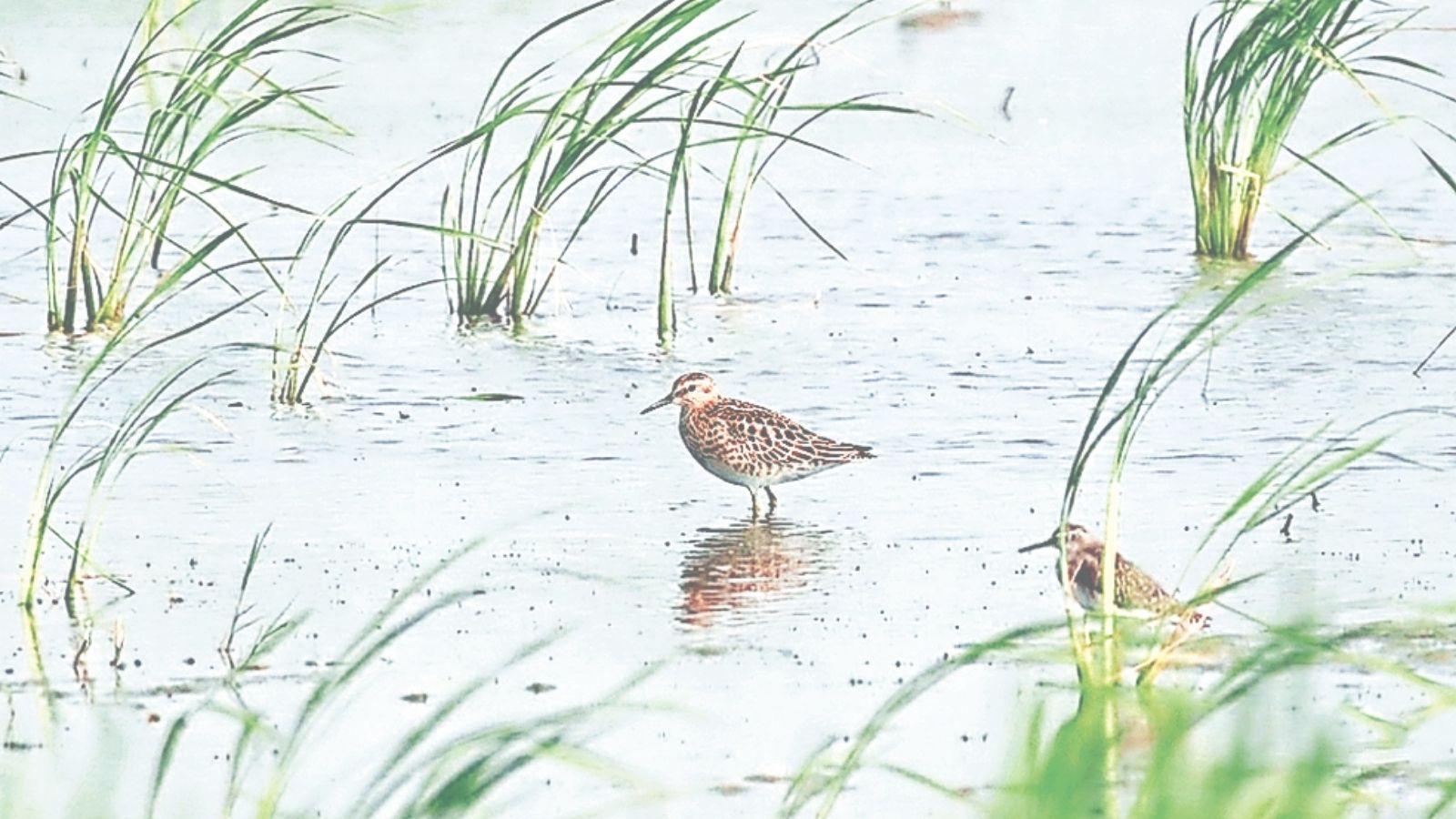
A rare bird called a sharp-tailed sandpiper was seen at Najafgarh Lake.
The bird was found near Mankrola village on the Gurgaon side of the wetland.
A birder named Akshit Dua took photographs and identified it by its special head and feather markings.
Experts say this is only the fifth recorded sighting of this bird in India in almost 150 years.
The bird normally breeds in northern Siberia and travels south during migration.
Most of these birds spend the non-breeding season in Australia and New Zealand.
Najafgarh Lake is an important resting and feeding place for migrating birds.
Scientists say wetlands near cities are valuable habitats, not wastelands.
The sharp-tailed sandpiper is considered Vulnerable because its population has fallen and its habitats are being damaged.

A sharp-tailed sandpiper was documented near Mankrola village on the Gurgaon side of Najafgarh Lake.
The sighting is described as only the fifth recorded sighting of the species in India in nearly 150 years.
Akshit Dua identified the bird using its white supercilium, rufous cap, eye-ring, and rusty-brown feathers.
The species breeds in northern Siberia and mainly migrates to Australia and New Zealand.
Classified as Vulnerable, the species has declined by about 45% over three generations, with habitat loss a major threat.
- Who
- Akshit Dua documented a sharp-tailed sandpiper, with comments from birders and ecologists.
- What
- A rare sharp-tailed sandpiper was spotted and photographed in India.
- When
- The bird was spotted on Sunday; the article does not specify the date.
- Where
- Near Mankrola village on the Gurgaon side of Najafgarh Lake in the Delhi-NCR region.
- Why
- The sighting is notable because the species is an exceptionally uncommon visitor to India and is rarely recorded there.
- Species
- Sharp-tailed sandpiper (Calidris acuminata)
- Indian record
- Reported as the fifth recorded sighting in India over nearly 150 years
- Location
- Najafgarh Lake, near Mankrola village on the Gurgaon side
- Breeding range
- Northern Siberia, from the Lena River delta toward the Kolyma region
- Main non-breeding grounds
- Australia and New Zealand
- Conservation status
- Vulnerable on the IUCN Red List
- Population trend
- Estimated decline of about 45% over three generations, or roughly 15 years