

Archive · 10 Dec 2025
Delhi trials cloud seeding to combat air pollution
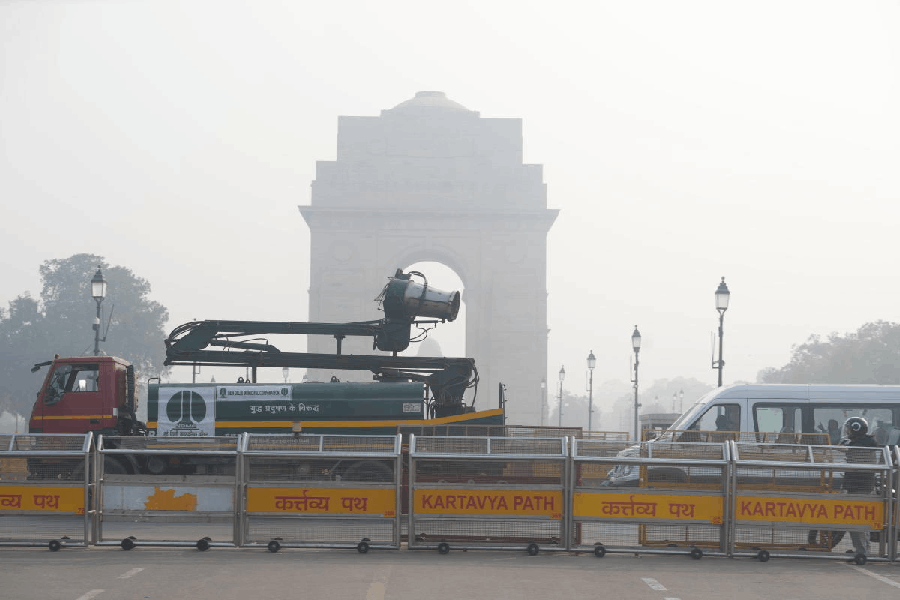
Delhi tried a special method called cloud seeding to make it rain and clean the air.
They used planes to put tiny particles into clouds to make them rain.
But it didn't work because the clouds weren't wet enough.
Making it rain this way is expensive and doesn't solve the real problem of pollution from cars, factories, and burning crops.
Experts say it's better to fix these pollution sources directly instead of trying to make it rain.
The trial cost a lot of money and didn't help much, so it's not a good solution for Delhi's air pollution problem.

Delhi authorities conducted cloud seeding trials in late October to combat high air pollution levels.
The trials involved releasing seeding agents into clouds to induce rainfall and wash away particulate matter.
The trials failed to produce rain due to insufficient moisture in the clouds (15-20% instead of the required 50%).
Cloud seeding is expensive, with each trial run costing Rs 55 lakh and the total project costing Rs 3.21 crore.
Experts argue that structural, year-round initiatives targeting emission sources would be more effective than cloud seeding.
- Who
- Delhi authorities
- What
- Conducted cloud seeding trials to induce artificial rain and combat air pollution
- When
- Late October
- Where
- Delhi, India
- Why
- To reduce air pollution by washing away particulate matter
- Technique
- Cloud seeding
- Seeding Agents
- Silver iodide
- Cost per Run
- Rs 55 lakh
- Total Project Cost
- Rs 3.21 crore
- Cloud Moisture During Trials
- 15-20%
- Required Cloud Moisture
- 50%
- Primary Pollutants
- PM2.5 and PM10
- Root Causes of Pollution
- Vehicular traffic, industry, construction, agricultural burning