

9 hrs ago
How Shaktism, Tantra and Bhakti Shaped Hinduism in Bengal
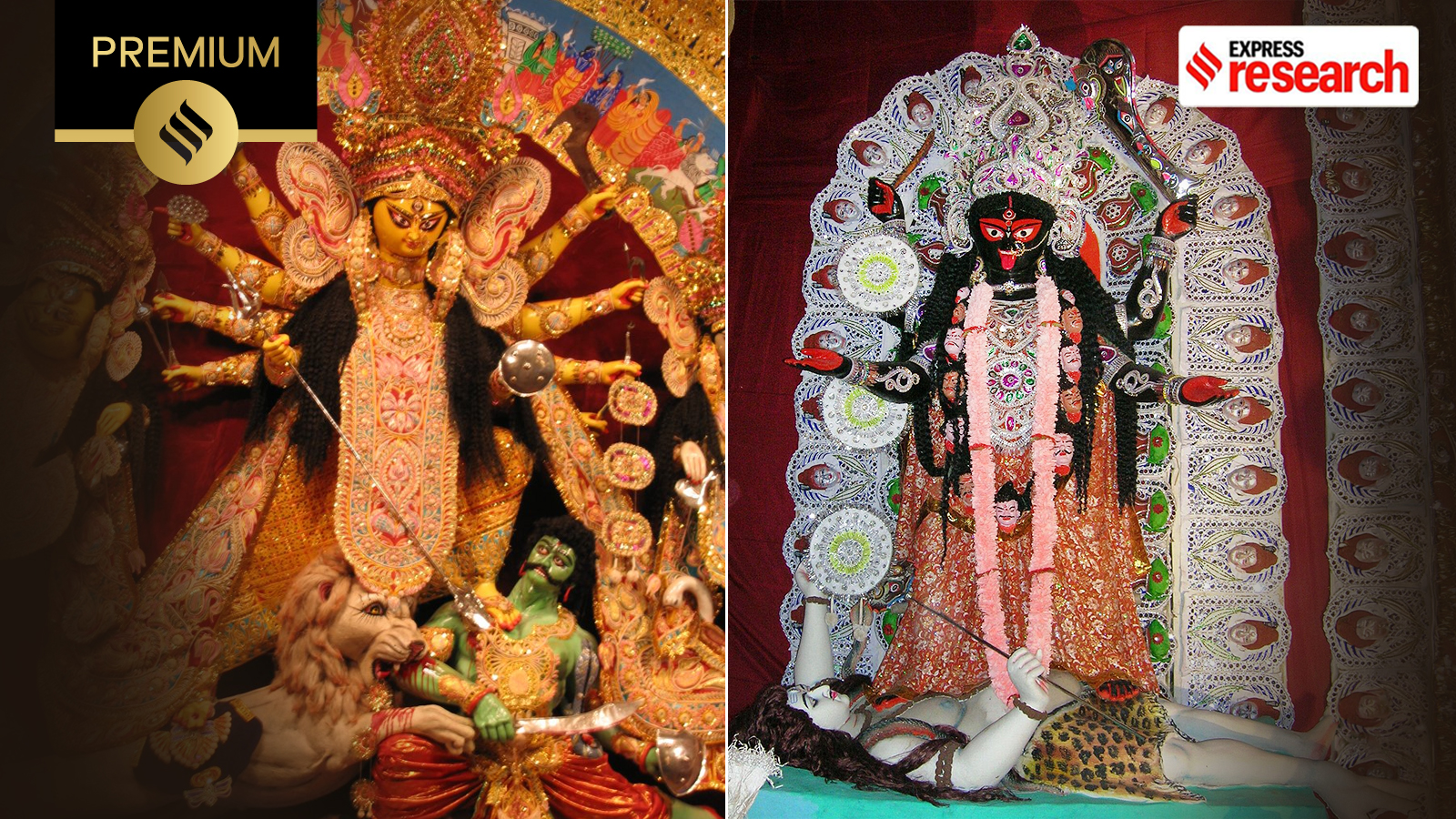
Hinduism in Bengal developed through several religious traditions coming together.
Shaktism focuses on worshipping the divine feminine.
Local people had worshipped many village goddesses before Brahmanical traditions became influential in Bengal.
Later, Brahmanical texts included some of these goddesses in their own stories.
Tantra also became important and influenced rituals, mantras and ideas about women’s religious roles.
Bhakti brought a more personal and emotional relationship with gods and goddesses.
In Bengal, these traditions influenced one another rather than remaining completely separate.
This is why Kali can be seen as frightening but also as a loving mother.
Durga is similarly viewed as a warrior, a mother and Bengal’s beloved daughter.

Bengal’s Hindu traditions were shaped by Shaktism, Tantra and Gaudiya Vaishnavism.
Local goddess worship predated large-scale Brahmanical influence and remained deeply rooted in the region.
Brahmanical traditions incorporated folk goddesses such as Manasa and Shashti into Puranic narratives.
Tantricism influenced Bengali worship, elevating women’s religious authority and emphasizing emotional intention over strict purity rules.
Gaudiya Vaishnavism added an intimate devotional approach, helping Durga and Kali become both powerful deities and beloved maternal figures.
- Who
- Bengali Hindus, especially practitioners of Shaktism, Tantricism and Gaudiya Vaishnavism, along with local goddess-worshipping communities.
- What
- The article explains how Shaktism, Tantra and Bhakti combined to create distinctive forms of Hindu religious and cultural life in Bengal.
- Where
- Bengal and surrounding areas including parts of present-day Bihar, Assam and Odisha.
- When
- The traditions developed over many centuries, with major influences from the Gupta period onward, Tantricism from around the 6th or 7th century, and Gaudiya Vaishnavism from the 15th century.
- Why
- Local goddess worship was deeply established before large-scale Brahmanical influence, while Tantra and Bhakti later adapted to and reshaped those traditions.
Key facts
- Central tradition
- Shaktism, the worship of the divine feminine, has long been prominent in Bengal.
- Brahmanical incorporation
- Brahmanical traditions incorporated folk goddesses such as Manasa and Shashti into Puranic narratives.
- Tantric influence
- Tantricism shaped Bengali mantras, mudras, ritual practices and ideas about women’s religious authority.
- Pala patronage
- The Pala kings ruled from 780 to 1174 CE and supported Bengal and Bihar as important centres of Tantric culture.
- Bhakti influence
- Gaudiya Vaishnavism spread to Bengal in the 15th century and became prominent through Chaitanya Mahaprabhu.
- Kali devotion
- Kali Bhakti was further popularised in the 19th century by Ramakrishna Paramahamsa.
- Estimated Shakta affiliation
- Scholar Narendra Nath Bhattacharya was cited as estimating that nearly 90 per cent of West Bengal’s population is Shakta to some degree.
Quotes
Kunal Chakraborty
Retired JNU professor of Ancient History and researcher of religion’s social history
“The Tantric pro-gender codes state that women have the authority to become priestesses and gurus, initiate disciples, run their own respective ashramas and hold positions of power in the religious sphere.”
 indianexpress.com
“Bengal remained outside the sphere of Brahmanical influence for a long time, and large-scale Brahmana migration to Bengal did not begin before the Gupta period (mid-4th century to 6th century CE).”
indianexpress.com
Sources
Related news

Bengal Temples Preserve Durga’s 12- to 18-Armed Forms
Indian Cities and Their Sacred Connections to Goddesses
Durga Puja Exposes BJP’s Two Faces on Faith
Bengal’s Durga Puja Draws Food and Political Battles
Rajasthan’s Gangaur Inspires Kolkata Puja’s 90th Durga Celebration

Bangladesh Hindu Community Celebrates Janmashtami at Dhakeshwari Temple

Family Alleges Irregularities in Kalighat Temple Management

Bengal Minister Defends Local Food Traditions During Durga Puja
Naga Chaitanya Launches The Rage Of Varahi Theme

Mahakali Trailer Reveals Akshaye Khanna’s Chilling Shukracharya Transformation
