

Archive · 31 Dec 2025
Internet of beings: Digitizing human bodies for healthcare
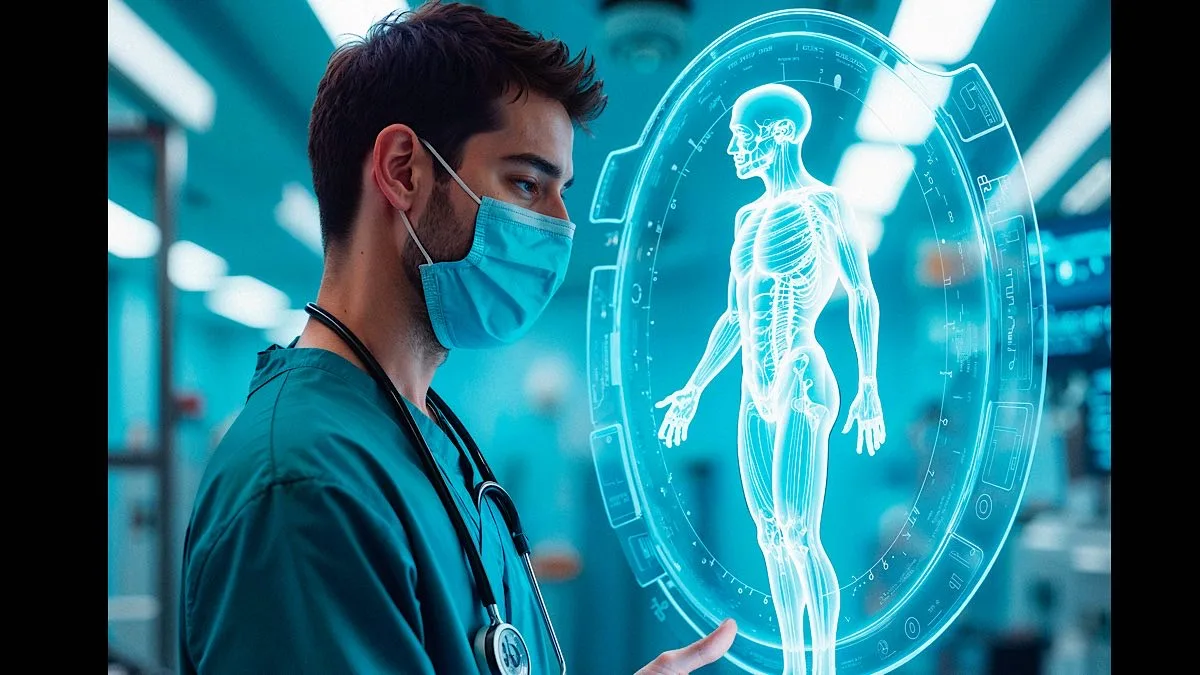
Imagine tiny sensors or biorobots inside our bodies, connected to the internet.
These could monitor our health, detect diseases early, and even help heal us.
They could make healthcare more personal and effective.
For example, they might send alerts for silent heart attacks or release medicine when needed.
Scientists could also use this data to find better treatments faster.
However, there are concerns about hacking and losing our humanity.
The goal is to make healthcare better for everyone, but we need to explore this carefully.

The 'Internet of beings' could revolutionize healthcare by connecting human bodies to the internet via tiny sensors or biorobots.
This technology could enable early disease detection, active healing, and faster, more precise drug discovery.
Potential benefits include preventing millions of deaths, such as silent heart attacks, and making healthcare more accessible.
Concerns include the risk of hacking and the potential loss of humanity in the process of digitization.
The future of medical research may shift to using digital twins and real-time data for more personalized and effective treatments.
- Who
- Scientists, healthcare professionals, and individuals
- What
- The concept of digitizing human bodies for healthcare using the 'Internet of beings'
- When
- Currently in development, with potential future implementation
- Where
- Globally, with discussions and developments happening in various countries
- Why
- To improve healthcare, detect diseases early, and make medical research more efficient
- Technology
- Internet of beings, biorobots, digital twins
- Potential Benefits
- Early disease detection, active healing, faster drug discovery
- Potential Risks
- Hacking, loss of humanity
- Current Status
- Technically feasible, in development
- Impact
- Enormous on individuals, industries, and societies
- Example of Silent Heart Attacks
- 170,000 out of 805,000 heart attacks in the US are 'silent'
- Future of Medical Research
- Shift to digital twins and real-time data
- Goal
- Accessible healthcare, defeating cancers, helping everyone live longer without disease