

Archive · 30 Dec 2025
Germany's Soft-Power Play Against India
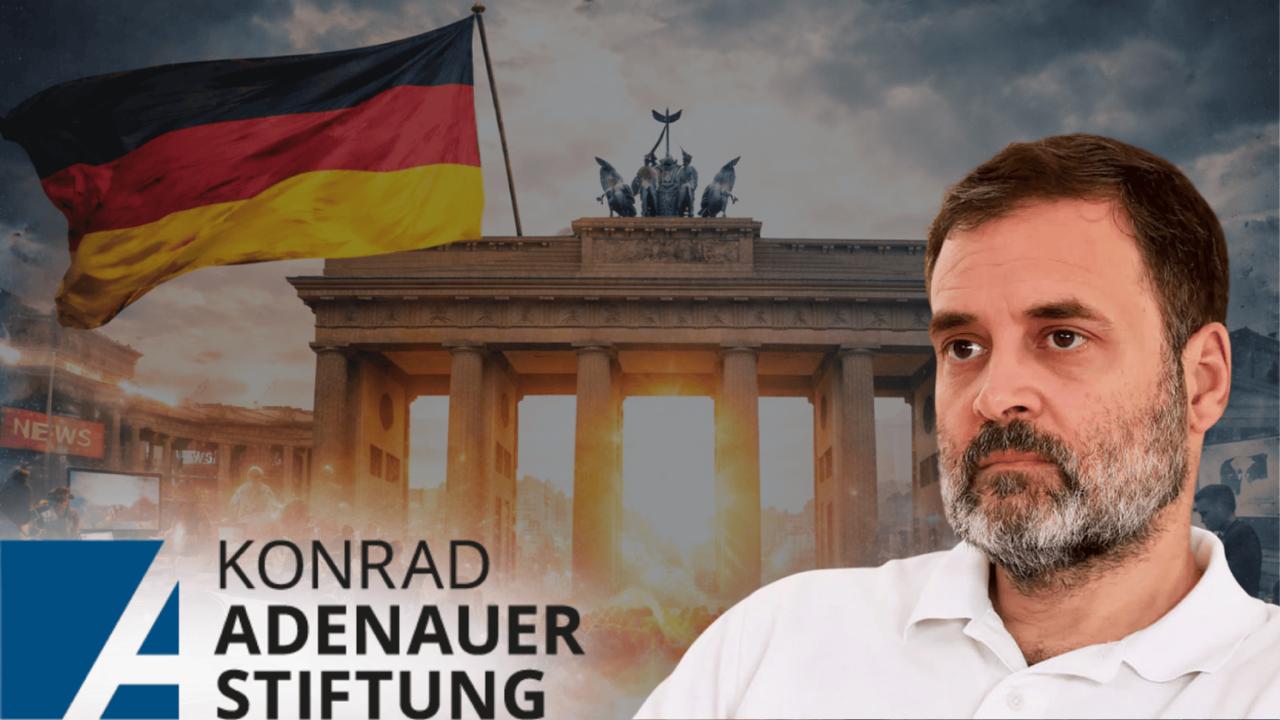
Germany has been using its influence to shape narratives and impact internal matters in India.
This includes the German Foreign Ministry commenting on Rahul Gandhi's conviction, Deutsche Welle News targeting Indian Prime Minister Narendra Modi and Indian media, and German political foundations like the Konrad Adenauer Stiftung (KAS) funding organizations that question India's democratic processes.
Germany's approach is part of its soft-power strategy, which focuses on moral lecturing, human rights, and democratic values.
This strategy is seen as interference by some, as it often crosses India's red lines and undermines national sovereignty.
Germany's influence in India is felt through various fronts, including civil society, academic networks, media, and digital influencers.
The country's normative power is described as a strategy to influence global narratives and position itself as the arbiter of democracy.

Germany's Foreign Ministry commented on Rahul Gandhi's conviction, expressing concerns about judicial independence.
Deutsche Welle (DW) News has a significant presence in India's Hindi-Urdu media space, often targeting Indian Prime Minister Narendra Modi and Indian media.
The Konrad Adenauer Stiftung (KAS), a German political foundation linked to the CDU, is active in India's civil society and academic networks, funding organizations that question India's democratic processes.
Rahul Gandhi recently delivered a lecture at the Hertie School of Governance in Germany, which is linked to Germany's post-Nazi 'atonement' ecosystem.
Germany's soft-power strategy includes moral lecturing, human rights advocacy, and democratic values promotion, often at the expense of national sovereignty.
- Who
- Germany, through its government, media, and political foundations, has been actively involved in shaping narratives and influencing internal matters in India.
- What
- Germany's soft-power strategy includes moral lecturing, human rights advocacy, and democratic values promotion, often at the expense of national sovereignty.
- When
- Germany's influence in India has been ongoing for several decades, with a significant presence in the Hindi-Urdu media space since 2024.
- Where
- Germany's influence is felt in India through various fronts, including civil society, academic networks, media, and digital influencers.
- Why
- Germany seeks to project itself as a 'moral superpower' and define what democracy should look like, often interfering in the internal matters of other countries, including India.
- German Foreign Ministry
- Monitored Rahul Gandhi's conviction and expressed concerns about judicial independence
- Deutsche Welle (DW) News
- State-funded media outlet with a significant presence in India's Hindi-Urdu media space
- Konrad Adenauer Stiftung (KAS)
- German political foundation linked to the CDU, active in India's civil society and academic networks
- Rahul Gandhi's Visit
- Delivered a lecture at the Hertie School of Governance in Germany
- German Foreign Policy
- Focuses on moral lecturing, human rights, and democratic values as part of its soft-power strategy
- German Stiftungen
- Political foundations affiliated with German parties, funded by the state, and active globally to 'teach democracy'
- Feminist Foreign Policy
- Germany's approach to foreign policy that emphasizes gender equality and women's rights
- German Influence in India
- Through NGOs, academic networks, media, and digital influencers