

Archive · 26 Jun 2025
Mice with Two Fathers Pave the Way for Future Reproduction?
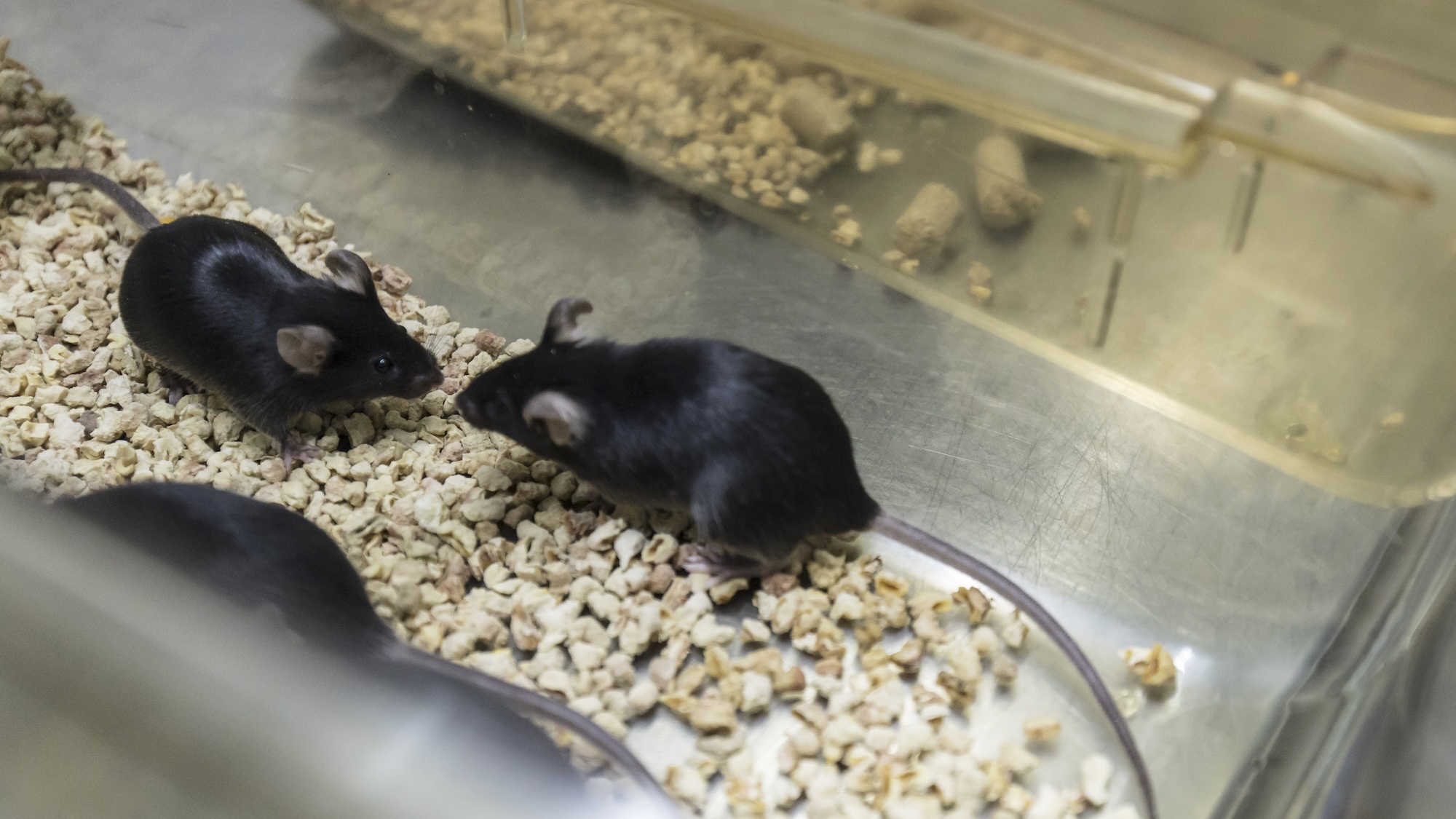
Scientists have created mice with two fathers who are able to have babies.
They took sperm from two male mice and put it into an egg without the usual DNA.
Then, they used a special trick called epigenome editing to change the sperm so it could grow into a baby.
These baby mice were able to have their own babies.
This method helps overcome the problem of genetic imprinting.
Although it's possible, it's still difficult, and it might be a long time before it could be used for humans.

Researchers created healthy, fertile mice from two male parents.
Scientists used epigenome editing to reprogram sperm DNA for embryo development.
Sperm cells were inserted into an egg without a nucleus.
The method produced two adult mice that could reproduce.
The success rate was 0.8% from 259 embryos.
- Who
- Researchers led by Yanchang Wei created the mice.
- What
- Researchers created mice with two fathers.
- When
- The research was recently published.
- Where
- The research was conducted at Shanghai Jiao Tong University in China.
- Why
- To explore reproductive technology and understand genetic imprinting.
Ethical and Practical Challenges
Potential for Fertility Advancements
Human Application
Ethical and Practical Challenges
Human research is heavily regulated, and success rates are poor.
Potential for Fertility Advancements
Epigenome editing is a potentially more acceptable method to use on humans than genetic modification.
- Researchers
- Shanghai Jiao Tong University
- Method
- Epigenome editing
- Process
- Sperm insertion and reprogramming
- Success Rate
- 0.8%

