

Archive · 12 Sep 2026
BRICS Chooses Local-Currency Diversification Over Replacing the Dollar
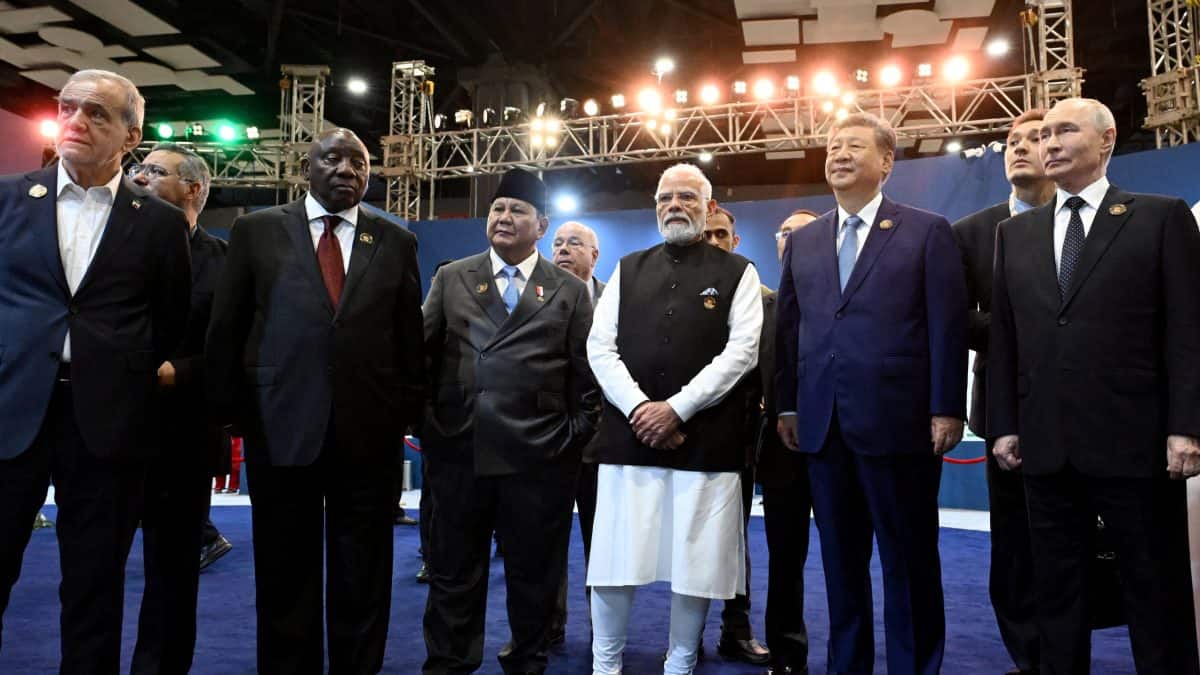
BRICS countries want to make it easier to trade with one another without always using the United States dollar.
They agreed to improve links between their payment systems and use national currencies more often.
They did not agree to create one shared BRICS currency.
The BRICS Payment Task Force will study practical ways to make cross-border payments faster, cheaper and safer.
Masoud Pezeshkian and Vladimir Putin said alternative financial channels could help countries deal with sanctions and political shocks.
The New Development Bank may provide more loans in local currencies.
However, BRICS countries have different economic rules and their currencies are not equally easy to use.
Uneven trade means countries could accumulate currencies they cannot easily spend or invest.
The dollar remains very important, so BRICS is pursuing more choices rather than trying to replace it quickly.

BRICS endorsed local-currency trade, interoperable payment systems and voluntary cooperation, but did not propose a common currency or formal dollar replacement.
The BRICS Payment Task Force was urged to develop fast, low-cost, accessible, transparent and secure cross-border payment arrangements.
Masoud Pezeshkian and Vladimir Putin advocated stronger financial channels to reduce exposure to dollar-based restrictions, sanctions and political shocks.
The New Development Bank was asked to expand local-currency financing, diversify funding and support development projects, while a multilateral guarantees initiative seeks to attract private capital.
A common currency faces obstacles including different monetary policies, limited convertibility, uneven trade, regulatory risks and the dollar’s dominant financial-market position.
- Who
- BRICS finance ministers and central bank governors, member governments, and officials including Masoud Pezeshkian, Vladimir Putin and Piyush Goyal.
- What
- BRICS backed local-currency trade, interoperable payment systems and expanded local-currency financing, while stopping short of endorsing a common currency or formally replacing the United States dollar.
- When
- The finance statement was issued after a meeting ahead of the BRICS Summit, while Pezeshkian, Putin and Goyal spoke on Friday; the New Delhi Declaration is identified as the 2026 declaration.
- Where
- The finance ministers and central bank governors met in Mumbai, and the BRICS Business Forum and summit were held in New Delhi.
- Why
- Members seek more efficient payment options, greater financial autonomy and protection from sanctions, political shocks and restrictions associated with existing dollar-based systems.
De-Dollarisation Advocates
Incremental Diversification Supporters
How far should BRICS move away from the dollar?
De-Dollarisation Advocates
Masoud Pezeshkian and Vladimir Putin support stronger alternative payment, trade and financing channels to reduce vulnerability to sanctions, political shocks and dollar-based restrictions.
Incremental Diversification Supporters
The official BRICS documents emphasize gradual, voluntary cooperation that respects national priorities and explicitly reject a one-size-fits-all approach.
Should BRICS create a common currency?
De-Dollarisation Advocates
A shared currency could, in principle, provide a single alternative to dollar-based settlement and deepen financial integration among members.
Incremental Diversification Supporters
The articles say a common currency would be highly difficult because members have different inflation rates, interest-rate regimes, capital controls, monetary policies and levels of convertibility.
Can local currencies replace dollar use?
De-Dollarisation Advocates
Linked payment systems, local-currency settlement, currency swaps and New Development Bank financing could allow more trade and investment outside dollar-based channels.
Incremental Diversification Supporters
Uneven trade balances, shallow markets and the need to convert accumulated currencies into a third currency limit the practicality of replacing the dollar, whose financial markets remain deep and liquid.
- Formal position
- The BRICS statement and New Delhi Declaration 2026 do not endorse a common BRICS currency or a formal replacement for the United States dollar.
- Main proposal
- Members support local-currency trade and investment, interoperable national payment systems, and practical cross-border payment arrangements.
- Payment standards
- The BRICS Payment Task Force is encouraged to develop solutions that are fast, low-cost, accessible, efficient, transparent and safe.
- New Development Bank
- The bank is expected to expand local-currency financing, diversify funding sources, strengthen project preparation and support high-impact projects.
- Financial guarantees
- The BRICS Multilateral Guarantees initiative aims to improve project creditworthiness, reduce financing costs and attract private capital.
- Reported dollar share
- The Bank for International Settlements said the dollar was on one side of 89.2% of foreign-exchange transactions in April 2025; the IMF reported it represented 57.13% of global foreign-exchange reserves in the first quarter of 2026.
- Implementation obstacles
- BRICS currencies differ in convertibility, international use and market liquidity, while members’ trade can be heavily unbalanced.
